When you stand up, you are not just offering your seat—you are setting an example.
Your action signals to others that help is needed. It creates a ripple effect.
Often, people do not act because they assume someone else will. This is known as the bystander effect. But when one person takes initiative, it breaks the inertia.
The Psychology Behind Inaction: Why People Sometimes Do Nothing
It is easy to assume that people who remain seated are selfish or indifferent. But psychology tells a more nuanced story.
The Bystander Effect
When many people are present, individuals are less likely to act because responsibility is diffused.
Each person thinks:
“Someone else will do it.”
Social Anxiety and Fear of Judgment
Some people hesitate because they are unsure how to act appropriately. They fear:
- Offering a seat to the wrong person
- Being rejected
- Drawing attention to themselves
This is especially relevant if you struggle with social anxiety, where even simple interactions can feel overwhelming.
Cognitive Overload
In crowded environments, the brain is already processing a lot of information. Adding a moral decision on top of that can lead to inaction.
A Practical Strategy: What You Should Actually Do in This Situation
Instead of overthinking, you can follow a simple, effective approach.
Step 1: Stand Up
This immediately creates one available seat.
Step 2: Use Clear Communication
You can say something simple like:
“Please, one of you can sit.”
This removes pressure from you to choose and allows them to decide based on their own needs.
Step 3: Encourage Others Indirectly
Your action often motivates others to do the same. Another person may stand up, solving the problem for everyone.
The Deeper Lesson: What This Situation Teaches About Life
This metro scenario is not just about seats. It reflects how we handle complexity in life.
1. Life Is Not Always About Choosing One Over Another
Many situations are framed as either/or, but the best solutions often involve expanding possibilities rather than limiting them.
2. Leadership Is About Initiative, Not Authority
You do not need power or status to create change. A small action can influence an entire group.
3. Empathy Requires Awareness, Not Just Good Intentions
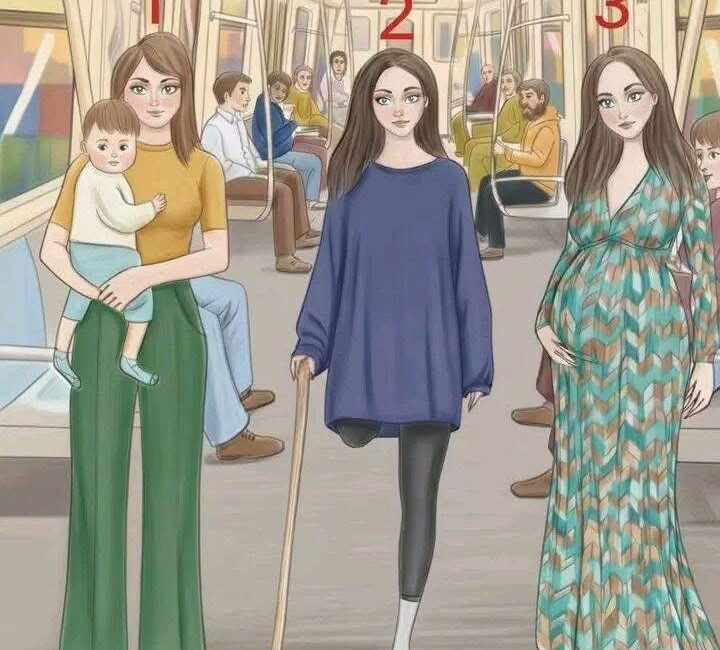
Understanding the different types of needs—safety, vulnerability, endurance—allows you to respond more intelligently.
Rethinking Strength: Why Endurance Should Not Be Punished
One subtle but important insight is this: people who appear stronger are often expected to tolerate more.
The mother carrying a child may be overlooked because she “seems capable.” But this expectation can become unfair.
Strength should not be a reason to deny support. It should be recognized, not exploited.
Building a More Compassionate Society: It Starts With Small Actions
A truly compassionate society is not one where people argue about who deserves help the most. It is one where help is abundant enough that no one is left struggling.
This begins with:
- Awareness
- Initiative
- Collective responsibility
Every small action contributes to a larger culture of care.
Conclusion: Be the Reason Everyone Gets to Sit
The question “Who deserves your seat?” is powerful because it forces you to confront your values. But its real purpose is not to divide—it is to awaken.
The truth is, you do not have to choose one person.
You can choose to act in a way that inspires others. You can turn a limited situation into an expanded solution.
Instead of asking who deserves your seat, become the reason more seats become available.
Because in the end, the most meaningful answer is not about who sits—but about how you show up in the moment.
And that is what truly defines you.