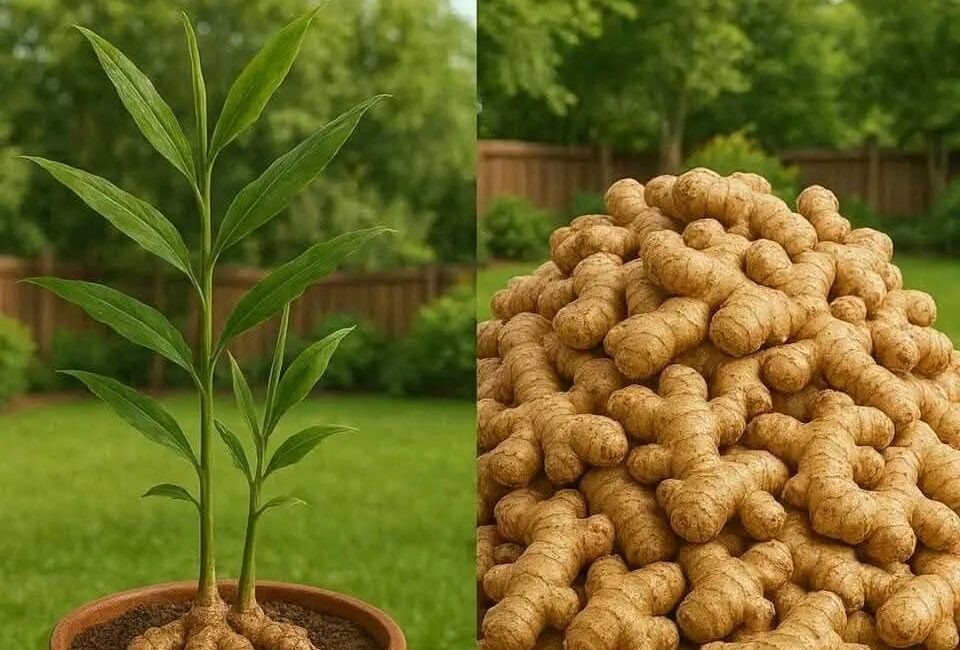
Introduction: Reclaiming Control Over What You Consume
In a world where convenience often outweighs quality, many people rely on grocery stores for their daily ingredients without questioning where those ingredients come from or how they were grown. Ginger, a widely used and deeply valued spice, is no exception. Yet, what most people do not realize is that ginger is one of the easiest and most rewarding plants to grow at home. With minimal effort, limited space, and a simple pot, you can create a continuous supply of fresh, aromatic ginger that surpasses anything found in stores.
This shift from buying to growing is not just about saving money. It is about reconnecting with your food, ensuring purity, and creating a sustainable lifestyle that aligns with both health and environmental awareness. As explained in your source text , growing ginger at home offers control over soil quality, eliminates exposure to harmful chemicals, and allows for year-round production even in small living spaces.
This article will guide you deeply into the art and science of growing ginger at home. You will not only learn how to grow it, but also why it works, how to optimize your results, and how to turn this simple plant into a long-term resource. By the end, you will understand ginger cultivation as both a practical skill and a powerful lifestyle upgrade.
Understanding Ginger: More Than Just a Kitchen Ingredient
Ginger is far more than a spice used in cooking. It is a botanical treasure with a rich history, complex biology, and numerous health benefits. To grow it successfully, you must first understand what it actually is.
The Botanical Nature of Ginger
Ginger is not a root, although many people refer to it as one. It is technically a rhizome, which is a type of underground stem that grows horizontally beneath the soil. This distinction is important because it explains how ginger reproduces and spreads.
Unlike plants grown from seeds, ginger grows from pieces of its own rhizome. Each segment has nodes, or growth points, that can develop into new shoots. This is why a single piece of ginger can produce an entire plant.
Why Ginger Thrives in Containers
Ginger naturally grows in tropical environments where the soil is loose, rich, and moist. It spreads sideways rather than downward, making it perfectly suited for shallow containers.
When you grow ginger in a pot, you are essentially recreating its natural environment in a controlled space. This gives you the ability to manage:
- Soil composition
- Moisture levels
- Temperature conditions
- Light exposure
This level of control is what makes container gardening so effective, especially for beginners.
The Hidden Benefits of Growing Ginger at Home
Growing ginger is not just about having fresh ingredients. It creates a ripple effect of benefits that touch multiple areas of your life.
1. Health and Purity
Store-bought ginger is often treated with chemicals to prevent sprouting and extend shelf life. When you grow your own, you eliminate these additives completely.
This means:
- No pesticides
- No growth inhibitors
- No chemical residues
You get ginger in its purest, most natural form.
2. Economic Advantage
Although ginger is not the most expensive spice, the cost adds up over time. A single rhizome planted at home can multiply into a continuous harvest.
Instead of buying repeatedly, you invest once and grow indefinitely.
3. Sustainability and Environmental Impact
Home gardening reduces reliance on industrial agriculture, packaging, and transportation. Even a small pot of ginger contributes to a more sustainable lifestyle.
4. Psychological and Emotional Benefits
There is something deeply grounding about growing your own food. Watching a plant develop over months builds patience, discipline, and a sense of accomplishment.
For someone who experiences anxiety or stress, this process can become a form of therapy—quiet, repetitive, and rewarding.
Choosing the Right Ginger: The Foundation of Success
The quality of your ginger plant begins with the rhizome you select.
What to Look For
When choosing ginger for planting, look for:
- Firm, plump pieces
- Visible “eyes” or buds
- Smooth skin without wrinkles
- No signs of mold or rot
Organic ginger is highly recommended because it is less likely to be treated with sprouting inhibitors.
Understanding Ginger Varieties
There are different types of ginger, each with unique characteristics:
- Common culinary ginger – Ideal for cooking and widely available
- Baby ginger – Milder flavor, less fibrous
- Blue ginger varieties – Known for unique aroma and taste
For beginners, starting with common culinary ginger is the most practical choice.
The Perfect Pot and Soil: Creating the Ideal Environment
Why Pot Selection Matters
Ginger grows horizontally, not vertically. This means your pot should be:
- Wide rather than deep
- At least 30 cm in diameter
- Equipped with drainage holes
A shallow, wide container allows the rhizomes to spread naturally.
Soil Composition: The Science Behind It
Ginger requires soil that is both nutrient-rich and well-draining. These two qualities may seem contradictory, but they are essential.
A good soil mix includes:
- Organic compost (for nutrients)
- Potting soil (for structure)
- Sand or perlite (for drainage)
This combination ensures that the plant receives enough moisture without becoming waterlogged.
Planting Ginger: A Step-by-Step Deep Dive
Planting ginger is simple, but understanding each step will help you avoid common mistakes.
Step 1: Preparing the Rhizome
Soak the ginger in warm water overnight. This helps:
- Remove any chemical residues
- Activate growth nodes
- Encourage faster sprouting
Step 2: Positioning in the Soil
Click page 2 to continue