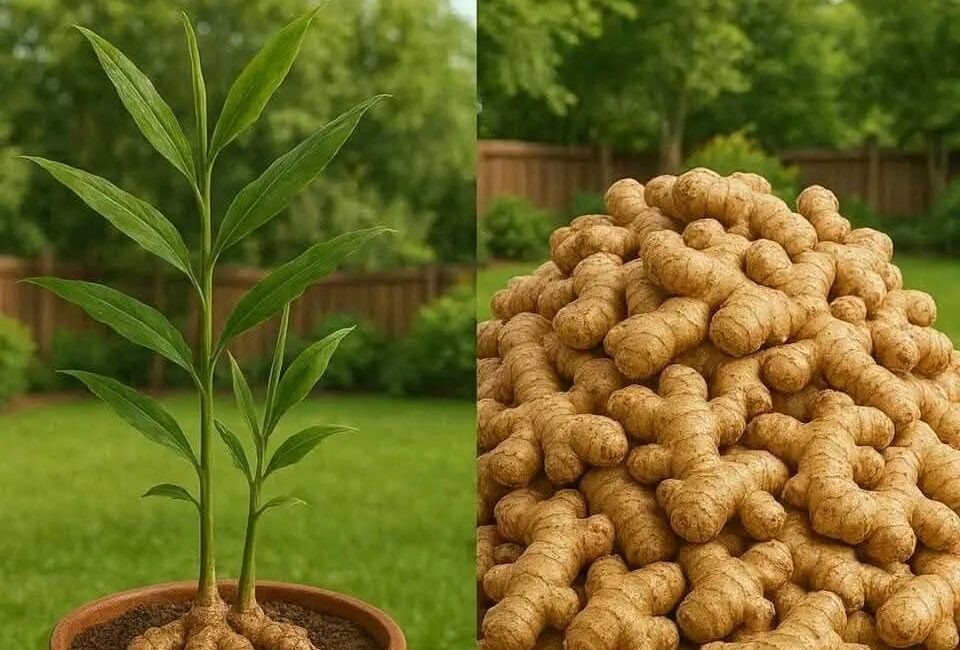
Place the rhizome horizontally with the buds facing upward. This orientation allows shoots to grow easily toward the surface.
Step 3: Covering and Watering
Cover the ginger with 2–5 cm of soil and water thoroughly. The soil should be moist but not saturated.
Step 4: Placement
Place the pot in a warm area with indirect sunlight. Ginger does not require intense direct sunlight, especially in early stages.
Caring for Your Ginger Plant: Mastering the Growth Cycle
Growing ginger successfully depends on consistent care rather than intense effort.
Watering: Balance is Everything
Ginger thrives in moist soil but is highly sensitive to overwatering.
- Too little water → slow growth
- Too much water → root rot
The key is to keep the soil consistently damp, not soaked.
Temperature and Humidity
Ginger prefers warm, humid conditions. Ideal temperature:
- Between 20°C and 30°C
If you live in a cooler climate, indoor growing is highly effective.
Feeding the Plant
Use a balanced liquid fertilizer every few weeks. This supports:
- Leaf growth
- Rhizome expansion
- Overall plant health
Understanding Ginger Growth: What Happens Underground
While the leaves grow above the soil, the real activity happens below.
The rhizome expands horizontally, producing new nodes and shoots. Over time, this creates a dense network of ginger underground.
This is why patience is essential. Ginger is not a fast-growing plant. It takes months before you see significant results.
Harvesting Ginger: Timing and Technique
When is Ginger Ready?
Ginger typically takes 8 to 10 months to mature. Signs include:
- Yellowing leaves
- Slower growth
- Drying stems
How to Harvest Without Killing the Plant
You do not need to remove the entire plant.
Instead:
- Gently dig around the edges
- Cut a portion of the rhizome
- Leave the rest to continue growing
This method allows for continuous harvesting.
Common Problems and How to Solve Them
Even though ginger is easy to grow, some issues may arise.
Root Rot
Cause: Overwatering
Solution: Improve drainage and reduce watering frequency
Yellow Leaves
Cause: Nutrient deficiency or overwatering
Solution: Adjust fertilizer and watering routine
Pests
Common pests include:
- Aphids
- Spider mites
Use natural solutions like neem oil to manage them.
Creating an Endless Supply: The Secret Strategy
The key to never buying ginger again lies in staggered planting.
How It Works
Instead of planting all your ginger at once:
- Plant new rhizomes every few months
- Harvest at different times
- Always keep some growing
This creates a cycle where fresh ginger is always available.
Ginger as a Lifestyle: Beyond Gardening
Growing ginger is not just about food. It reflects a deeper shift toward independence and intentional living.
You move from being a passive consumer to an active creator.
This mindset can extend to other areas:
- Growing herbs
- Managing diet more consciously
- Reducing reliance on processed foods
Advanced Tips for Maximum Yield
Once you master the basics, you can optimize your results.
Use Mulching
Mulch helps retain moisture and regulate temperature.
Rotate Soil Nutrients
Refresh the soil periodically to maintain fertility.
Indoor-Outdoor Transition
Move your plant outdoors in warm months and indoors during cold periods.
The Deeper Lesson: Patience and Growth
Ginger teaches something important: growth takes time.
In a fast-paced world, waiting 8–10 months for a harvest may seem long. But this process builds patience and discipline.
It reminds you that not everything valuable is instant.
Conclusion: A Small Pot, A Big Transformation
Growing ginger at home may seem like a small act, but its impact is profound. It transforms your relationship with food, teaches valuable life skills, and provides a continuous, natural resource right at your fingertips.
As highlighted in your original content , the simplicity of growing ginger in a pot makes it accessible to almost anyone, regardless of space or experience. With just one container, a piece of rhizome, and consistent care, you can create an endless cycle of growth.
And once you start, you may find that ginger is only the beginning.
Because the real transformation is not just in what you grow—but in how you start seeing control, independence, and self-sufficiency in your own life.