Introduction: When “Easy” Becomes Unexpectedly Difficult
Some challenges don’t intimidate you at first—they invite you in.
You glance at them and think, This is simple. I’ve seen this before. I’ll solve it quickly. There is no sense of threat, no anticipation of difficulty. Just a calm confidence that your brain will recognize the pattern and deliver the answer almost instantly.
And then… it doesn’t.
Seconds pass. Then minutes. You try again. You look harder. You begin to doubt your first impression. What once seemed obvious becomes confusing. What looked simple becomes strangely complex.
This is the unique power of certain visual puzzles.
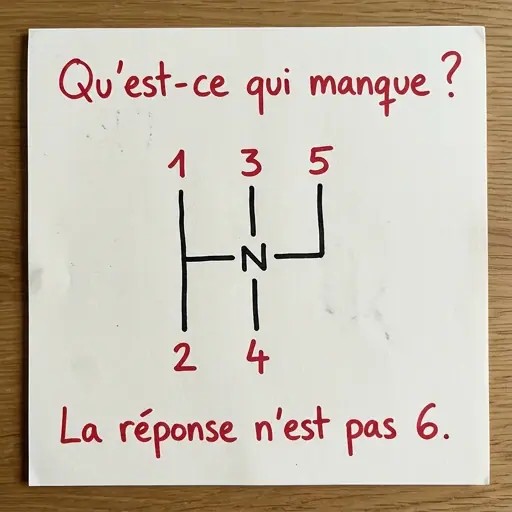
The challenge described here is one of those deceptively simple riddles. At first glance, it appears to be a sequence—something logical, structured, mathematical. Your brain immediately activates familiar tools: pattern recognition, numerical reasoning, sequence analysis.
But those tools fail you.
Because the puzzle is not asking what you think it is asking.
And that is where the real lesson begins.
The Illusion of Simplicity: Why Your Brain Takes the Wrong Path
When you are presented with a sequence of symbols, numbers, or shapes, your brain does not start from zero.
It starts from habit.
Automatic Thinking: Your Brain’s Default Mode
Your brain is designed to save time and energy. To do that, it uses automatic thinking patterns, also known as cognitive shortcuts.
So when you see:
- A structured sequence
- Repeated elements
- A missing piece
Your brain immediately assumes:
👉 “This is a logical or mathematical pattern.”
This is not a conscious decision. It happens instantly.
Why This Is a Problem
The puzzle is built on a trick:
👉 It uses familiar visual structure to push you into the wrong type of thinking.
You are not supposed to calculate anything.
But your brain insists on trying.
The Real Nature of the Puzzle: It Is Not Mathematical
This is the turning point.
The puzzle is not about:
- Numbers
- Equations
- Logical formulas
It is about recognition.
The missing element is not hidden in a calculation.
It is hidden in plain sight.
The Solution: The Missing “R”
After frustration, confusion, and repeated attempts, the answer appears:
👉 The missing symbol is the letter R.
At first, this may feel surprising. Even disappointing.
You might think:
- “That’s too simple.”
- “I should have seen that.”
- “Why didn’t I recognize it?”
But the answer becomes clear when you shift your perspective.
The Key Insight: It Represents a Gear Shift Pattern
The sequence is not abstract.
It is familiar.
It represents the layout of a manual car gear shift.
Standard Manual Gear Layout
Most manual transmission vehicles follow a recognizable pattern:
- First gear
- Second gear
- Third gear
- Fourth gear
- Fifth gear
- Reverse gear (R)
The puzzle visually encodes this pattern.
But instead of presenting it clearly, it disguises it.
Why Most People Fail: The Trap of Overthinking
This puzzle does not test intelligence.
It tests flexibility.
The Overthinking Trap
Most people fail because they:
- Assume complexity
- Search for hidden formulas
- Ignore obvious interpretations
They believe:
👉 “If it’s a puzzle, it must be complicated.”
But that assumption is exactly what blocks the solution.
The Psychology Behind the Mistake
To understand why this happens, you need to explore how your brain processes information.
1. Functional Fixedness
Functional fixedness is the tendency to see things only in their usual role.
In this puzzle:
- You see symbols as abstract elements
- You do not consider they could represent something real
Your brain refuses to reinterpret them.
2. Mental Set: Sticking to Familiar Strategies
Click page 2 to continue