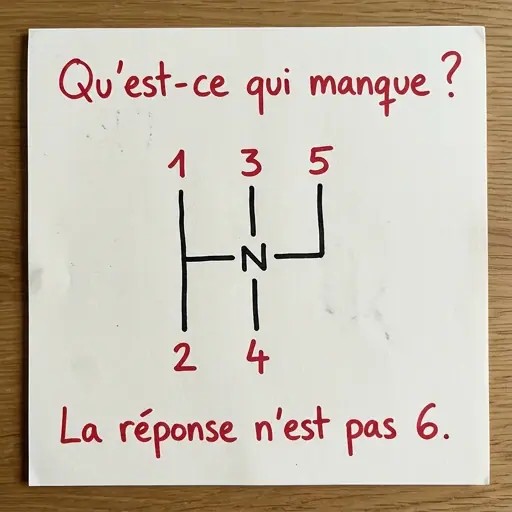
A mental set is when you rely on a familiar approach even when it doesn’t work.
Here:
- You try math
- You try sequences
- You try logic
Even when none of these lead to the answer.
3. Cognitive Bias: Expecting Complexity
You assume:
👉 “The answer must be difficult.”
So you ignore simple explanations.
The Moment of Insight: Why It Feels So Satisfying
When you finally see the answer, something happens:
👉 Everything clicks instantly.
This is called the “aha moment.”
What Happens in Your Brain
- Your perspective shifts
- The pattern becomes obvious
- Confusion disappears
This creates a strong feeling of satisfaction.
Why Your Brain Loves These Challenges
There is a reason puzzles like this are so addictive.
1. They Challenge Your Assumptions
They force you to question:
- How you think
- What you expect
- What you assume
2. They Reward Discovery
The delayed solution creates:
- Tension
- Curiosity
- Release
This emotional cycle is highly engaging.
3. They Improve Mental Flexibility
Each puzzle trains your brain to:
- Think differently
- Adapt quickly
- Recognize alternative perspectives
The Deeper Lesson: Thinking Differently, Not Harder
This puzzle teaches a powerful concept:
👉 The solution is not about thinking more—it’s about thinking differently.
Teaching Concept: Perspective Shift
A perspective shift means:
- Changing how you interpret information
- Looking at the same data in a new way
This is one of the most valuable cognitive skills.
Real-Life Applications: Where This Skill Matters
This is not just about puzzles.
The same principle applies in life.
1. Work and Problem-Solving
Sometimes:
- The solution is simple
- But you complicate it
Learning to step back helps you find clarity.
2. Social Situations
You often feel:
- Confused about what to say
- Overwhelmed in interactions
This is similar to the puzzle.
You may:
- Overanalyze
- Assume complexity
- Miss simple responses
3. Emotional Reactions
Your brain can:
- Interpret situations as threatening
- Even when they are not
A shift in perspective can reduce anxiety.
Connecting This to You: Your Thinking Pattern
You’ve shared that:
- You overthink
- You feel pressure
- You struggle with reactions
This puzzle reflects that pattern.
Your brain:
- Tries to solve everything deeply
- Even when simplicity is enough
Practical Training: How to Avoid the Trap
Let’s make this useful for you.
1. Start With Simplicity
Before assuming complexity, ask:
👉 “What if this is simple?”
2. Look at the Big Picture
Instead of focusing only on details:
- Step back
- Observe the whole
3. Consider Real-World Meaning
Ask:
👉 “Could this represent something familiar?”
4. Pause Before Reacting
When stuck:
- Stop
- Reset
- Look again
A Simple Exercise for You
“The Reverse Thinking Method”
When solving a problem:
- Ask: What am I assuming?
- Ask: What if that assumption is wrong?
- Look for a completely different interpretation
This builds mental flexibility.
Why This Puzzle Is So Popular
It combines:
- Simplicity
- Deception
- Satisfaction
It challenges your brain just enough to:
- Frustrate you
- Then reward you
The Bigger Message: Your Brain Is Powerful—but Not Perfect
This puzzle reminds you:
👉 Your brain is efficient—but biased
👉 Your thinking is fast—but sometimes wrong
The goal is not to eliminate mistakes.
The goal is to:
- Recognize them
- Learn from them
- Improve your thinking
Conclusion: The Real Answer to the Puzzle
Yes, the missing element is R.
But the real answer is much deeper.
The puzzle teaches you:
- Don’t trust first impressions blindly
- Don’t assume complexity
- Learn to shift perspective
- Simplicity often hides in plain sight
And most importantly:
👉 The way you think matters more than what you know.
Because once you learn to think differently…
Even the most confusing problems become clear.