Introduction: A Simple Image, A Deep Question
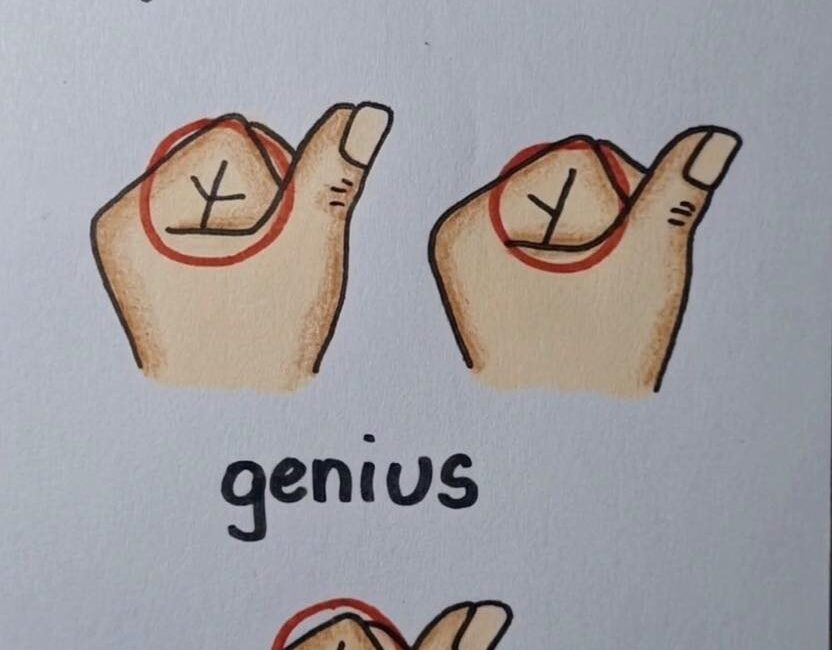
At first glance, the image seems playful, almost innocent. Three drawings of a hand, each labeled with a word: “poor,” “rich,” and “genius.” The only visible difference lies in how the thumb is positioned around what appears to be a coin marked with a currency symbol.
Then comes the question: “Which one are you?”
It feels like a game. A quick personality test. Something light.
But underneath this simplicity lies something much deeper—a reflection of how we categorize people, how we define intelligence and success, and how easily the human mind accepts symbolic shortcuts to explain complex realities.
This article will take you far beyond the surface of this image. You will learn not just what it represents, but why it resonates so strongly, how it connects to your mindset, your identity, and even your emotional patterns. Most importantly, you will learn how to interpret these kinds of ideas intelligently—without falling into misleading or limiting beliefs.
Because the real question is not which one you are.
The real question is: How do you think—and how can you grow?
The Visual Breakdown: What the Image Suggests
Before we analyze deeply, let’s clearly understand what the image is presenting.
There are three hand positions:
- The first is labeled “poor”
- The second is labeled “rich”
- The third is labeled “genius”
Each shows a slightly different way of holding or positioning the thumb around a coin-like symbol.
The implication is simple:
👉 The way you use your hand reflects your financial status or intelligence level.
At face value, it suggests:
- Certain behaviors = poverty
- Other behaviors = wealth
- A different behavior = genius
This is where the illusion begins.
Why This Image Feels Convincing
You might wonder: Why do people even take this seriously?
The answer lies in how your brain works.
1. The Brain Loves Patterns
Your brain is constantly trying to find patterns, even when none exist.
When you see:
- Clear labels (poor, rich, genius)
- Simple visual differences
- A direct question
Your brain tries to connect them.
It thinks:
“There must be meaning here.”
But not all patterns are real.
2. Authority Illusion
When something is presented confidently, your brain assumes it is based on knowledge.
Even without proof, the image creates a sense of authority.
It feels like:
- A psychological test
- A behavioral insight
- A hidden truth
But in reality, it is just a symbolic representation.
3. Identity Trigger
The most powerful part of the image is the question:
👉 “Which one are you?”
This forces you to:
- Compare yourself
- Choose a category
- Define your identity
And humans naturally want to belong to a category—especially a positive one like “rich” or “genius.”
The Truth: There Is No Scientific Basis
Let’s be very clear:
👉 The way you hold your hand has no proven connection to your wealth, intelligence, or success.
There is:
- No psychological research supporting this
- No neurological evidence
- No behavioral science linking hand position to mindset
This type of image is what we call a visual myth.
So Why Does It Matter?
Because even if the image is not scientifically true, the ideas behind it are worth exploring.
Each label—poor, rich, genius—represents a mindset.
And mindset is real.
The “Poor” Mindset: What It Really Means
The word “poor” in this context is not about money.
It represents a way of thinking.
Characteristics of a Limiting Mindset
A person stuck in a limiting mindset may:
- Focus on scarcity (“I don’t have enough”)
- Fear taking risks
- Avoid opportunities
- Believe success is out of reach
Psychological Pattern
This mindset is driven by:
- Fear
- Past experiences
- Lack of confidence
Teaching Concept: Scarcity vs Abundance
- Scarcity mindset: There is not enough
- Abundance mindset: There are opportunities
This is one of the most important concepts you can learn.
The “Rich” Mindset: Beyond Money
Being “rich” here is not just about having money.
It represents a mindset of growth and opportunity.
Characteristics of a Growth-Oriented Mindset
- Sees opportunities instead of obstacles
- Invests time and energy wisely
- Takes calculated risks
- Learns from failure
Psychological Pattern
This mindset is built on:
- Confidence
- Long-term thinking
- Adaptability
Teaching Concept: Investment Thinking
Rich thinking focuses on:
- Investing in skills
- Investing in knowledge
- Investing in relationships
Not just money.
The “Genius” Mindset: The Deepest Level
The “genius” label is the most interesting.
It suggests not just success—but a different way of thinking.
Characteristics of a High-Level Thinker
Click page 2 to continue