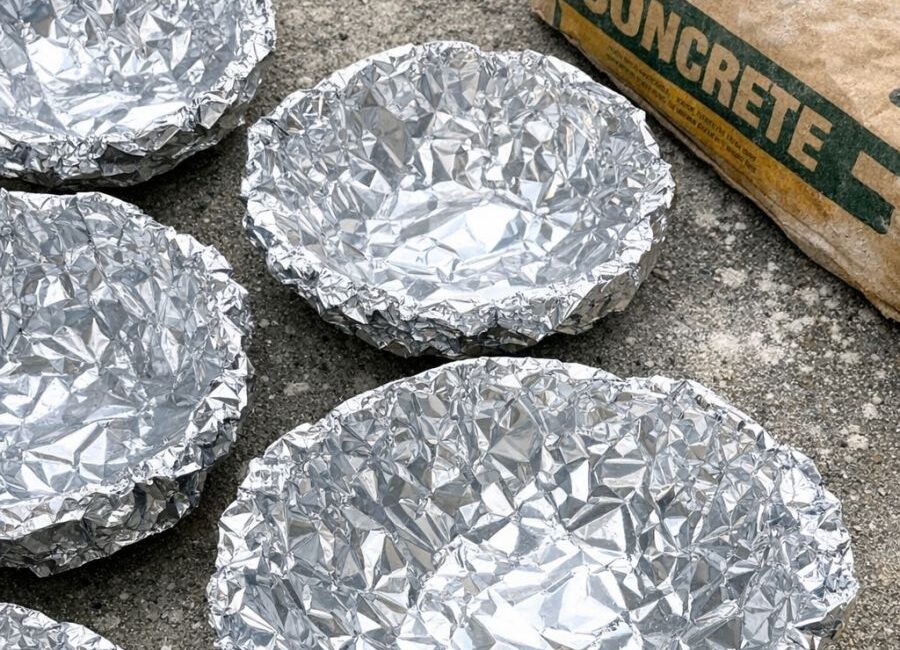
Once poured into the textured foil molds, the concrete begins capturing every tiny detail.
This stage feels almost like casting a sculpture.
The weight of the concrete presses deeply into the folds, preserving the organic patterns permanently.
Even before drying, the stones already hint at their final artistic appearance.
Why Nature-Inspired Forms Feel Emotionally Calming
Humans naturally respond positively to organic forms and textures.
Research in environmental psychology consistently shows that nature-inspired design elements contribute to feelings of relaxation and emotional well-being.
The irregular textures created by the foil resemble:
- Weathered stone
- River rock
- Eroded surfaces
- Geological formations
- Natural terrain
This subconscious connection to nature makes the stepping stones feel calming and harmonious within outdoor environments.
Step Four: Allowing the Concrete to Cure
Patience becomes important during curing.
As the concrete hardens slowly, the textures become permanently embedded into the surface.
This waiting period often increases anticipation because the final reveal remains partially mysterious.
The unpredictability of the textures adds excitement to the process.
Step Five: Peeling Away the Aluminum Foil
This is the magical moment.
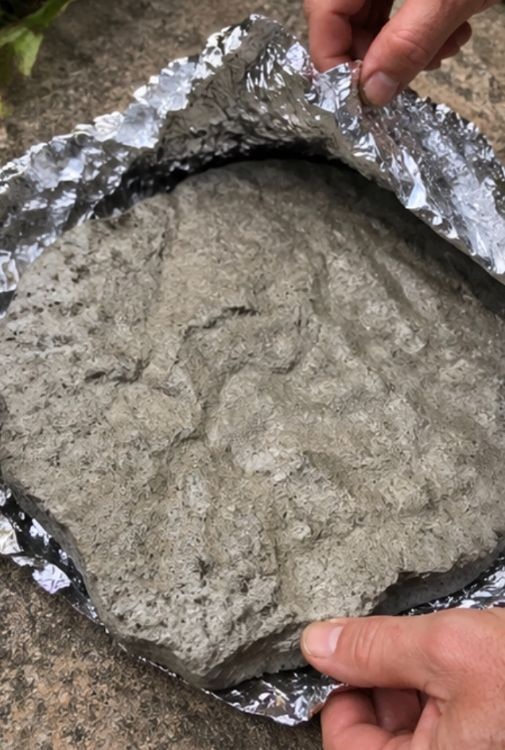
Once the foil is peeled back, the textured concrete surface finally emerges in full detail.
The reveal often surprises people because the stones look far more artistic than expected.
The random folds create dramatic ridges, subtle valleys, layered textures, and sculptural surfaces that resemble expensive handcrafted landscape pieces.
The aluminum foil completely disappears from the visual identity of the project.
What remains looks entirely natural and intentional.
Why Light Changes the Appearance of Textured Stone
One reason these stepping stones feel so visually rich is because their surfaces interact beautifully with sunlight.
The raised areas catch highlights while recessed folds create shadows.
This creates constant visual movement throughout the day.
Morning light produces softness.
Midday light sharpens contrast.
Evening light enhances warmth and shadow depth.
This dynamic interaction makes the stones feel alive and sculptural rather than static.
Best Places to Use Textured Stepping Stones
These stones work beautifully in many outdoor settings.
Garden Paths
Create artistic walkways through greenery.
Gravel Landscapes
Contrast beautifully against minimalist stone beds.
Zen Gardens
Enhance peaceful meditative aesthetics.
Patio Transitions
Blend hardscape and natural areas elegantly.
Outdoor Seating Areas
Add sculptural visual interest beneath furniture.
Around Water Features
Complement fountains and ponds beautifully.
Why Neutral Tones Work So Well in Landscape Design
Concrete’s soft gray tones pair naturally with outdoor environments.
Neutral colors allow surrounding plants, textures, and materials to shine while still contributing sophistication.
Gray especially works beautifully because it complements:
- Green foliage
- Warm wood
- Black metal
- White gravel
- Natural stone
- Earthy pottery
This versatility makes concrete ideal for nearly every landscape style.
The Rise of Minimalist Garden Design
Modern gardens increasingly embrace simplicity and intentional composition.
Minimalist landscapes focus on:
- Texture
- Shape
- Balance
- Material contrast
- Open space
- Sculptural elements
Rather than overcrowding spaces with excessive decoration, minimalist gardens rely on fewer but more impactful design features.
Textured stepping stones fit perfectly into this philosophy because they function as both practical pathways and artistic focal points.
Creative Variations for Personalized Designs
One reason this project continues inspiring DIY enthusiasts is because customization possibilities are endless.
Natural Pigments
Add earthy color tones such as terracotta, charcoal, or sand.
Embedded Stones
Press pebbles or crystals into wet concrete.
Mosaic Accents
Add broken tile fragments for artistic detail.
Leaf Impressions
Embed leaves for botanical textures.
Metallic Powder
Create subtle shimmer effects.
Larger Sculptural Shapes
Experiment with oversized irregular molds.
Mixed Texture Techniques
Combine foil with fabric or mesh patterns.
Each variation changes the visual personality of the stones dramatically.
Why Handmade Garden Features Feel More Meaningful
Mass-produced garden décor often lacks emotional identity.
Handmade outdoor elements feel personal because they reflect creativity and intentional effort.
Every stepping stone becomes part of the creator’s artistic vision.
This emotional connection changes how people experience their outdoor spaces.
Gardens become more than landscaped areas.
They become curated environments filled with personal expression.
The Emotional Comfort of Outdoor Living Spaces
Modern lifestyles increasingly push people toward creating peaceful outdoor retreats.
Gardens now function as places for:
- Relaxation
- Reflection
- Entertaining
- Mental escape
- Emotional restoration
Decorative elements that feel natural and artistic contribute strongly to these calming atmospheres.
The textured stepping stones help create environments that feel grounded, serene, and visually harmonious.
Why Organic Shapes Feel More Sophisticated Than Perfect Symmetry
Perfectly uniform designs can sometimes feel sterile or artificial.
Organic irregularity often appears more luxurious because it resembles handcrafted artistry and natural formation.
This is why high-end designers frequently incorporate asymmetry and texture into:
- Architecture
- Furniture
- Landscaping
- Pottery
- Lighting
- Decorative objects
The foil textures naturally create this sophisticated irregularity without requiring advanced design expertise.
Sustainable Creativity and Conscious Decorating
Projects like this align perfectly with the growing movement toward sustainable creativity.
People increasingly value:
- Resourcefulness
- Handmade craftsmanship
- Upcycling
- Thoughtful consumption
- Long-lasting design
Using simple materials creatively feels far more intentional than purchasing disposable mass-produced décor.
This shift reflects changing ideas about luxury itself.
Today, authenticity and creativity often feel more valuable than expensive price tags.
Common Mistakes to Avoid
Although beginner-friendly, several details matter greatly.
Overworking the Foil
Too much flattening reduces texture richness.
Excessive Water in Concrete Mix
Weakens structural integrity.
Thin Concrete Layers
May crack more easily.
Rushing the Curing Process
Proper drying improves durability.
Overly Uniform Shapes
Organic irregularity creates more visual interest.
Why This DIY Trend Is Going Viral
This project combines nearly every element people love in transformation content:
- Cheap materials
- Dramatic before-and-after reveal
- Artistic results
- Organic texture
- Luxury-inspired appearance
- Outdoor design appeal
- Creative experimentation
The reveal stage especially captivates viewers because the aluminum foil leaves behind unexpectedly beautiful textures.
People enjoy seeing ordinary materials transformed into something sophisticated and sculptural.
Turning Construction Material Into Art
Perhaps the most fascinating aspect of this project is how it completely changes the perception of concrete itself.
Concrete stops feeling industrial and cold.
Instead, it becomes:
- Artistic
- Organic
- Sculptural
- Textured
- Elegant
This transformation reflects the broader evolution of modern design, where even traditionally utilitarian materials can become beautiful when approached creatively.
Final Thoughts on the Textured Aluminum Foil Stepping Stone Transformation
At first glance, aluminum foil and concrete seem far too ordinary to create anything extraordinary. Yet together, they produce textured stepping stones that feel artistic, luxurious, and deeply connected to modern landscape design.
This project captures everything people crave in contemporary outdoor décor:
- Organic beauty
- Handmade character
- Sculptural texture
- Sustainable creativity
- Affordable elegance
- Emotional warmth
- Minimalist sophistication
The random folds of crumpled foil create intricate patterns impossible to replicate perfectly, giving each stone a one-of-a-kind identity that feels naturally weathered and artisan-crafted. Once placed along a garden path or integrated into a peaceful outdoor retreat, the stones transform the surrounding environment into something more thoughtful, immersive, and visually captivating.
More importantly, the project reminds people that beautiful design does not require expensive materials or professional studios. Sometimes all it takes is imagination, experimentation, and the willingness to see artistic potential hidden inside the simplest everyday objects.
What emerges from the foil is more than a stepping stone.
It becomes a piece of functional outdoor art — a lasting reminder that creativity can turn even the most ordinary materials into something absolutely stunning.