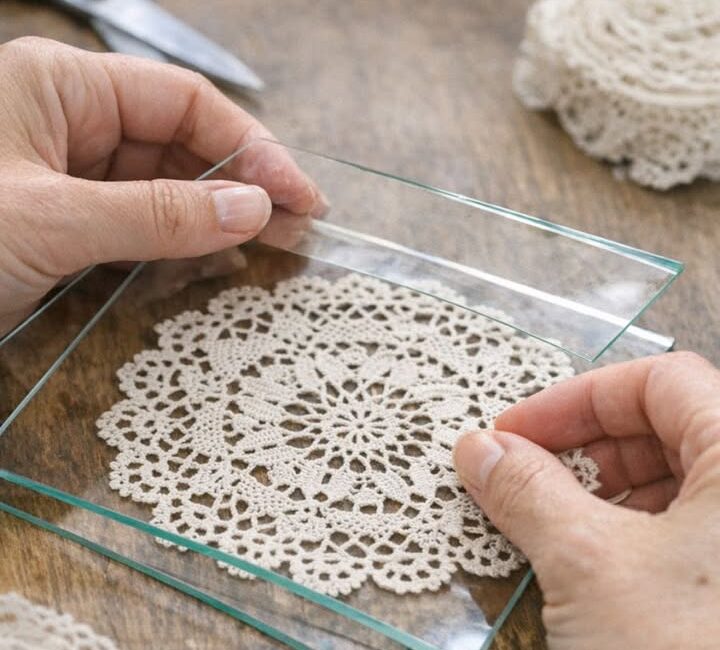
For years, vintage doilies sat quietly hidden inside drawers, antique trunks, linen cabinets, and forgotten storage boxes. Delicate, intricate, and deeply nostalgic, these handmade lace pieces were once treasured symbols of craftsmanship and domestic elegance. They decorated dining tables, armchairs, dressers, and tea trays in homes across generations. Yet as modern design trends evolved, many people began viewing them as outdated relics from another era.
Now, something unexpected is happening.
Creative decorators, DIY enthusiasts, vintage collectors, and interior designers are rediscovering the beauty of antique doilies in an entirely new way. Instead of using them traditionally, people are layering them between glass panels to create breathtaking decorative art pieces that blend vintage romance with modern sophistication.
The transformation is astonishing.
Once sealed between two transparent panes of glass, the delicate patterns appear suspended in air like floating lace sculptures. Natural light filters through the fabric, highlighting every embroidered detail, every stitched curve, and every fragile texture in ways that ordinary display methods never could.
The final result feels:
- elegant,
- artistic,
- luxurious,
- nostalgic,
- and unexpectedly modern all at once.
Many people who see these framed glass creations assume they came from:
- boutique home décor stores,
- artisan galleries,
- high-end antique markets,
- or expensive custom interior design studios.
But in reality, they often begin with forgotten doilies hidden inside family storage boxes or discovered at thrift stores and flea markets for just a few dollars.
That contrast between humble materials and stunning final presentation is exactly why this DIY trend is suddenly everywhere.
More than just décor, these glass panel creations represent something emotionally powerful:
the preservation of history through modern design.
They transform forgotten heirlooms into statement pieces capable of bridging generations, styles, and memories in a single object.
And perhaps most beautifully of all, they prove that even the most fragile remnants of the past can become strikingly relevant again when viewed through a creative lens.
Why Vintage Decor Is Experiencing a Massive Revival
The resurgence of vintage doily art is part of a much larger cultural shift happening in interior design.
For years, homes leaned heavily toward ultra-minimalism:
- plain surfaces,
- neutral palettes,
- mass-produced furniture,
- and sleek industrial aesthetics.
While visually clean, many spaces eventually began feeling emotionally cold or impersonal.
Now people are craving interiors that feel:
- layered,
- meaningful,
- textured,
- and emotionally rich.
Vintage décor provides exactly that.
Older handmade objects carry:
- craftsmanship,
- history,
- individuality,
- and emotional depth that modern factory-produced items often lack.
Doilies, in particular, hold strong nostalgic power because they are associated with:
- grandmothers,
- family traditions,
- handmade artistry,
- and domestic warmth.
By reimagining them in contemporary ways, people can preserve that emotional connection without making spaces feel old-fashioned.
The Surprising Beauty of Lace Between Glass
One reason this DIY project feels so visually striking is because glass changes how the eye experiences texture.
Normally, doilies lie flat against tables or furniture surfaces.
Between glass panels, however, they become almost sculptural.
The transparency creates:
- depth,
- shadow,
- light reflection,
- and floating dimension.
Every tiny stitched detail becomes amplified.
Natural sunlight passing through the glass creates delicate shadows on nearby walls, making the artwork feel dynamic and alive throughout the day.
The effect feels both soft and architectural simultaneously.
That balance is rare in home décor.
Why Handmade Textures Feel So Luxurious
Luxury interior design is not always about expensive materials.
Often, true sophistication comes from:
- texture,
- craftsmanship,
- uniqueness,
- and emotional resonance.
Handmade lace instantly introduces visual richness because of its complexity.
Each doily contains:
- intricate patterns,
- layered stitching,
- geometric repetition,
- and organic imperfections created by human hands.
Unlike machine-perfect surfaces, handmade textiles feel authentic and intimate.
When displayed elegantly between glass panels, the lace gains museum-like importance.
Something once ordinary suddenly feels collectible.
The Emotional Power of Repurposing Family Heirlooms
One reason this trend resonates so deeply is because many people already own vintage doilies connected to family history.
Perhaps they belonged to:
- a grandmother,
- great-aunt,
- mother,
- or older relative.
Instead of leaving these heirlooms hidden in storage, this project transforms them into visible daily art.
That emotional shift matters.
It preserves memory while allowing the object to continue living within the home rather than slowly fading away unseen.
For many people, these glass panels become more than decoration.
They become emotional storytelling pieces.
How to Create Vintage Doily Glass Panel Art
Despite the sophisticated appearance, this DIY project is surprisingly accessible.
You do not need advanced artistic training or expensive equipment.
With careful arrangement and attention to detail, almost anyone can create stunning results.
Materials You Will Need
To begin, gather:
- Two glass panels
- Vintage doilies
- Glass cleaner
- Microfiber cloth
- Invisible tape or spray adhesive
- Picture frame clips or panel clips
- Hanging hardware if needed
Optional additions include:
- pressed flowers,
- botanical elements,
- pastel dye,
- gold edging,
- antique frames,
- or LED backlighting.
The simplicity of the materials is part of the project’s charm.
Step 1: Clean the Glass Thoroughly
Clean glass is essential because fingerprints and dust become highly visible once the panels are assembled.
Use glass cleaner and a microfiber cloth carefully.
Crystal-clear surfaces maximize:
- light transmission,
- visibility,
- and elegance.
This step immediately contributes to the polished luxury appearance.
Step 2: Curate and Arrange the Doilies
This is where the creative process truly begins.
Experiment with:
- overlapping patterns,
- layered compositions,
- asymmetrical placement,
- or centered arrangements.
Different combinations create completely different moods.
Symmetrical Layouts
Symmetrical arrangements feel:
- refined,
- balanced,
- and traditional.
These work beautifully in classic or farmhouse interiors.
Organic Layering
Looser layered arrangements feel:
- artistic,
- bohemian,
- and contemporary.
This approach creates more visual movement and depth.
Minimalist Placement
Using only one or two carefully chosen doilies creates dramatic negative space and modern elegance.
This style works especially well in minimalist homes.
Step 3: Secure the Arrangement Carefully
Once satisfied with the design, secure the doilies gently using:
- invisible tape,
- or light spray adhesive.
The goal is preserving delicate fabrics without damaging them.
Too much adhesive can ruin vintage textiles permanently.
Gentleness matters.
Step 4: Layer the Second Glass Panel
Carefully place the second panel over the arrangement.
This instantly transforms the loose fabrics into a cohesive art piece.
The transparency creates the illusion that the lace is suspended within the glass itself.
At this stage, most people realize how unexpectedly sophisticated the project looks.
Step 5: Secure the Panels Together
Use clips or framing hardware to hold the glass securely.
Metal clips create industrial-modern contrast, while antique brass hardware enhances vintage warmth.
The hardware itself becomes part of the aesthetic.
Step 6: Display the Finished Artwork
This project offers remarkable versatility because it can function in multiple ways:
- wall art,
- tabletop décor,
- decorative trays,
- hanging window panels,
- or layered gallery wall pieces.
The display location dramatically affects the atmosphere.
Why Natural Light Makes These Panels Look Magical
One of the most stunning aspects of glass doily art is its relationship with sunlight.
During daylight hours, light passes through the lace patterns and creates:
- soft shadows,
- layered reflections,
- and glowing textures.
This interaction changes constantly throughout the day.
Morning light creates softness.
Afternoon sunlight creates stronger contrast.
Evening lighting adds warmth and intimacy.
The artwork feels alive because it continuously changes visually.
The Rise of Romantic and Soft Interiors
The popularity of this trend also reflects broader design movements emphasizing softness and emotional comfort.
Many people are moving away from harsh minimalism toward interiors that feel:
- comforting,
- nostalgic,
- romantic,
- and layered.
Vintage lace naturally supports this atmosphere.
Its softness contrasts beautifully against:
- concrete,
- wood,
- metal,
- glass,
- or neutral modern interiors.
This balance creates visual harmony.
Why Transparent Decor Feels So Sophisticated
Glass décor has long been associated with elegance because it creates:
- openness,
- reflection,
- and visual lightness.
Unlike heavy framed artwork, glass panels feel airy and refined.
They interact with surrounding space rather than visually blocking it.
This quality allows vintage lace to feel modern instead of overly traditional.
Creative Variations That Make the Artwork Even More Stunning
One reason this DIY trend continues spreading rapidly is because customization possibilities are endless.
Click page 2 to continue