The Kitchen Habit That Quietly Divides Millions of Households
Walk into almost any family kitchen and you will eventually encounter one of the most surprisingly controversial food debates of modern domestic life:
Should butter stay on the counter… or inside the refrigerator?
For some people, the answer feels obvious.
Butter belongs in the fridge.
Cold.
Protected.
Safe from spoilage.
For others, especially in homes where certain traditions have lasted generations, butter sitting on the kitchen counter is completely normal. It rests comfortably inside a butter dish, soft enough to spread instantly onto bread, toast, pancakes, or warm baked goods.
No waiting.
No scraping frozen chunks across delicate bread.
No frustration.
And yet the moment someone notices butter sitting out for two or three days, panic often begins.
“Is that still safe?”
“Can butter spoil?”
“What if bacteria grows?”
“Can you get sick from it?”
The truth is more complicated than most people realize.
Butter occupies a strange middle ground between highly perishable dairy and surprisingly stable fat. Its composition makes it more resistant to spoilage than milk, cream, or soft cheeses, yet it is not completely immune to deterioration.
And this is where the real conversation begins.
Because the question is not simply whether butter can stay out.
The question is:
Under what conditions does butter remain safe, flavorful, and usable — and when does it quietly begin going bad without people noticing?
Why Butter Is Different From Other Dairy Products
To understand why butter behaves differently from milk or yogurt, you first need to understand what butter actually is.
Butter is primarily fat.
Roughly 80% of butter consists of milk fat, while the remaining portion contains:
- Water
- Milk solids
- Trace proteins
This composition matters enormously because bacteria thrive most aggressively in moist environments.
The lower the moisture content, the harder it becomes for many microorganisms to grow rapidly.
This is one reason butter lasts longer than many dairy products even outside refrigeration.
The Ancient History of Butter Storage
Long before refrigerators existed, people still consumed butter regularly.
This historical fact alone reveals something important:
butter has always possessed a degree of natural stability.
Traditional households used methods such as:
- Cool cellars
- Covered ceramic crocks
- Butter bells
- Salt preservation
- Underground storage
These techniques slowed spoilage enough to make daily use practical.
In many cultures, leaving butter out was not considered dangerous — it was simply normal life.
Modern refrigeration changed expectations dramatically, but it did not completely erase older storage habits.
Why Salted Butter Lasts Longer Than Unsalted Butter
One of the most important distinctions in butter storage is whether the butter is salted.
Salt acts as a natural preservative.
This matters because salt helps reduce microbial activity by creating an environment less favorable for bacterial growth.
Salted Butter
Salted butter generally tolerates room temperature better because:
- Salt slows spoilage
- Reduced microbial growth occurs
- Flavor remains stable longer
Unsalted Butter
Unsalted butter lacks this protective advantage.
Without salt, spoilage risks increase faster, especially in warm environments.
This is why unsalted butter typically requires stricter refrigeration practices.
What Actually Causes Butter to Go Bad?
Many people assume spoiled butter means dangerous bacteria immediately taking over.
But butter spoilage usually begins through a different process first:
Oxidation.
The Science of Oxidation: Why Butter Turns Rancid
Butter contains fats that react gradually with oxygen in the air.
This chemical process changes the structure of the fat molecules over time.
As oxidation progresses, butter develops:
- Sour smells
- Sharp flavors
- Bitter aftertastes
- “Paint-like” odors
- Unpleasant rancid notes
This process does not necessarily mean dangerous bacterial contamination immediately exists.
But it does mean the butter is deteriorating.
Heat, light, and air exposure accelerate oxidation significantly.
Why Butter Sometimes Smells “Off” Before It Becomes Dangerous
One fascinating aspect of food spoilage is that sensory changes often appear before severe microbial risk develops.
Human senses evolved partly to detect food deterioration.
This is why spoiled butter may smell unpleasant before becoming highly dangerous.
However, relying purely on smell is not always perfect because some microbial contamination can occur without dramatic odor changes.
Mold Growth: The Bigger Danger
Although butter’s low moisture content slows bacterial growth, mold can still develop under certain conditions.
Especially when:
- Butter is contaminated by dirty utensils
- The environment is humid
- Food particles are introduced
- Butter remains exposed too long
Visible mold means the butter should be discarded immediately.
Why Kitchen Temperature Changes Everything
One of the biggest variables in butter safety is ambient temperature.
A cool kitchen behaves very differently from a hot one.
Cooler Environments
In cooler climates or air-conditioned kitchens, butter remains stable longer.
Warm Kitchens
In hot or humid conditions, spoilage accelerates dramatically.
Heat speeds up:
- Oxidation
- Fat breakdown
- Moisture changes
- Microbial activity
Butter left out in a cool European-style kitchen behaves differently than butter sitting near a sunny stove during summer heat.
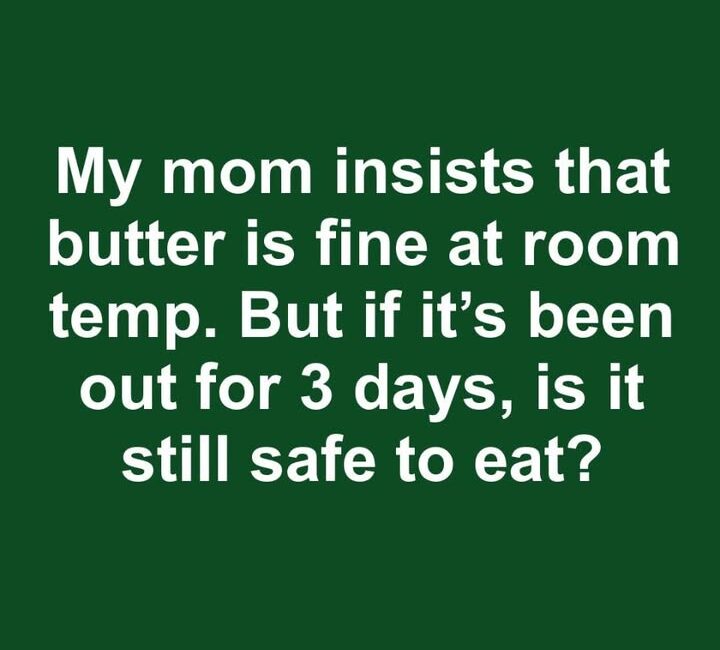
Is Butter Left Out for Three Days Actually Safe?
This is the question people argue about constantly.
And the answer is:
It depends.
Salted Butter
Salted butter stored properly in moderate room temperatures may still be safe after three days.
Especially if:
- Covered properly
- Protected from heat
- Stored cleanly
- Not contaminated by crumbs or dirty knives
Unsalted Butter
Unsalted butter becomes riskier much faster.
After several days at room temperature, flavor deterioration and spoilage potential increase significantly.
Why Butter Storage Became More Complicated in Modern Kitchens
Older homes often had naturally cooler storage spaces.
Modern kitchens sometimes create harsher conditions for butter because of:
- Central heating
- Warm appliances
- Bright lighting
- Smaller ventilation spaces
Ironically, modern environments can make traditional butter storage slightly less stable.
The Psychology Behind Soft Butter Preferences
People do not leave butter out only out of habit.
They leave it out because soft butter dramatically improves the eating experience.
Cold butter is frustrating.
It tears bread.
Breaks pastries.
Clumps unevenly.
Soft butter feels luxurious by comparison.
This emotional comfort explains why many households continue counter storage despite food safety debates.
Why Food Traditions Are Emotionally Powerful
Click page 2 to continue