Potluck culture created an entire category of American recipes designed around:
- Simplicity
- Transportability
- Shareability
- Broad appeal
The best potluck dishes follow important unwritten rules:
- Easy to serve
- Easy to eat standing up
- Familiar but slightly exciting
- Not too expensive
- Visually inviting
Pepper jelly dip succeeds on every level.
The Visual Psychology of This Dish
One overlooked reason this appetizer works so well is visual contrast.
The colors create instant appetite appeal:
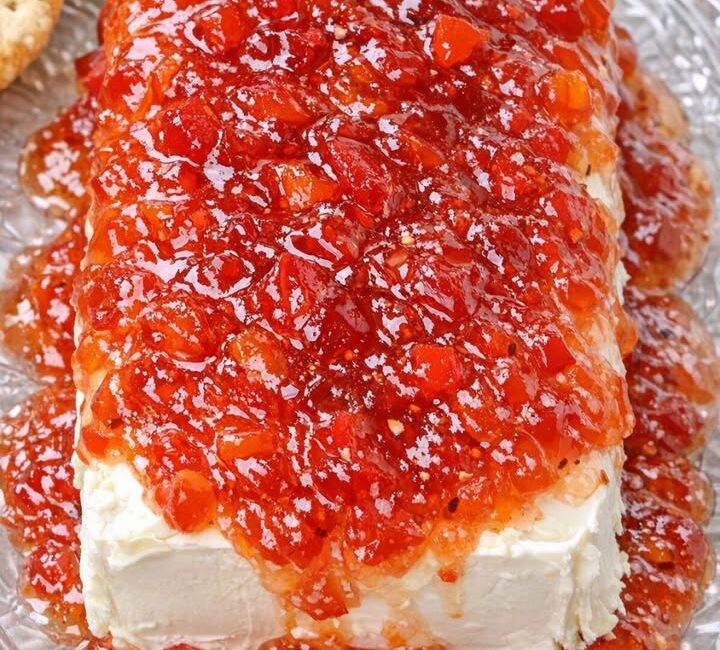
- Bright red jelly
- White cream cheese
- Golden crackers
Humans eat visually first.
The glossy jelly spilling down the edges of smooth cream cheese creates sensory anticipation before the first bite even happens.
It looks indulgent without appearing complicated.
Why Texture Matters More Than Most People Realize
Texture is one of the most powerful aspects of food enjoyment.
This dip creates multiple texture experiences simultaneously:
- Cold creaminess
- Sticky jelly softness
- Crisp cracker crunch
The brain loves textural variation because it keeps sensory stimulation active.
This is one reason ultra-soft foods or ultra-crunchy foods alone become less satisfying over time.
Contrast creates excitement.
The Hidden Luxury of Low-Effort Recipes
Modern food culture often glorifies difficulty.
Complicated recipes become status symbols.
But there is a different kind of luxury hidden inside effortless dishes:
the luxury of ease.
A recipe requiring almost no preparation creates freedom.
You can:
- Entertain without stress
- Prepare food quickly
- Focus on guests instead of cooking
- Assemble it at the last minute
This emotional convenience is part of the recipe’s appeal.
Why Guests Always Hover Around Appetizer Tables
Appetizers serve a unique social function.
They create informal interaction.
People gather around snack tables naturally because finger foods encourage movement and conversation rather than structured dining.
This pepper jelly dip works especially well socially because:
- It is easy to share
- Easy to approach
- Easy to eat casually
- Non-intimidating
People can take one cracker… then quietly return six more times.
The Strange Psychology of “Just One More Bite”
Highly satisfying foods often create a loop of sensory reward.
This dip achieves that because every bite resets the palate slightly.
The sweetness fades into spice.
The spice softens into creaminess.
The cracker crunch refreshes the texture experience.
The result feels balanced enough that the brain does not become fatigued quickly.
That balance creates repeat eating behavior.
Why Cream Cheese Is a Secret Weapon in Party Food
Cream cheese has become foundational in countless crowd-pleasing recipes because of its extraordinary adaptability.
It pairs well with:
- Sweet flavors
- Savory flavors
- Herbs
- Spices
- Fruits
- Smoked ingredients
Its fat content also creates satiety and mouthfeel that make foods feel indulgent quickly.
Why This Recipe Feels Nostalgic Even to First-Time Tasters
Some recipes trigger emotional comfort immediately even without personal childhood memories attached to them.
Why?
Because certain flavor combinations feel universally reassuring.
Creamy + sweet + salty + crunchy taps into deeply familiar sensory patterns found in many comfort foods across cultures.
This creates instant emotional accessibility.
The Art of Presentation Without Effort
One remarkable aspect of this dip is how elegant it can appear despite requiring almost no technical skill.
A smooth cream cheese block topped with glossy jelly automatically creates visual sophistication.
Simple presentation tricks elevate it further:
- Glass platters
- Symmetrical cracker arrangement
- Textured jelly drips
- Contrasting colors
The dish photographs beautifully while remaining deeply approachable.
Why Food That “Looks Homemade” Matters
People increasingly crave food that feels human rather than industrial.
Perfectly manufactured foods often feel emotionally cold.
This dip retains visible imperfections:
- Jelly drips unevenly
- Crackers shift naturally
- Scoops leave texture marks
These imperfections signal authenticity.
And authenticity creates emotional warmth.
The Holiday Power of Red and Green Pepper Jelly
Color psychology plays a huge role in seasonal food traditions.
Red pepper jelly naturally fits holiday aesthetics.
Green pepper jelly adds even stronger visual association with:
- Christmas gatherings
- Festive spreads
- Seasonal entertaining
People often underestimate how strongly color affects appetite and emotional response.
Why Easy Recipes Survive Generations
Complicated recipes often disappear over time because they require too much effort for everyday life.
Simple recipes survive because they are practical.
The pepper jelly dip survives across generations because it satisfies essential conditions:
- Minimal ingredients
- Fast assembly
- Reliable results
- Broad popularity
It becomes part of family memory through repetition.
The Social Status of “The Person Who Brought That Dip”
Every gathering has certain dishes that become associated with specific people.
“The brownie person.”
“The deviled egg person.”
“The famous casserole aunt.”
This pepper jelly dip often creates that phenomenon because people remember it intensely despite its simplicity.
Being known for an easy but beloved recipe creates a kind of culinary social identity.
Why No-Cook Recipes Feel Increasingly Valuable Today
Modern life leaves many people exhausted.
Long work hours, overstimulation, and constant obligations reduce energy for elaborate cooking.
Recipes requiring:
- No oven
- No stovetop
- No prep complexity
feel psychologically relieving.
This is one reason ultra-simple comfort recipes continue thriving.
How This Dip Quietly Balances Sophisticated Flavor Principles
Despite its simplicity, the recipe accidentally follows advanced culinary principles:
Fat Balance
Cream cheese provides richness.
Acid Contrast
Pepper jelly often contains vinegar brightness.
Heat Regulation
Spice creates stimulation without overwhelming.
Texture Layering
Crackers add crunch and structure.
Visual Contrast
Colors create appetite activation.
Great recipes often work because they satisfy multiple sensory systems simultaneously.
The Beauty of Food That Does Not Pretend to Be Healthy
One reason comfort foods remain emotionally powerful is honesty.
This dip does not pretend to be:
- A detox food
- A superfood
- A wellness trend
- A diet hack
It exists purely to create enjoyment.
And sometimes that straightforward pleasure feels refreshing in modern food culture.
Why Community Recipes Matter More Than Celebrity Recipes
Celebrity recipes often feel performative.
Community recipes feel lived-in.
The best neighborhood dishes survive because real people repeatedly made them successfully in real kitchens under real-life conditions.
That practicality creates trust.
A neighbor recommending a recipe often feels more convincing than professional marketing.
How Food Becomes Memory
Years later, people may forget entire conversations from gatherings.
But they remember certain dishes vividly.
Food attaches itself strongly to emotional memory because eating engages multiple senses simultaneously:
- Taste
- Smell
- Texture
- Visual cues
- Social atmosphere
This makes recipes emotionally durable.
Final Reflection: The 3-Ingredient Dip That Proves Simplicity Still Wins
At first glance, this recipe seems almost too simple to deserve attention.
Cream cheese.
Pepper jelly.
Crackers.
That’s all.
Yet somehow it consistently outperforms more elaborate appetizers because it understands something fundamental about human enjoyment:
People do not always want complexity.
Sometimes they want comfort.
Contrast.
Ease.
Pleasure.
Conversation.
Familiarity.
This Southern pepper jelly dip succeeds not because it tries to impress people with sophistication, but because it quietly delivers satisfaction in the most direct way possible.
It is the kind of recipe people discover accidentally, underestimate immediately, and then think about for days afterward.
And perhaps that is the true mark of legendary food.
Not how complicated it is.
But how impossible it becomes to stop eating once you start.