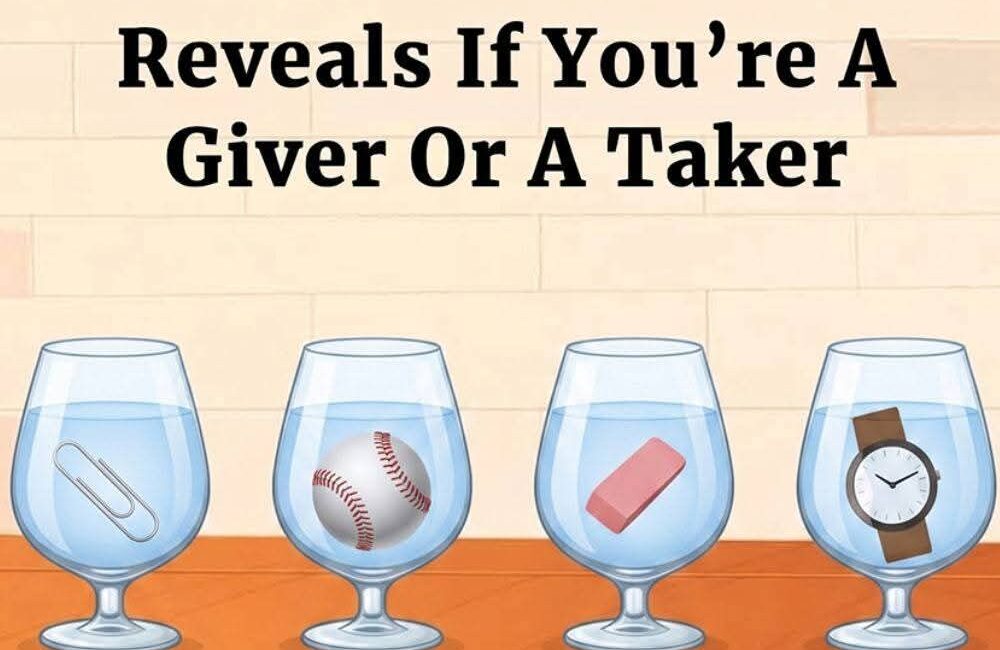
Timepieces evoke reflection; you ponder symbolism (time as resource). Personality Profile: High openness, introspective. Blends giver altruism with taker pragmatism—valuing experiences deeply. Careers: Artists, philosophers, strategists. Strengths: Visionary insight. Risk: Escapism ignores practicality.
A D-chooser might see glasses as “life’s vessels,” choosing based on emotional resonance.
Giver vs. Taker Spectrum: A-choosers lean giver (subtle contributions), B takers (bold grabs), C/D hybrids. Research shows givers outperform takers long-term in networks, as reciprocity compounds.
Psychological Underpinnings: Why Puzzles Like This Reshape Perception
These visual riddles exploit Gestalt principles (proximity, similarity) and confirmation bias. Brain imaging reveals prefrontal cortex activation for logical paths (A), amygdala for intuitive (B).
Historical roots: Similar to 19th-century “thinking puzzles” by Lewis Carroll or Gestalt tests by Max Wertheimer. Modern virality stems from social proof—sharing validates identity.
In therapy, such tests assess cognitive flexibility; in HR, predict job fit (detail roles favor A-types).
Real-World Applications: From Business to Personal Development
In Business and Career Success
Water treatment plants use displacement for accurate dosing—analysts (A-types) thrive. Chemical industry pros model reactor volumes, spotting “paperclip efficiencies.” Givers in sales focus on client needs (subtle details), outlasting takers.
Negotiation: Takers grab “big baseball wins”; givers uncover hidden value.
Health and Wellness Ties
Mindfulness training uses illusions to build awareness—choosing A correlates with better stress management via detail focus.
Education and Parenting
Teach kids via puzzles: fosters critical thinking, reducing taker tendencies toward entitlement.
Strategies to Sharpen Your Puzzle-Solving Skills
- Pause: Engage System 2—list variables (size, density).
- Measure Mentally: Estimate volumes.
- Test Hypotheses: Imagine removing objects.
- Practice Variants: Dice vs. marbles; ice cubes melting.
- Reflect: Journal choices—what biases surfaced?
Advanced: 3D model in mind—cylindrical volume πr²h minus object V.
Cultural Impact and Viral Phenomenon
Puzzles explode on social media for dopamine hits—quick solve, personality reveal. Global variants: Asian rice bowls with objects; European wine glasses. Celebrities share, amplifying reach.
In pop culture, akin to “spot the difference” in ads or IQ tests.
Variations and Challenging Extensions
- Floating Objects: Ice cube vs. cork—which displaces more?
- Irregular Glasses: Tapered shapes alter visuals.
- Multi-Object: Two paperclips vs. one baseball.
- Time Element: Watch “ticks,” adding pressure.
Solutions always hinge on displacement.
Criticisms and Deeper Philosophical Layers
Skeptics call personality links pseudoscience—correlations, not causation. Yet, fun frameworks spark self-awareness. Philosophically, echoes Plato’s cave: shadows (visuals) vs. truth (displacement).
In ethics, givers embody utilitarianism; takers egoism.
Final Thoughts: What Did You Choose?
Glass A reigns supreme, but your pick illuminates your lens on life. Givers thrive by seeing subtleties; takers seize the obvious. Embrace both—balance conquers all puzzles.
So, which glass did you pick? Share below—logic or instinct?