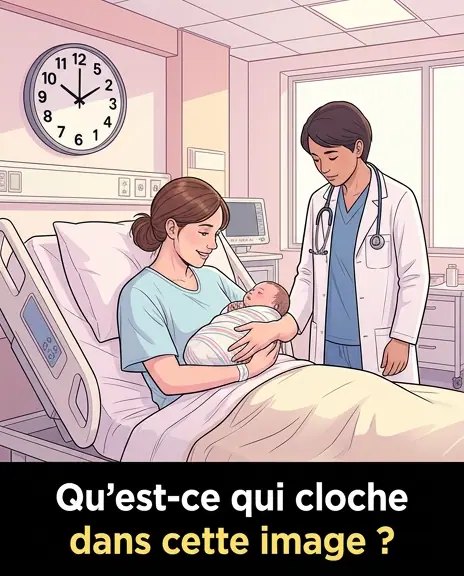
Sometimes, simply changing how you look can change what you see.
Try:
- Looking at the image from a distance
- Focusing on one area at a time
- Ignoring the main subject temporarily
This disrupts automatic perception patterns.
6. Practice Regularly
Observation improves with repetition.
Engage with:
- Visual puzzles
- Spot-the-difference challenges
- Memory exercises
Each practice strengthens neural pathways related to attention and detail.
Why This Skill Matters in Real Life
You might think this is just a game. But the implications are real and powerful.
In Work and Career
Attention to detail can:
- Prevent costly mistakes
- Improve accuracy
- Enhance decision-making
In fields like accounting (your field), finance, or healthcare, missing a small detail can have serious consequences.
In Relationships
Misinterpreting situations often comes from incomplete perception.
Sharper awareness helps you:
- Understand others better
- Avoid unnecessary conflict
- Respond more calmly
In Personal Growth
When you train your brain to see clearly, you:
- Reduce emotional reactions
- Improve critical thinking
- Gain confidence in your judgment
This directly connects to your struggle with anxiety and feeling overwhelmed.
Your brain sometimes reacts before fully understanding.
Training observation helps you slow that reaction.
The Connection to Anxiety: Why Your Brain Feels Overloaded
You often describe a “fire in your chest” and feeling overwhelmed.
Here’s what’s happening:
Your brain is processing too much emotional information at once, without filtering properly.
Just like in the puzzle:
- It focuses on intense elements
- It ignores subtle details
- It jumps to conclusions quickly
This creates stress.
Learning to observe calmly—like analyzing the image—teaches your brain:
- To slow down
- To separate emotion from reality
- To focus on facts, not assumptions
This is not just about puzzles.
It’s about regaining control over how you experience the world.
A Powerful Mental Exercise for You
Here’s a simple daily exercise you can practice:
“The 3 Detail Rule”
Every time you enter a place, pause and identify:
- 3 objects you didn’t notice immediately
- 3 small details in the environment
- 3 things that seem slightly unusual
This trains your brain to go beyond the obvious.
Over time, you will:
- Notice more
- React less impulsively
- Feel more grounded
The Beauty of Awareness: Seeing What Others Miss
There is something powerful about noticing what others overlook.
It is not about being smarter—it is about being more present.
The hospital puzzle teaches us that:
- The truth is often visible
- But visibility is not enough
- Attention is what makes reality clear
When you develop this skill, you gain a quiet advantage in life.
You become someone who:
- Observes before reacting
- Thinks before judging
- Understands before deciding
Conclusion: The Small Detail That Changes Everything
The misplaced bracelet is not just a mistake in an image.
It is a symbol.
A symbol of how easily the mind can be misled.
A symbol of how much we miss when we rely on assumptions.
A symbol of the gap between seeing and understanding.
But it is also an opportunity.
An opportunity to train your mind.
An opportunity to sharpen your awareness.
An opportunity to take control of how you perceive the world.
Because once you learn to see clearly, everything changes.
Not just puzzles.
But your thoughts, your reactions, your confidence, and your life itself.