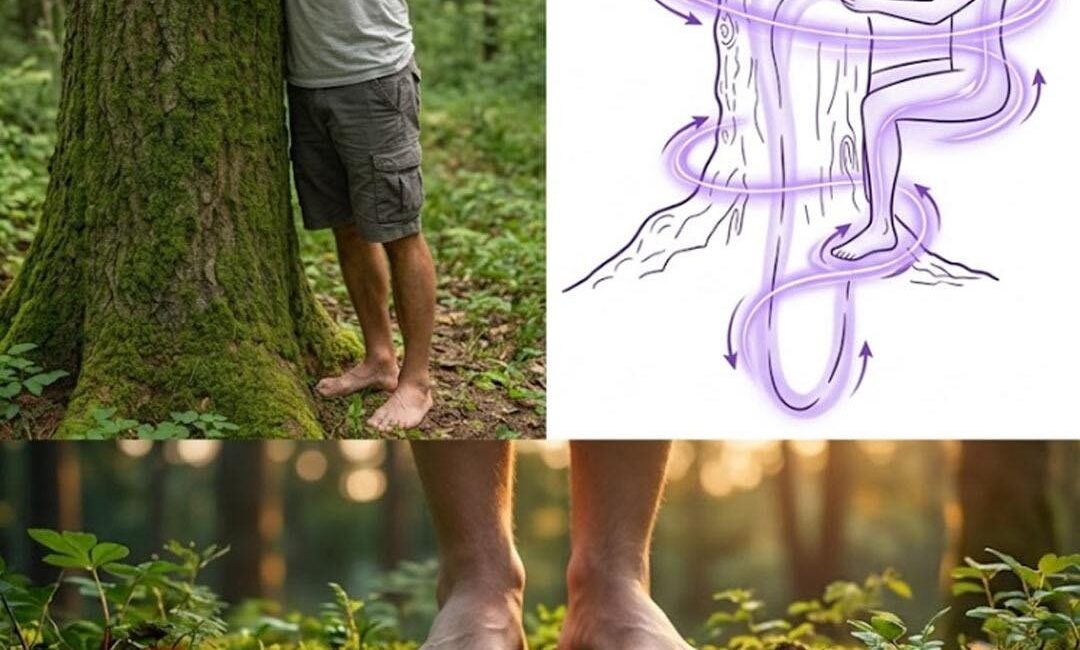
Barefoot contact is essential.
👉 Shoes block the connection.
Step 3: Find a Tree
Choose one that feels:
- Stable
- Quiet
- Natural
Step 4: Physical Contact
- Stand barefoot
- Place your hand on the tree
- Or lean slightly against it
Step 5: Breathe Slowly
Don’t force anything.
Just:
- Inhale deeply
- Exhale slowly
Step 6: Stay for 15 Minutes
This is key.
Less time = weaker effect
Consistency = stronger results
Common Mistakes That Reduce the Effect
❌ Being distracted (phone, thoughts)
→ reduces connection
❌ Rushing
→ no time for body to respond
❌ Wearing shoes
→ blocks grounding
❌ Expecting instant “magic”
→ creates resistance
What You Might Feel (And Why It’s Normal)
Some people feel:
- Calm
- Lightness
- Emotional release
Others feel:
- Nothing at first
Both are normal.
👉 Your body adapts over time.
Long-Term Benefits: What Happens If You Do This Regularly
If you practice grounding consistently:
1. Reduced Anxiety
You become less reactive.
2. Better Emotional Control
You respond instead of reacting.
3. Improved Focus
Less mental noise.
4. Stronger Body Awareness
You understand your feelings faster.
The Deeper Lesson: Reconnecting With What You Lost
This practice is not new.
It is ancient.
Humans used to:
- Walk barefoot daily
- Live close to nature
- Touch natural elements constantly
Modern life removed that.
And with it, something subtle—but important—was lost.
Grounding is not adding something new.
It is restoring something original.
Conclusion: A Quiet Practice With Powerful Impact
Touching a tree while barefoot is simple.
Almost too simple.
But that is exactly why it works.
It bypasses complexity.
It bypasses overthinking.
It goes directly to your body.
And for someone like you—who lives a lot in the mind, who feels deeply, who struggles with control and reaction—this kind of practice is not just helpful.
It is essential.
Because sometimes, the solution is not to think more.
It is to feel more.
And reconnect with something stable, silent, and always there.