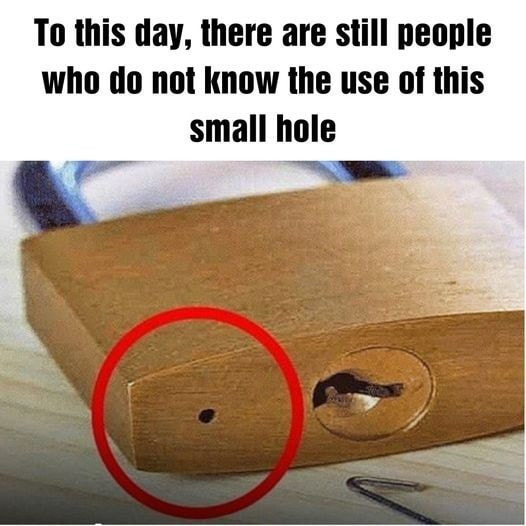
You might notice that not every padlock has this hole. The presence (or absence) depends on the lock’s design and purpose.
- Outdoor and weatherproof padlocks: Almost always have it, because they need drainage and ventilation.
- Indoor or combination locks: May not include it, as they’re less exposed to environmental factors.
- High-security or tamper-resistant locks: Sometimes omit the hole or hide it internally to prevent tampering with lock-picking tools.
In other words, it’s not a design flaw or missing feature — it’s intentional based on where the lock will live its life.
The Science of Longevity: Why This Tiny Hole Matters
It’s easy to underestimate how powerful such a small detail can be. But consider this:
A single padlock can go through hundreds of temperature cycles in a year — from freezing winter nights to blistering summer days.
Inside the lock, the materials expand and contract. Moisture creeps in, condensation forms, and oxygen begins corroding metal. Without a drainage or ventilation point, the lock essentially becomes a sealed metal capsule — one that slowly eats itself from the inside out.
That’s why a padlock with that little hole can last years longer than one without it. It’s a form of built-in self-preservation.
Myths About the Padlock Hole
As with many everyday mysteries, the internet has given rise to several myths about this little opening. Let’s clear them up once and for all.
- Myth: “It’s for inserting a safety pin or paperclip to reset the lock.”
– False. Standard key padlocks don’t reset through this hole; it’s not connected to the combination or locking mechanism. - Myth: “It’s a secret access point for thieves.”
– Not true. The hole doesn’t provide access to internal pins in a way that would allow easy picking. In fact, its narrow, downward-facing design makes it nearly impossible to exploit. - Myth: “You can pour oil into it to make the lock smooth again.”
– Partially true, but use proper lock lubricant—not regular oil. Traditional oils attract dust and gum up the lock over time. - Myth: “It’s just decorative.”
– Definitely false. It’s a functional, carefully engineered part of the design.
How to Maintain a Padlock (and Use That Hole Properly)
Even the toughest padlock benefits from a bit of care. If you use one outdoors, here’s how to keep it in perfect shape:
- Once a month: Spray a small burst of lock lubricant into both the keyhole and the bottom drainage hole.
- Turn the key several times to distribute it inside.
- After rain or snow: Give the lock a quick shake or wipe to remove surface moisture.
- Before winter: Apply a rust-prevention spray (like WD-40 Specialist or silicone-based protectants) through the hole to coat internal parts.
- Never use grease or cooking oil. They attract dirt and eventually cause sticking.
Doing this takes less than two minutes but can double or triple the lifespan of your padlock.
When the Hole Saves You from Disaster
It’s easy to think of this hole as unimportant — until the day you desperately need your lock to open in bad weather.
Imagine this:
You’re standing outside your storage shed in January. Snow is falling. You insert your key into the padlock, but it won’t budge. You twist harder, but the shackle is frozen in place. The lock feels like it’s welded shut.
In that moment, that tiny drainage hole could have been the difference between being stuck in the cold and getting inside safely. A properly draining, lubricated padlock doesn’t freeze. That’s why professionals — from truckers to sailors to construction workers — always check for it when choosing their locks.
It’s the detail that separates a gadget from a tool.
The Beauty of Hidden Engineering
There’s something deeply satisfying about realizing that everyday items are full of quiet genius. The little hole at the bottom of a padlock embodies that idea perfectly. It’s a reminder that good design is not about decoration — it’s about foresight.
The designers who created it anticipated weather, time, neglect, and human forgetfulness. They built in resilience with a single, well-placed hole.
So the next time you see one, don’t dismiss it as meaningless. That tiny dot of metal is a silent guardian of reliability — the reason your lock opens smoothly after years of use.
The Takeaway: Small Hole, Big Purpose
That little hole isn’t just a quirk of design. It’s a multi-purpose engineering feature that:
- Drains moisture and prevents freezing.
- Allows lubrication and maintenance.
- Provides ventilation during temperature changes.
- Assists in manufacturing and assembly.
- Extends the life and reliability of your lock.
It’s a miniature example of how thoughtful design turns a simple object into a long-lasting tool.
So, next time you click a padlock shut, take a moment to look at that small opening at the bottom. Inside that hole lives a century of mechanical wisdom — a detail so small, yet so essential, that it keeps your possessions safe, season after season.
And that’s the beauty of engineering hidden in plain sight: sometimes, the smallest things are doing the heaviest lifting.