Every household has that one secret trick passed down from grandmothers, neighbors, or the kind of person who always seems to know how things really work. One of those curious tips that’s been making the rounds again is this: “Put salt in your washing machine.”
At first, it sounds bizarre. Salt? The stuff you sprinkle on fries? Why on earth would you put it in a sophisticated appliance designed with high-tech sensors and multiple wash cycles?
But here’s the truth — salt isn’t just for cooking. Used correctly, it can dramatically improve your washing machine’s performance, protect your clothes, and even extend the life of the appliance itself.
And yes — appliance repairmen do know about this trick. They just rarely tell you, because if everyone did it regularly, they’d get a lot fewer service calls.
Let’s uncover the science, the myths, and the step-by-step methods behind this fascinating, old-fashioned yet effective laundry hack.
The Hidden Enemies of Your Washing Machine
Before understanding why salt works, we need to talk about what slowly destroys your washing machine from the inside.
There are four main culprits:
- Hard Water Deposits (Limescale)
If you live in an area with hard water — water rich in minerals like calcium and magnesium — every wash cycle leaves behind microscopic deposits. Over time, these mineral layers build up around the drum, heating element, and hoses, reducing efficiency and potentially damaging components. - Soap Scum and Detergent Residue
Ironically, the more detergent you use, the dirtier your machine can become. Surfactants and softeners can leave sticky films that trap lint, grime, and bacteria — resulting in unpleasant odors and dull clothes. - Fabric Dyes and Odors
Washing colored clothing often releases tiny pigment particles that cling to the drum and rub off on lighter clothes in later washes. - Bacterial and Fungal Growth
The combination of warm water, humidity, and detergent residue creates an ideal environment for mold — especially in the rubber seal around the door and the detergent drawer.
These invisible enemies don’t cause immediate failure, but they silently erode the performance of your machine. Over time, you’ll notice:
- Dingy laundry, even after a fresh wash.
- A persistent musty smell.
- Slower drainage and noisier spins.
- Shortened machine lifespan.
Now, here’s where the magic of salt comes in.
The Science Behind Salt: Nature’s Oldest Cleaner
Salt — sodium chloride — might seem basic, but it’s a chemical multitasker. It’s natural, cheap, safe for most appliances, and incredibly versatile.
Here’s what it does in your washing machine:
1. It Softens Water Naturally
Hard water causes mineral buildup inside your machine. Salt works as a mild water softener by binding to the calcium and magnesium ions, reducing their ability to form deposits.
This not only protects your machine but also improves detergent efficiency — because soap lathers and cleans better in soft water.
2. It Prevents Fading of Colors
One of the oldest textile tricks in history is using salt to set dye in fabrics. Salt helps stabilize the molecular structure of color pigments, preventing them from bleeding and fading during washes.
If you’ve ever had a bright red shirt turn your whites pink — salt can stop that. It “locks in” the dye, keeping colors bold and fabrics looking new longer.
3. It Eliminates Bad Odors
Salt is naturally antibacterial and antifungal. When added to a wash cycle, it helps neutralize the bacteria that thrive in damp, detergent-rich environments.
Combined with its deodorizing power, it leaves both your machine and your clothes smelling fresh — without needing synthetic fragrances.
4. It Breaks Down Residue and Limescale
Salt’s slightly abrasive texture (when undissolved) helps scour away stubborn buildup. In hot water, it dissolves and reacts with limescale deposits, helping to loosen and flush them out of your system.
This not only keeps your machine cleaner but improves water flow, drainage, and spin efficiency.
5. It Extends the Life of the Drum and Heating Element
Limescale and detergent residues act as insulators, forcing the heating element to work harder and overheat. By regularly cleaning with salt, you reduce the layer of buildup that causes excess wear and tear, extending your machine’s lifespan and saving on energy costs.
How to Use Salt in Your Washing Machine
There are two main methods — one for machine cleaning, and another for laundry protection.
1. Monthly Machine Detox (Deep Cleaning Method)
What You’ll Need:
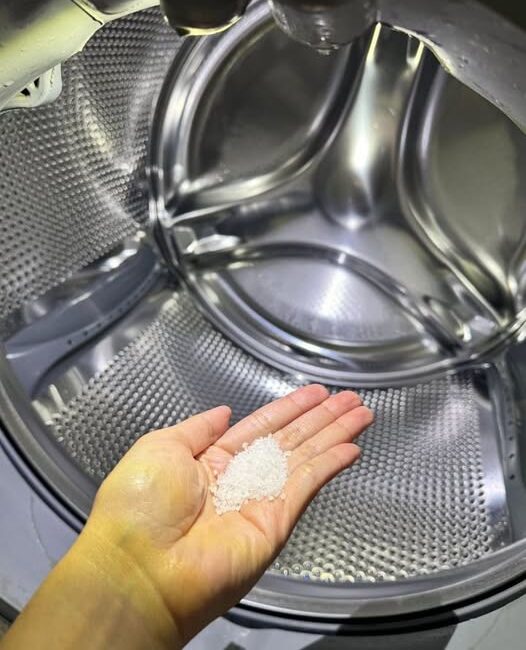
- 1 cup (250g) of coarse sea salt or rock salt
- Optional: ½ cup of white vinegar (for extra power)
Steps:
- Make sure your washing machine is empty.
- Pour the salt directly into the drum (not the detergent tray).
- Optional — add the vinegar to the detergent drawer.
- Run a hot cycle (60°C–90°C) without any clothes.
The salt dissolves and circulates through the system, removing mineral deposits, soap scum, and bacterial residue. The vinegar amplifies the descaling effect while neutralizing odors.
Repeat once every 3–4 weeks to keep your machine spotless inside.
2. Fabric Protector (During Regular Washes)
For colored or delicate clothes:
- Add 1 tablespoon of salt to the detergent drawer or directly into the drum before loading your clothes.
- Wash as usual.
The salt acts as a natural dye fixative and softener. It helps keep bright colors vivid and prevents dark fabrics from bleeding onto lighter ones.
For white clothes:
- Combine 1 tablespoon of salt with a tablespoon of baking soda for each wash.
- This helps maintain brightness and removes any yellow or gray tinge caused by minerals or detergent residues.
Bonus Tip: The Salt and Lemon Combo
For stubborn smells and mold around the rubber door seal, try this:
- Mix ½ cup of coarse salt with the juice of one lemon.
- Apply the paste around the rubber gasket, leaving it for 15 minutes.
- Wipe with a damp cloth.
The salt gently scrubs away mold spores and residue, while the lemon’s acidity disinfects and deodorizes. Your washing machine will look, smell, and feel brand new.
Why Repairmen Don’t Talk About It
Click page 2 for more