You might wonder — if this works so well, why isn’t it standard advice from appliance technicians?
There are three simple reasons:
- Maintenance Means Fewer Service Calls
If every homeowner regularly descaled and deodorized their washing machines using natural methods like salt, repair technicians would get fewer calls for clogged pumps, calcified heating elements, and mildew buildup. - It’s Too Simple (and Too Cheap)
A kilo of salt costs less than one euro. Compare that to specialized cleaning tablets or chemical descalers that brands sell for ten times the price — often under the same premise. - It’s an Old Trick — Forgotten by Modern Marketing
Before industrial cleaners existed, salt was the go-to household mineral for cleaning, preserving, and purifying. Appliance companies rarely promote natural solutions because they prefer to sell branded “maintenance products.”
In short: it’s effective, inexpensive, and makes your machine last longer — which isn’t great for business.
The Eco-Friendly Advantage
Beyond performance, using salt is an environmentally conscious choice.
Chemical cleaners often contain phosphates and synthetic surfactants that flow into wastewater systems, harming aquatic ecosystems. Salt, on the other hand, is natural and fully biodegradable when used in small quantities.
Plus, when you combine salt with other eco-cleaning staples like baking soda, lemon juice, and vinegar, you create a full arsenal of safe, planet-friendly cleaning solutions.
Signs You Should Start Using Salt Immediately
If you notice any of these warning signs, your washing machine is begging for a salt treatment:
- A musty or sour smell even after running empty cycles.
- Residue on your clothes after washing.
- Visible limescale on the drum or inside the detergent drawer.
- The machine takes longer to complete cycles or heat water.
- Clothes fade quickly or feel rough to the touch.
These are early symptoms of internal buildup — and salt is one of the easiest, most affordable ways to reverse the damage.
Can You Use Any Type of Salt?
Not all salts are equal for this task. Here’s what works best:
- ✅ Coarse Sea Salt or Rock Salt: Ideal for descaling — dissolves slowly and evenly.
- ✅ Kosher Salt: Fine enough to dissolve quickly, great for laundry use.
- ❌ Iodized Table Salt: Avoid it for machine cleaning. The additives (iodine, anti-caking agents) can leave residue.
- ❌ Scented Bath Salts: Never use these — the oils and dyes can clog filters.
Stick to natural, unrefined salt for best results.
A Simple Routine That Saves Hundreds
Regularly using salt in your washing machine is like giving it a low-cost spa treatment. It reduces the need for professional servicing and keeps your appliance performing like new.
Here’s a simple schedule to follow:
- Every Week: Add a tablespoon of salt to laundry loads (color protection).
- Every Month: Run a hot salt-only cycle (machine detox).
- Every 3 Months: Deep-clean the detergent drawer and seal with salt and lemon paste.
With this rhythm, your washing machine can last years longer — quietly, efficiently, and odor-free.
Real-Life Feedback from Homeowners
Many people who’ve tried the salt trick swear by its results. Here are a few testimonials shared across home forums and cleaning blogs:
“I live in a hard water area. After using salt once a month, my washing machine no longer smells, and my towels come out softer.”
“I thought my washing machine was dying. I did one salt-and-vinegar cycle, and suddenly it was draining perfectly again.”
“I’ve used salt to set color in my clothes for years — never thought to use it in the washer. My blacks stay black now.”
Sometimes, the simplest household wisdom works better than the priciest modern solution.
A Quick Word of Caution
As powerful as salt is, moderation is key. Don’t overload your machine with it — a little goes a long way.
Excessive salt can corrode metal components over time, especially in very humid environments. Stick to the recommended amounts, and always run a rinse cycle after cleaning to flush out residue.
The Hidden Power of Old Wisdom
What makes this trick beautiful isn’t just its effectiveness — it’s what it represents: the rediscovery of simple, natural care.
Our ancestors cleaned without synthetic detergents, descaled without harsh chemicals, and kept things spotless with ingredients they could eat. Salt, vinegar, lemon, and soap — these weren’t “hacks.” They were part of daily life.
Modern cleaning culture has replaced that simplicity with bright bottles and bold claims. But when you strip away the marketing, the science is still the same — and the salt in your pantry is proof.
Final Thoughts: The Grain of Truth Behind the Trick
So, why should you put salt in your washing machine?
Because it works.
It protects, cleans, refreshes, and preserves — all without toxins, fumes, or expense. It’s one of those rare home remedies that’s backed by chemistry, history, and real results.
In a world obsessed with complicated solutions, the humble grain of salt reminds us that sometimes, the answer is as simple as it gets.
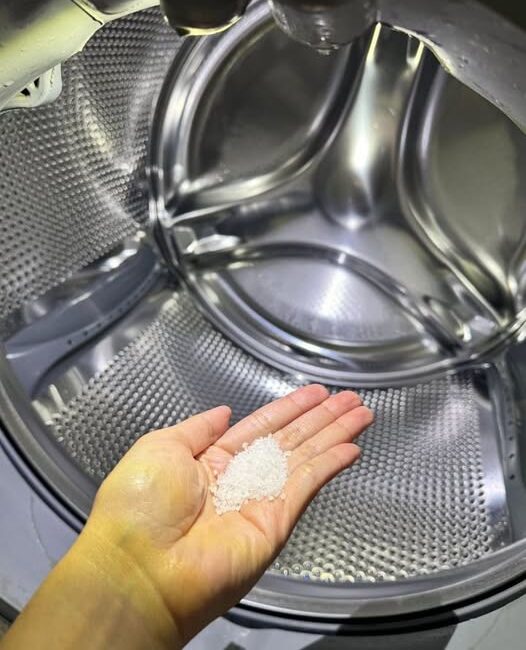
So go ahead: grab that box of coarse salt, sprinkle it in your washer, and watch the magic happen.
Your clothes will shine brighter.
Your machine will last longer.
And your grandmother — and your repairman — would both secretly approve.