Outdoor spaces are no longer treated as simple backyards or patios. In recent years, they have evolved into extensions of the home itself — places designed for relaxation, entertaining, creativity, and emotional escape. People are investing more energy into creating outdoor environments that feel magical, cozy, stylish, and deeply personal.
And perhaps one of the most unexpected DIY trends transforming patios everywhere right now involves something nobody would normally consider beautiful:
plastic soup spoons.
At first glance, disposable spoons seem like the ultimate throwaway object. Cheap, lightweight, ordinary, and purely functional, they are usually associated with takeout containers, picnics, or quick meals. Metal chicken wire carries a similarly industrial reputation — practical but visually harsh.
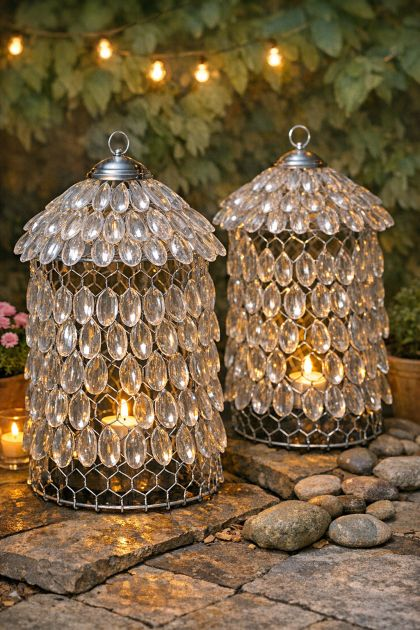
Yet when hundreds of plastic spoons are woven carefully into curved chicken wire frames and illuminated from within, the result becomes astonishing.
The lanterns glow like shimmering crystal sculptures.
Light bounces across the layered spoon surfaces, creating reflections that resemble:
- frosted glass,
- delicate scales,
- cascading petals,
- or luxury chandelier crystals.
At night, the effect becomes even more breathtaking.
The lanterns radiate soft glowing light while casting intricate shadows across patios, gardens, fences, and outdoor seating areas. Guests often assume they came from:
- upscale outdoor décor boutiques,
- artisan lighting studios,
- luxury patio collections,
- or expensive designer home stores.
Very few realize they were handmade using plastic soup spoons and chicken wire.
That dramatic transformation between humble materials and elegant final appearance is exactly why this project has exploded in popularity.
But beyond visual beauty, these faux-crystal lanterns represent something much larger happening in modern design culture:
the desire to create luxury aesthetics through creativity, sustainability, and artistic reinvention rather than expensive spending alone.
This project proves something surprisingly powerful:
beautiful design is often less about the cost of materials and more about imagination, texture, light, and presentation.
Why Outdoor Lighting Has Become One of the Most Important Design Trends
Lighting completely changes how spaces feel emotionally.
During the day, patios and gardens rely heavily on:
- plants,
- furniture,
- textures,
- and architecture.
But at night, lighting becomes the defining element of atmosphere.
Soft glowing lights create:
- intimacy,
- warmth,
- relaxation,
- and emotional comfort.
Harsh lighting often feels cold and functional.
Layered ambient lighting feels luxurious and welcoming.
This is why outdoor lighting has become one of the biggest priorities in modern patio design.
People increasingly want outdoor spaces that feel:
- magical,
- calming,
- elegant,
- and emotionally immersive after sunset.
The spoon lantern project fits perfectly into this movement because it creates sculptural lighting with dramatic visual texture.
The Fascinating Beauty of Light Reflection
One reason these lanterns look so expensive is because reflective surfaces naturally create visual richness.
The curved shape of plastic spoons interacts with light in surprisingly sophisticated ways.
Each spoon catches illumination differently, producing:
- highlights,
- shadows,
- shimmer,
- and layered reflections.
When hundreds of spoons overlap together, the effect becomes multidimensional.
The brain begins associating the texture with:
- crystal,
- shell,
- porcelain,
- or artisan glasswork.
That illusion creates luxury perception even though the materials themselves are inexpensive.
Why Recycled and Upcycled Decor Is Becoming So Popular
Modern consumers increasingly crave sustainability alongside beauty.
People are becoming more conscious of:
- waste,
- disposable culture,
- and environmental impact.
At the same time, they still want homes and outdoor spaces that feel stylish and unique.
Upcycled projects solve both desires simultaneously.
This lantern project transforms ordinary disposable objects into:
- artistic décor,
- functional lighting,
- and conversation pieces.
That transformation feels deeply satisfying emotionally because it challenges assumptions about value and beauty.
The Emotional Appeal of Handmade Lighting
Lighting affects mood more powerfully than almost any other décor element.
Handmade lighting adds another layer of emotional richness because it feels:
- personal,
- crafted,
- and artistic.
Unlike mass-produced patio lights, these lanterns carry visible evidence of creativity and effort.
That authenticity makes spaces feel warmer and more inviting.
Why Texture Creates Luxury in Design
Luxury interiors and outdoor spaces rarely rely on flat surfaces alone.
Texture is what creates:
- depth,
- visual movement,
- and sensory richness.
The overlapping spoon arrangement creates highly tactile texture that feels almost sculptural.
Even during daylight hours, the lanterns function like decorative art objects because their layered surfaces interact beautifully with natural light.
At night, the texture becomes even more dramatic once illuminated from within.
How to Create DIY Faux-Crystal Patio Lanterns
Despite their sophisticated appearance, these lanterns are surprisingly achievable for beginners.
You do not need advanced electrical skills.
You do not need expensive tools.
You do not need professional crafting experience.
The process itself is relatively simple, though somewhat time-intensive.
That time investment is exactly what creates the stunning layered effect.
Materials You Will Need
To begin, gather:
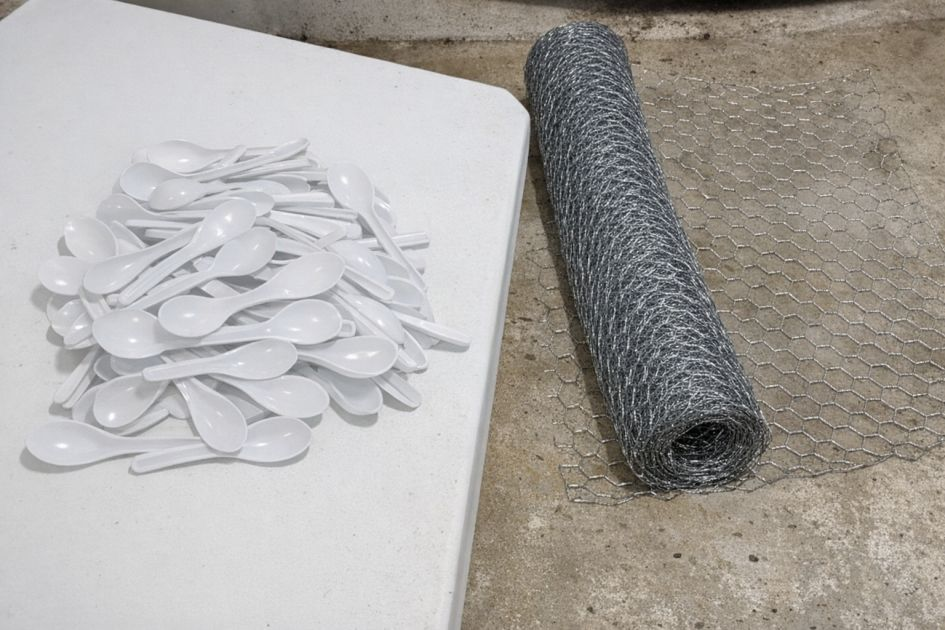
- Plastic soup spoons
- Metal chicken wire
- Wire cutters
- Pliers
- LED string lights or solar-powered lights
- Fishing line or thin wire
- Optional hot glue gun
Optional decorative additions include:
- translucent paint,
- metallic spray paint,
- tinted lighting,
- or decorative hanging chains.
The affordability of the materials makes the final transformation even more impressive.
Step 1: Shape the Chicken Wire Frame
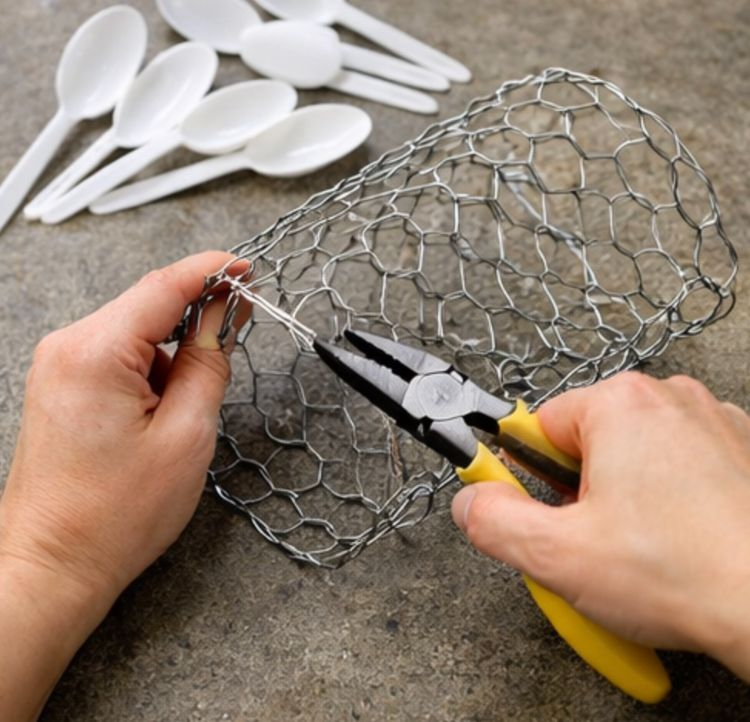
Begin by cutting the chicken wire into the desired shape.
Most people create:
- cylinders,
- globes,
- or elongated lantern forms.
Chicken wire works beautifully because it is:
- lightweight,
- flexible,
- durable,
- and easy to manipulate.
Once shaped into a cylinder and secured with pliers, the structure becomes the foundation for the layered spoon texture.
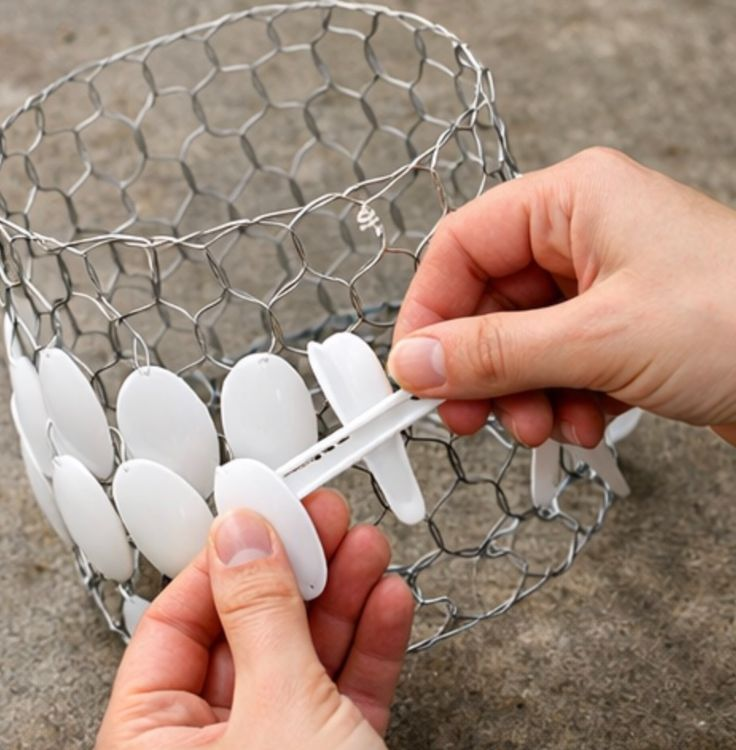
Step 2: Begin Weaving the Plastic Spoons
This is where the magic begins.
Starting from the bottom, weave spoon handles through the wire openings carefully.
Overlap the spoon bowls slightly like:
- fish scales,
- flower petals,
- or layered feathers.
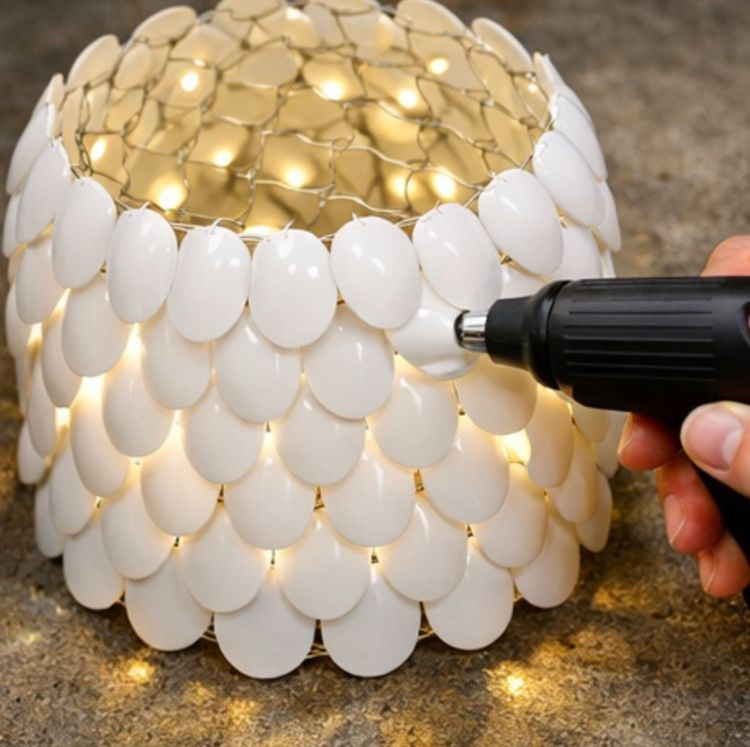
This overlapping arrangement is what creates the shimmering reflective texture.
As more spoons are added, the industrial chicken wire slowly disappears beneath sculptural layers of curved plastic.
Why Repetition Creates Such Beautiful Visual Effects
Humans naturally respond positively to repetition and pattern.
The repeated spoon shapes create:
- rhythm,
- movement,
- symmetry,
- and visual harmony.
This repetitive layering is similar to architectural scales, roof tiles, or feather patterns found in nature.
The eye perceives the arrangement as elegant because structured repetition feels calming and sophisticated psychologically.
Step 3: Cover the Entire Structure
Click page 2 to continue