There is something deeply satisfying about transforming ordinary, overlooked materials into something so beautiful that people cannot believe it was handmade. In a world where luxury home décor often comes with intimidating price tags, creative DIY enthusiasts are discovering that some of the most stunning interior design pieces can come from the simplest household items imaginable.
And one surprisingly viral home décor trend is proving exactly that.
People are shredding ordinary brown paper lunch bags, soaking them in two basic ingredients, pressing the mixture onto wooden panels, and creating faux-tooled leather wall art so sophisticated that neighbors keep asking where it was purchased.
At first, the idea sounds almost impossible.
Brown paper bags?
Turned into luxury-looking wall panels?
Capable of resembling hand-tooled leather?
Yet once the process is complete, the final transformation is extraordinary.
The textured surfaces develop rich dimension, soft creases, layered depth, and earthy warmth that closely resemble expensive artisan leatherwork. After painting and finishing, the panels carry the appearance of handcrafted designer décor often associated with luxury interiors, upscale rustic homes, boutique hotels, and professionally designed living spaces.
Most people who see the finished pieces assume they came from:
- a high-end furniture showroom,
- a custom artisan studio,
- a luxury home décor collection,
- or an expensive interior design boutique.
Very few realize the panels actually began as disposable brown lunch bags.
That contrast between humble materials and sophisticated final results is precisely why this DIY project has exploded in popularity.
But the appeal goes beyond visual beauty alone.
This project represents several powerful trends happening simultaneously in modern home design:
- sustainable decorating,
- affordable luxury aesthetics,
- handcrafted textures,
- eco-conscious creativity,
- vintage-inspired interiors,
- and personalized statement art.
It proves that elegance does not always come from expensive materials.
Sometimes elegance comes from imagination.
And perhaps most importantly, it shows that some of the most beautiful home transformations happen when people stop seeing ordinary objects for what they are and begin seeing what they could become instead.
Why Textured Wall Art Is Dominating Modern Interior Design
Flat walls are disappearing from modern interior trends.
For years, minimalism emphasized smooth surfaces, stark lines, and highly simplified spaces. While visually clean, many interiors eventually began feeling emotionally cold or lacking personality.
Today, people increasingly crave homes that feel:
- layered,
- tactile,
- warm,
- artistic,
- and emotionally comforting.
Texture has become one of the most important elements in interior design because it adds:
- visual depth,
- softness,
- warmth,
- and sensory richness.
Textured wall panels are especially popular because they create dramatic impact without overwhelming a room.
The faux-tooled leather paper panels fit perfectly into this movement because they combine:
- handcrafted appearance,
- earthy warmth,
- and sculptural texture all at once.
Why Leather-Inspired Decor Feels So Luxurious
Leather has long been associated with sophistication, craftsmanship, and timeless elegance.
In interior design, leather-inspired textures evoke:
- warmth,
- richness,
- durability,
- and artisan quality.
Tooled leather in particular carries strong visual appeal because of its intricate embossed textures and handcrafted feel.
Authentic tooled leather décor, however, is often extremely expensive.
That is why faux techniques have become increasingly popular.
This paper-based DIY project recreates many of the visual qualities people love about leather:
- layered texture,
- soft creasing,
- natural imperfections,
- earthy color variation,
- and handcrafted depth.
The result feels upscale without the luxury price tag.
The Surprising Potential Hidden Inside Brown Paper Bags
Brown paper lunch bags are one of the most overlooked craft materials imaginable.
People typically associate them with:
- packing lunches,
- grocery storage,
- or disposable packaging.
Yet brown kraft paper has several qualities that make it incredibly useful for decorative art:
- strong fibers,
- flexibility,
- absorbency,
- natural texture,
- and warm organic color.
Once soaked and combined with glue, the paper transforms into a pliable sculptural material capable of holding shape and texture beautifully.
This transformation feels almost magical because the paper stops looking like paper entirely.
Instead, it begins resembling:
- aged leather,
- handmade plaster,
- or artisan-crafted wall textures.
Why Earth-Toned Decor Feels So Comforting
One reason these faux leather panels feel emotionally appealing is their color palette.
Warm browns, siennas, umbers, and clay tones naturally create feelings of:
- coziness,
- grounding,
- warmth,
- and calmness.
Modern life is often visually overstimulating, filled with:
- bright screens,
- harsh lighting,
- synthetic materials,
- and fast-paced environments.
Earth-toned interiors offer emotional relief by reconnecting spaces to natural visual comfort.
This explains why warm rustic palettes continue growing in popularity.
How to Create Faux-Tooled Leather Panels From Brown Paper Bags
Despite their sophisticated appearance, these wall panels are surprisingly accessible for beginners.
No advanced art training is required.
No expensive equipment is necessary.
No professional workshop is needed.
The process itself is relatively simple but produces dramatic results.
Materials You Will Need
To begin, gather:
- Brown paper lunch bags
- Large bucket or basin
- Warm water
- White glue
- Acrylic paints in leather tones
- Wooden panels
- Paintbrushes
- Plastic drop cloth
- Rolling pin
Optional additions include:
- metallic paint,
- textured rollers,
- stencils,
- antique wax finishes,
- or sealants.
The affordability of the materials is one of the project’s greatest strengths.
Step 1: Tear the Paper Into Pieces
Begin by tearing the brown paper bags into strips or small pieces.
Tearing rather than cutting creates softer organic edges that blend together more naturally later.
At this stage, the material still looks simple and unremarkable.
That dramatic “before and after” contrast is part of what makes the final reveal so satisfying.
Step 2: Soak the Paper Thoroughly
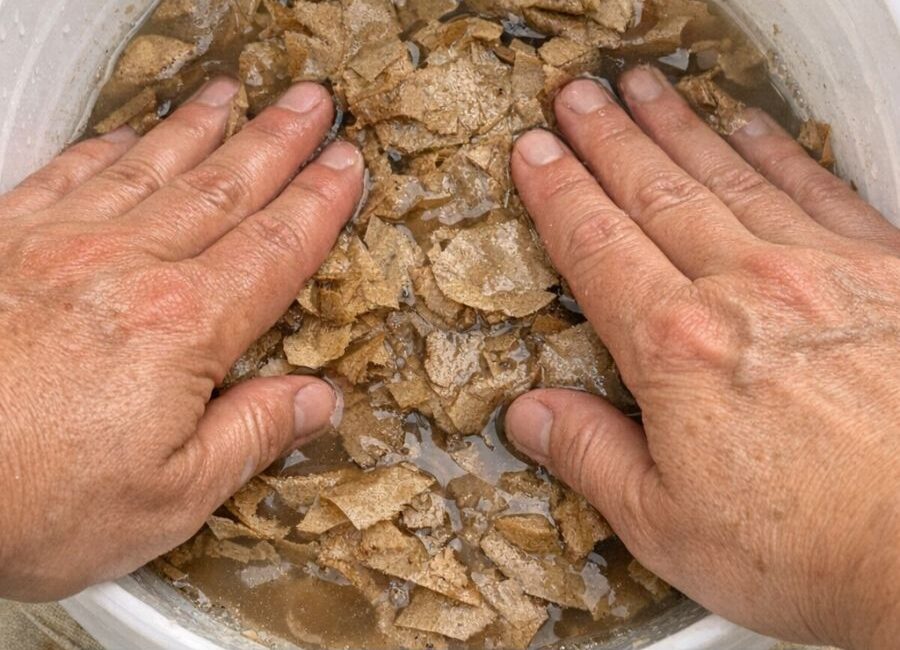
Place the paper inside warm water and allow it to soften completely.
As the fibers absorb moisture, the paper becomes flexible and almost fabric-like.
This stage transforms rigid disposable material into sculptable texture.
The soaking process also allows the paper fibers to bond more effectively once glue is added.
Step 3: Add White Glue
Mix white glue into the soaked paper.
This combination creates a pulpy textured mixture capable of hardening into durable sculptural surfaces once dry.
The glue acts as both:
- binder,
- and structural reinforcement.
The resulting material feels surprisingly strong after curing.
Step 4: Apply the Mixture to Wooden Panels
Spread the pulp mixture onto wooden panels using your hands.
This process feels highly tactile and artistic.
Unlike precision-focused crafts, textured panel making benefits from natural variation and imperfections.
That unpredictability creates authenticity.
Step 5: Smooth and Shape the Surface
Using a rolling pin or similar tool, press and smooth the material carefully.
You can intentionally create:
- wrinkles,
- creases,
- raised textures,
- or embossed patterns.
This stage determines much of the final leather-like appearance.
Natural irregularities often produce the most convincing results.
Step 6: Allow the Panels to Dry Completely
Drying may take:
- 24 to 48 hours depending on humidity and thickness.
Patience matters enormously here.
As the material dries, it hardens into surprisingly durable textured surfaces.
The transformation becomes more impressive by the hour.
What once looked like wet paper pulp slowly begins resembling artisan wall texture.
Step 7: Paint in Rich Leather Tones
This is where the panels truly come alive.
Using layered acrylic paint techniques, apply shades such as:
- burnt sienna,
- raw umber,
- deep brown,
- terracotta,
- caramel,
- or antique bronze.
Layering multiple tones creates realistic depth similar to aged leather.
Dry brushing techniques work especially well because they highlight raised textures naturally.
Why Layered Paint Creates Such Realistic Results
Real leather contains natural color variation.
Uniform color often appears artificial.
By layering:
- dark shadows,
- warm highlights,
- and textured brush strokes,
the panels gain richness and realism.
This technique creates dimension that fools the eye into perceiving expensive material.
The Psychological Appeal of Handmade Texture
Handmade surfaces affect people emotionally in ways mass-produced décor often cannot.
Humans naturally respond positively to:
- irregularity,
- texture,
- craftsmanship,
- and visible human touch.
Perfectly smooth factory-made surfaces can sometimes feel emotionally sterile.
Textured handcrafted panels feel:
- authentic,
- artistic,
- and emotionally warm.
This is one reason artisan décor trends continue growing rapidly.
Why Faux Finishes Are Becoming Increasingly Popular
Luxury aesthetics are evolving.
People increasingly value:
- creativity,
- craftsmanship,
- and uniqueness over expensive materials alone.
Faux finishes allow homeowners to recreate high-end looks affordably while adding personal artistic input.
The faux leather paper panel perfectly represents this movement because it combines:
- luxury-inspired aesthetics,
- sustainability,
- affordability,
- and handcrafted artistry.
Styling Faux Leather Panels in Different Interior Designs
One of the most powerful aspects of this DIY project is versatility.
The finished panels adapt beautifully across many décor styles.
Farmhouse Interiors
The warm earthy tones complement:
- reclaimed wood,
- vintage furniture,
- linen textures,
- and rustic décor.
The panels feel especially cozy above fireplaces or dining areas.
Bohemian Spaces
Layered textures and handcrafted surfaces fit naturally into bohemian interiors filled with:
- plants,
- woven materials,
- and collected décor pieces.
Modern Rustic Design
Click page 2 to continue