Introduction
Some home hacks are subtle, almost invisible in their simplicity — but once you discover them, they stick with you. Hanging a clothespin over the shower is one of those hacks. It seems trivial; what can a humble wooden clothespin clipped somewhere in your bathroom do? But in reality, it can transform your shower experience, fight odor, refresh your space, and even serve as a tiny, elegant hack your guests might remark upon. In this article, we will explore everything about this technique: how and why it works, what kinds of benefits you can expect, practical tips, variations, cautions, and how to make it part of your daily ritual.
By the end, you’ll likely think: once you know it, you always will.
The core idea: the clothespin as a steam diffuser / aroma clip
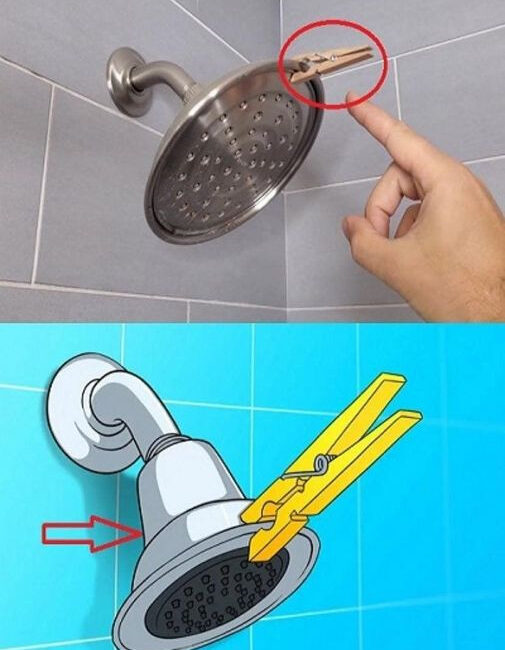
At its simplest, hanging a clothespin over the shower works by turning it into a passive aroma diffuser in the moist, steamy environment. You clip a wooden clothespin (or sometimes another small clip) near the showerhead or somewhere the steam will reach but avoid direct splashing. Then you dab or soak a few drops of essential oils (or fragrance oils) on the wood. As hot water runs and steam rises, the warmth and humidity help volatilize the scent compounds, gently releasing them into the shower zone. Thus, your shower becomes subtly perfumed, like a micro spa.
This effect is akin to how people hang eucalyptus branches near showers so that steam teases out the scent. The clothespin method gives you control over which oils, when to refresh them, and where to place them precisely.
But that’s just the foundational use. Beyond aroma, there are several secondary advantages and intriguing side‑benefits.
Why people do it: benefits and motivations
Let’s list and then explain the main benefits that prompt people to adopt this trick:
- Natural air freshener / scent diffuser
- Combatting musty or stale odors in the bathroom
- Small-scale insect deterrence
- Mood, relaxation, or aromatherapeutic uplift
- Visual or aesthetic charm, a subtle accent
- Reminder or signal tool
- Potential help with directing or avoiding water drips
1. Natural air freshener / scent diffuser
This is the most common motivation. Bathrooms, and especially showers, tend to accumulate lingering moisture, which can dull smells or create a slightly stale odor. A clothespin infused with pleasant essential oils helps neutralize or override those faint scents, making the space smell fresher. Unlike sprays or aerosols, this method is passive, low waste, and silent.
Because the steam aids diffusion, the fragrance radiates especially when the shower is active — so your senses perceive it during the most relevant moment. When water is off and air is cooler, the scent lingers enough to keep the bathroom from smelling “musty.” Many users choose oils like lavender (calming), eucalyptus (opening, mentholic), citrus blends (bright, fresh), peppermint, rosemary, or blends of your choice.
2. Combating musty or stale odors
Bathrooms often struggle with dampness, poor ventilation, or lingering smells from drains, towels, hair, or mold growth. A scented clip helps mask or counteract those mild smells. The continuous mild diffusion means your bathroom always has a background freshness that counters faint odor buildup.
3. Insect deterrence
Some essential oils (lemongrass, citronella, tea tree, eucalyptus, etc.) have mild insect-repelling qualities. By diffusing these scents near the shower — where humidity attracts small flies or gnats — the clothespin may help reduce insects’ comfort or discourage them from hanging around. While it’s not a full insecticide solution, it’s a small line of defense.
4. Mood, relaxation, or aromatherapeutic uplift
Smell is deeply tied to memory and mood. When you wake up or wind down in the bathroom, a subtle scent can elevate your mindset. Lavender or chamomile might help after a long day; citrus or peppermint might energize a morning routine. This little hack gives you control over that sensory environment.
In a world where environmental cues matter — lighting, temperature, scent — this is a small but high-impact tweak.
5. Visual or aesthetic charm
A small wooden clothespin with a hint of oil clipped to your showerhead or curtain rod has a pleasant, artisanal look. It suggests intention and care. Some people even decorate the clothespin (e.g. with a tiny tag, painted accent, or varnish) so it becomes a miniature decorative accent.
6. Reminder or signal tool
Another less common but clever use: you can attach small notes, reminders, or tags to the clothespin. For instance, family members might write short messages (e.g. “Don’t forget conditioner”, “keep shower time short”) or use it as a visual cue — because you will see it daily, you’re more likely to adhere to the prompt.
7. Potential help with directing or avoiding water drips
In some cases, people have found the clothespin helpful in nudging or redirecting stray drips from showerheads or hoses, or preventing small residual drips from hitting a sensitive spot (e.g. a door threshold or tile edge). It’s a minor benefit and context-dependent, but occasionally useful.
How to do it right: step‑by‑step guide
Let’s break it down into practical steps, plus tips and pitfalls.
Step 1: Choose the right clip
- Use a wooden clothespin (unvarnished or lightly finished). The wood absorbs the oils and releases them gradually better than plastic.
- Ensure the clip is of a decent size — small enough to be discrete but large enough to handle some oil and not break.
- It should grip securely, with enough tension, so it doesn’t fall with steam or minor vibration.
Step 2: Select essential oils or fragrance oils
- Pick oils you like and that are safe for indoor inhalation (avoid very strong irritants or undiluted neat essential oils that might irritate sensitive noses).
- Good options: lavender, eucalyptus, bergamot, sweet orange, tea tree (sparingly), lemongrass, rosemary, peppermint, cedarwood, or custom blends.
- You can mix a few drops of complementary oils (e.g. lavender + bergamot) for your signature blend.
Step 3: Apply the oil
- Place the clothespin somewhere safe and dry initially.
- Apply 2 to 5 drops per side (or less, depending on oil potency). Don’t saturate; you want the wood to absorb and release gradually.
- Let the drops soak in for a few minutes. You can gently rub them in.
- Optional: If you expect heavy usage or want slower diffusion, you can mix the oil with a few drops of a carrier (like a mild fractionated coconut oil) to slow evaporation — but pure oil often works best.
Step 4: Clip in place
- Clip it onto the top edge of the showerhead, or somewhere near the showerhead where steam passes but the clip isn’t in the direct spray or soaking path.
- If that’s not possible, clip it to the top of the shower curtain rod (provided steam travels upward), or a nearby shower bar or rail. Just make sure it is reachable by moisture-laden air.
- Position it so it stays dry except for steam — direct water splashes can wash away oil or damage the wood.
Step 5: Test and adjust
- Turn on the shower and let it run a minute. Check whether you smell the scent. If it’s too faint, you might increase drops, reposition the clip, or change oil blend.
- If the scent is overpowering, reduce the drops or reposition further away.
- Over time, you’ll find a sweet balance: enough scent to uplift but not overpower.
Step 6: Refreshing
- Every few days (or as needed based on usage and how strong the fragrance remains), reapply a few drops.
- Wipe or dry the wood if it accumulates residue (soap film, mineral deposits).
- If the wood becomes waterlogged or starts to degrade, replace the clothespin.
Optional enhancements
- Double clip or layering: use two clothespins spaced apart for stronger diffusion.
- Tagged clip: attach a small tag or nameplate for aesthetic or functional reasons.
- Multiple clipped pins: you could have one in each shower stall or direction in a multihead shower system.
- Rotate oils with seasons or mood: citrus in summer, warmer wood/herbal oils in winter.
Variation ideas (creative twists)
If you like tinkering, here are variations and spin-offs on the clothespin trick:
- Use a small wooden peg or clip rather than a full clothespin, if the design requires.
- Carve a tiny notch or groove to hold a little cube of scent or resin.
- Use cork or wooden beads strung on thin wire and clipped; the beads act as scent carriers.
- Instead of essential oils, you could use a lightly fragranced solid (e.g. a wax blend) placed near steam, though it’s less common.
- Use charcoal-infused wood pieces or bamboo together with the clip to absorb excess moisture or neutralize odor, combining absorption with diffusion.
- Create a rotating scent rack: a small rotating arm of clothespins each with a scent for variety.
- Use colored or painted clothespins to match bathroom décor — sealed so paint doesn’t interfere with absorption.
- Combine the clip with a small drop of water plus oil to make a slow-release “micro diffuser” drop.
The theory: why it works — the science behind it
Click page 2 for more