Every gardener eventually faces the same frustrating challenge: birds discovering freshly planted gardens, ripe fruits, herbs, vegetables, or flower beds before humans get the chance to enjoy them. One morning the garden looks lush and thriving, and by the next afternoon, strawberries have vanished, seedlings are disturbed, tomatoes are pecked open, and carefully nurtured produce appears half-destroyed. While birds are beautiful parts of nature, they can quickly become overwhelming visitors when they repeatedly target gardens and outdoor spaces.
This is why creative bird deterrent solutions have become increasingly popular among homeowners, gardening enthusiasts, patio decorators, and backyard hobbyists. Yet many commercial bird repellents often feel expensive, unattractive, or environmentally harsh. Plastic devices and chemical sprays may solve one problem while creating another by disrupting the natural beauty of the outdoor environment.
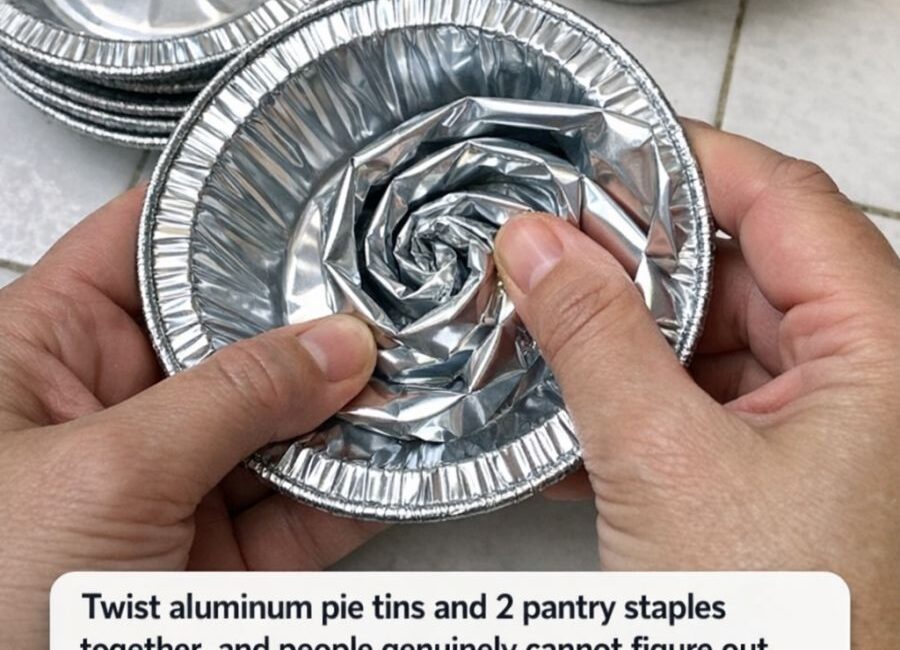
That is exactly why one surprisingly simple DIY project has captured attention everywhere: transforming ordinary aluminum pie tins into a spinning reflective bird deterrent that not only protects gardens but also doubles as mesmerizing outdoor décor.
At first glance, aluminum pie tins seem like disposable kitchen leftovers with little decorative value. Most people associate them with baked desserts, holiday meals, or temporary food containers. However, once twisted, suspended, and arranged into a spinning kinetic sculpture, these lightweight metallic tins become something unexpectedly brilliant.
The movement catches the wind. The reflective surfaces scatter flashes of sunlight across the garden. The spinning motion creates unpredictable visual patterns. The gentle metallic sounds introduce subtle auditory distraction. Together, these elements create an effective bird deterrent while simultaneously adding whimsical charm and artistic movement to outdoor spaces.
The transformation feels almost magical. What begins as simple kitchen waste suddenly resembles a designer garden ornament found in an upscale outdoor décor collection. Neighbors stop to stare as sunlight dances across the moving aluminum surfaces. Guests assume the spinner came from a boutique garden store. Yet the entire project can be made using inexpensive materials already sitting in drawers or recycling bins.
This trend has become especially popular because it satisfies multiple desires at once:
- Affordable garden protection
- Sustainable DIY creativity
- Outdoor kinetic art
- Eco-friendly bird deterrence
- Rustic garden charm
- Functional landscape décor
- Upcycled household crafting
The project represents the growing movement toward practical beauty in modern outdoor design. Today’s homeowners want functional objects that also contribute visually to their gardens and patios. Bird deterrents no longer need to look industrial or intrusive. They can become part of the aesthetic experience itself.
The aluminum spinner fits beautifully into this philosophy because it merges utility with artistic expression. It protects plants while creating motion, reflection, texture, and light play within the garden.
Another reason the trend resonates so strongly is because it taps into nostalgia and handmade creativity. There is something emotionally satisfying about transforming ordinary materials into something useful and visually captivating. In an era dominated by mass-produced outdoor products, handmade projects feel personal, inventive, and meaningful.
The reflective qualities of aluminum also contribute greatly to the spinner’s appeal. Light reflection has long been used in garden design to create movement and visual interest. Water features, mirrors, metallic sculptures, and glass ornaments all rely on shifting light to energize outdoor environments. The pie tin spinner accomplishes this beautifully with almost no cost.
As the spinner rotates in sunlight, flashes of brightness scatter unpredictably through the garden. This constant motion confuses birds because they dislike unstable visual environments. Birds prefer predictable safe feeding spaces, and sudden reflections or movement often discourage them from lingering.
The subtle metallic sounds produced by spinning tins also contribute to the deterrent effect without becoming overwhelming or harsh for humans. Unlike loud mechanical devices, the gentle rattling and chiming feel soothing and atmospheric.
The result is a garden accessory that functions almost like kinetic art. Even when birds are not present, the spinner adds life and movement to outdoor spaces. Breezes animate the sculpture continuously, making patios and gardens feel dynamic rather than static.
This combination of functionality and visual charm explains why aluminum pie tin bird deterrent spinners are becoming one of the most admired DIY garden trends in modern outdoor living.
Why Birds Become a Problem in Gardens
Birds are essential parts of healthy ecosystems. They help control insects, spread seeds, and contribute beauty and natural sound to outdoor environments. However, when gardens begin producing fruits, vegetables, seeds, or tender seedlings, birds often become persistent visitors capable of causing surprising damage.
Certain birds are especially attracted to:
- Tomatoes
- Strawberries
- Blueberries
- Lettuce
- Herbs
- Sunflower seeds
- Newly planted seedlings
- Flower buds
Birds pecking produce can ruin harvests quickly, especially in smaller home gardens where every plant matters.
Many gardeners struggle because traditional deterrents often feel unattractive or ineffective. Plastic owls, chemical repellents, and netting sometimes disrupt the beauty of outdoor spaces or fail over time as birds adapt.
Reflective motion deterrents work differently because they create constantly changing visual conditions that birds cannot easily predict.
The aluminum spinner project leverages this principle naturally and elegantly.
The Science Behind Reflective Bird Deterrents
Birds rely heavily on visual awareness for survival. Sudden flashes of light, unusual movement, and unpredictable reflections can signal danger or instability within an environment.
This is why reflective materials often work effectively in gardens.
The spinning aluminum surfaces create:
- Flashing light patterns
- Rapid directional movement
- Visual unpredictability
- Temporary glare
- Motion variation
Together, these elements discourage birds from settling comfortably near the protected area.
The spinning motion also mimics predator movement subtly, increasing the deterrent effect.
Unlike static scarecrows or unmoving decorations, kinetic objects remain dynamic. Their continuous movement prevents birds from becoming fully accustomed to them.
Why Aluminum Pie Tins Work Surprisingly Well
Aluminum pie tins possess several characteristics that make them ideal for this project.
Lightweight Structure
Their lightweight design allows even gentle wind to create movement.
Reflective Surface
The metallic finish reflects sunlight intensely from multiple angles.
Flexibility
Aluminum bends easily into spirals and sculptural forms.
Durability
The tins resist outdoor weather surprisingly well.
Affordability
They are inexpensive and often already available at home.
Sound Production
The thin metal creates subtle rattling sounds when moving.
These combined qualities make aluminum pie tins remarkably effective materials for DIY garden spinners.
The Growing Popularity of Kinetic Garden Art
Modern outdoor design increasingly embraces movement as a decorative element.
Static gardens can feel visually flat, especially during seasons when flowers are not blooming heavily. Kinetic décor introduces energy and dynamism into outdoor spaces.
Examples include:
- Wind spinners
- Hanging mobiles
- Reflective sculptures
- Chimes
- Rotating ornaments
- Water features
Movement creates emotional engagement because the garden constantly changes depending on sunlight and wind conditions.
The pie tin spinner fits beautifully within this design movement because it combines artistic motion with practical purpose.
Materials Needed for the Aluminum Pie Tin Spinner
One reason this project spreads so rapidly online is because almost anyone can make it using simple household items.
Aluminum Pie Tins
Three tins create balanced movement and layered reflection.
One becomes the spiral spinner while the others remain flatter for additional motion.
String or Twine
Strong twine allows flexible hanging and movement.
Natural jute twine adds rustic charm while nylon string increases weather resistance.
Swivel Hook
A swivel hook prevents tangling while allowing smooth rotation.
Hole Punch or Sharp Tool
Used for creating attachment holes.
Step-by-Step Process for Creating the Spinner
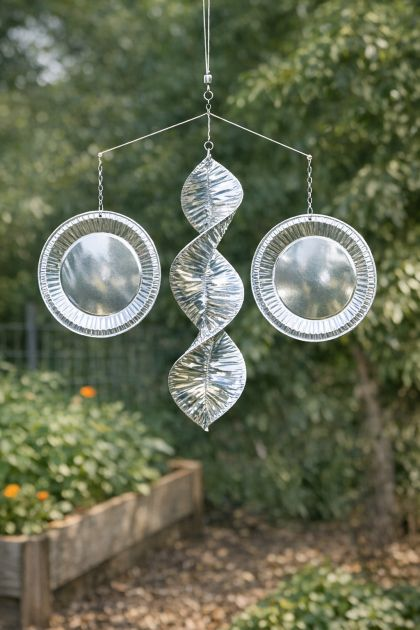
The assembly process feels satisfying because the transformation happens quickly.
Step 1: Create the Spiral
One aluminum pie tin is twisted carefully into a spiral shape.
The curved edges catch wind efficiently, helping the spinner rotate continuously.
Step 2: Punch Attachment Holes
Holes are added strategically for stringing and balance.
Proper placement ensures smooth spinning motion.
Step 3: Attach the Spiral
The spiral tin is secured using twine through the center hole.
Step 4: Add the Swivel Hook
The swivel hook allows unrestricted rotation while preventing tangling.
Step 5: String the Flat Tins
Click page 2 to continue