Concrete projects require:
- stable surfaces,
- organization,
- and easy cleanup.
Lay down protective coverings and gather all materials before mixing cement.
Preparation matters because cement begins setting relatively quickly.
This stage creates the foundation for cleaner, more professional-looking results.
Step 2: Mix the Cement
Combine the quick-setting cement according to package instructions.
The consistency should feel:
- smooth,
- thick,
- and pourable without being overly watery.
Proper texture matters enormously because:
- overly thin cement weakens structure,
- while overly thick cement creates air pockets.
At this stage, the project still appears extremely ordinary.
That dramatic “before and after” contrast is part of the project’s appeal.
Step 3: Pour Cement Into the Mold
Pour the wet cement into the cardboard form evenly.
Most projects use around:
- two inches of depth,
though this can vary depending on desired holder thickness.
The smooth gray surface already begins resembling modern industrial design materials.
Step 4: Press the Plastic Cups Into the Cement
This is where the transformation truly begins.
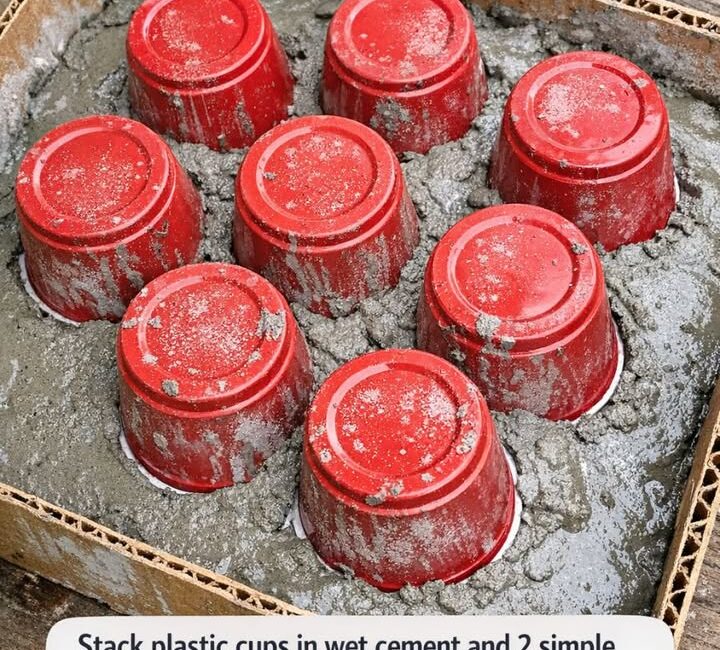
Turn the cups upside down and press them gently into the wet cement.
Arrange them:
- evenly,
- symmetrically,
- or organically depending on the desired aesthetic.
The cups create recessed cavities that later become candle holders.
As the cups sink into the cement, the geometric structure begins taking shape.
Why Repetition Creates Such Beautiful Visual Rhythm
Humans instinctively appreciate repeated forms because they create:
- balance,
- movement,
- and visual predictability.
The clustered cup shapes resemble:
- architectural columns,
- carved stone recesses,
- or sculptural installations.
This repetitive geometry feels calming and sophisticated psychologically.
Step 5: Allow Partial Setting
Wait until the cement firms slightly.
This stage is crucial because removing the cups too early can collapse the cavities, while waiting too long makes removal difficult.
Timing creates clean geometric edges.
Step 6: Remove the Cups Carefully
Twist and pull each cup gently from the cement.
This moment often feels astonishing.
The empty geometric recesses suddenly reveal themselves, transforming the project from construction material into sculptural décor.
The cavities create:
- depth,
- shadow,
- and architectural texture instantly.
Most people are shocked by how professional the result already appears.
Step 7: Allow Full Curing
Let the cement cure completely according to instructions.
Full curing strengthens durability while enhancing the clean sculptural appearance.
Once hardened, the candle holder becomes:
- solid,
- weighty,
- and visually substantial.
This physical heaviness contributes strongly to the luxurious feeling of the piece.
Step 8: Sand and Finish the Surface
Light sanding softens rough edges while preserving the raw concrete texture.
At this stage, the candle holder begins resembling something from a high-end design studio.
The contrast between smooth geometric recesses and raw concrete texture creates sophisticated visual balance.
Why Concrete Texture Feels So Expensive
Luxury design increasingly favors natural imperfections over artificial perfection.
Concrete carries:
- subtle pores,
- tonal variation,
- and tactile depth.
These qualities make it feel:
- organic,
- grounded,
- and authentic.
Unlike shiny synthetic materials, raw concrete feels timeless and architectural.
The Magic of Candlelight Against Cement
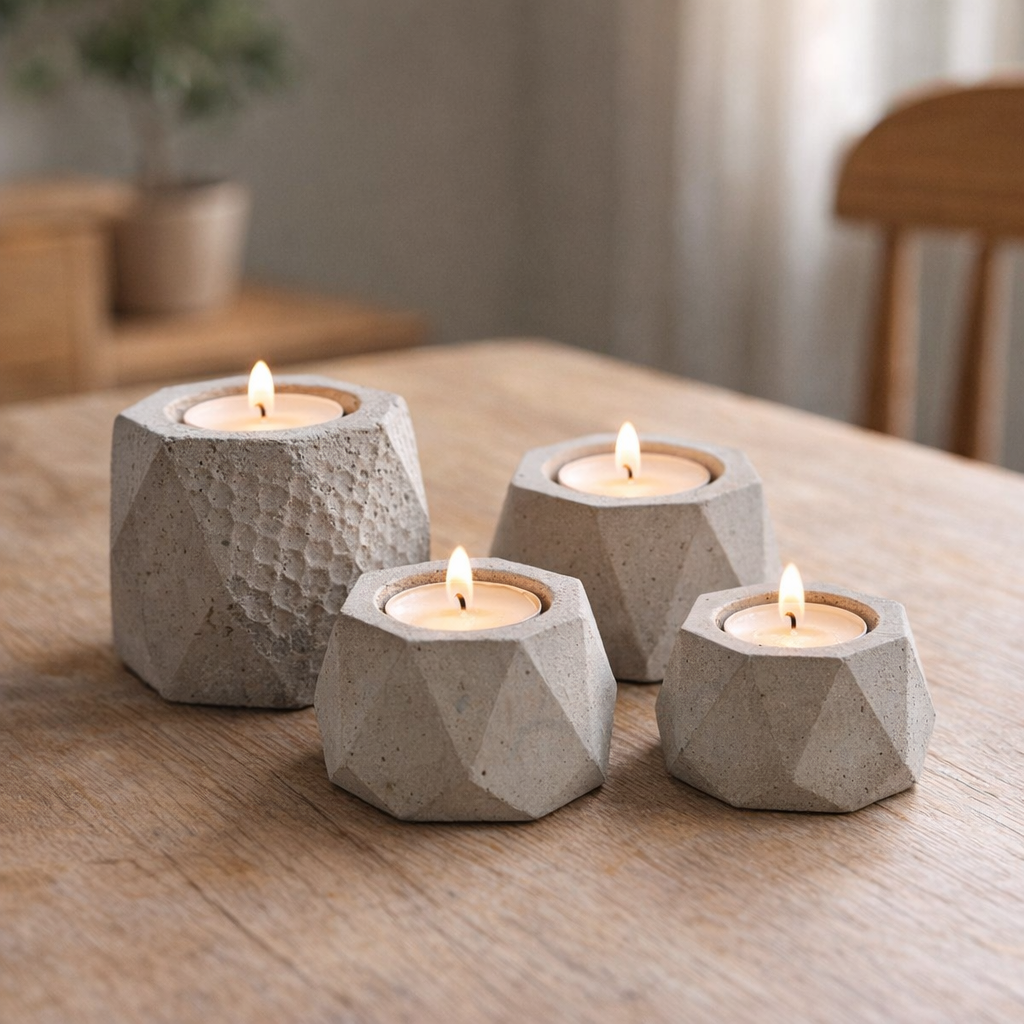
When candles are placed inside the geometric recesses, the project transforms again completely.
The flames cast:
- warm reflections,
- soft shadows,
- and glowing depth across the cement surface.
This contrast between:
- warm flickering light,
and - cool industrial concrete
creates incredible emotional richness.
The atmosphere becomes:
- cozy,
- modern,
- artistic,
- and calming simultaneously.
Why Minimalist Candle Holders Feel So Luxurious
Minimalist décor often appears expensive because it relies heavily on:
- proportion,
- material quality,
- and intentional restraint.
The geometric cement holders avoid visual clutter.
Instead, they emphasize:
- shape,
- balance,
- and sculptural presence.
This simplicity feels refined.
Creative Variations That Make the Candle Holders Even More Stunning
One reason this DIY trend continues growing rapidly is because customization possibilities are endless.
Add Pigments to the Cement
Pigmented cement creates:
- black,
- white,
- terracotta,
- blush,
- or charcoal candle holders.
This allows perfect coordination with interior palettes.
Use Different Cup Sizes
Varying cup sizes create:
- different cavity depths,
- layered geometry,
- and sculptural complexity.
The visual variation feels highly artistic.
Add Metallic Accents
Gold leaf, copper wax, or metallic paint highlights elevate the pieces dramatically.
This creates luxury contrast against raw concrete.
Press Textures Into the Surface
Fabric, lace, leaves, or textured materials can imprint subtle patterns into the cement before curing.
This adds tactile richness without disrupting minimalism.
Create Oversized Sculptural Pieces
Larger concrete forms become:
- centerpiece installations,
- table sculptures,
- or architectural décor objects.
The scale dramatically increases visual impact.
Why Handmade Decor Feels More Emotionally Valuable
Handmade objects carry emotional significance because they reflect:
- time,
- effort,
- and creativity.
Unlike mass-produced décor, handmade concrete candle holders feel:
- unique,
- personal,
- and artistically intentional.
That emotional authenticity makes spaces feel warmer and more meaningful.
Why Industrial Design Became So Popular
Industrial-inspired interiors continue growing because they combine:
- raw materials,
- simplicity,
- and architectural strength.
Concrete candle holders fit naturally into this movement because they feel:
- grounded,
- sculptural,
- and timeless.
Their visual weight creates stability within interiors.
Styling Geometric Candle Holders in Different Interiors
One reason this project became so viral is because the finished pieces adapt beautifully across multiple design styles.
Minimalist Interiors
The clean geometry complements:
- neutral palettes,
- uncluttered surfaces,
- and modern furniture.
Scandinavian Spaces
Concrete contrasts beautifully against:
- pale woods,
- linen textiles,
- and soft organic tones.
Industrial Lofts
The raw material aesthetic fits naturally alongside:
- steel,
- exposed brick,
- and dark woods.
Bohemian Modern Homes
Layering concrete with:
- candles,
- plants,
- and woven textures
creates warm artistic balance.
Why Geometric Decor Creates Calmness
Structured forms create psychological comfort because they introduce:
- predictability,
- order,
- and balance into visual environments.
In chaotic modern life, geometric design often feels emotionally grounding.
Why Guests Can’t Believe These Are DIY
The finished candle holders look shockingly professional because they mimic:
- gallery sculpture,
- boutique décor,
- and architectural design objects.
Most people assume they were purchased from:
- luxury furniture stores,
- modern art boutiques,
- or designer home collections.
The idea that plastic cups created the geometry feels almost impossible.
That surprise creates fascination.
Common Mistakes to Avoid
Even beginner-friendly concrete projects benefit from careful planning.
Mixing Cement Too Thin
Weak mixtures reduce structural integrity.
Removing Cups Too Early
Premature removal can damage geometric edges.
Overcrowding the Design
Spacing between cavities creates visual elegance.
Ignoring Air Bubbles
Gentle tapping removes trapped air and improves smoothness.
Why DIY Luxury Decor Is Becoming So Popular
People increasingly realize that expensive-looking interiors depend less on cost and more on:
- thoughtful styling,
- texture,
- geometry,
- and creativity.
This project embodies that realization perfectly.
It transforms:
- disposable materials,
- industrial cement,
- and basic supplies
into sculptural décor that feels high-end and artistic.
The Symbolism Behind Transforming Plastic Cups Into Sculpture
There is something deeply satisfying about turning disposable objects into lasting beauty.
Plastic cups are designed for temporary use.
Concrete, by contrast, symbolizes permanence and durability.
Combining the two creates a fascinating symbolic transformation:
temporary materials helping shape something timeless.
That contrast resonates emotionally because it reflects creativity itself — the ability to discover beauty hidden inside ordinary things.
Final Thoughts: The Plastic Cup Cement DIY That Looks Like Designer Sculpture
At first glance, plastic cups and wet cement seem completely ordinary.
Most people would never imagine they could become:
- luxury candle holders,
- minimalist sculptures,
- or architectural décor pieces.
Yet once the cups are pressed into concrete and carefully removed, the resulting geometry transforms the material completely.
The finished candle holders become:
- modern,
- artistic,
- sculptural,
- and deeply sophisticated.
They soften interiors with candlelight.
They create texture and visual depth.
They bring architectural elegance into everyday spaces.
And they prove that some of the most breathtaking home décor ideas begin with the simplest materials imaginable.
Perhaps that is why people cannot stop staring at these geometric cement candle holders.
Because the final result feels far too luxurious to have started with something as simple as stacked plastic cups pressed into wet cement.