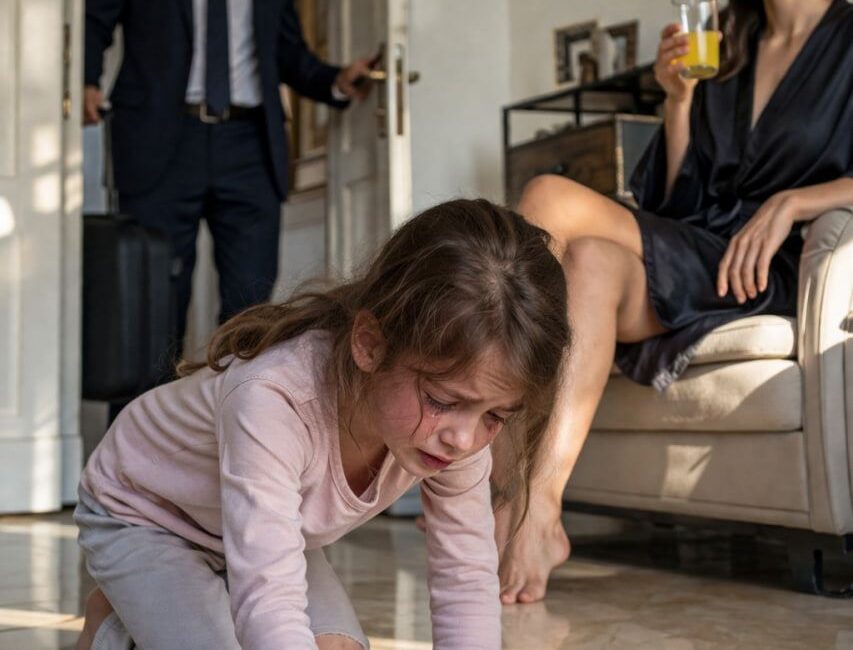
This part of the story reflects a growing issue in modern society.
Children are increasingly:
- Filmed
- Shared publicly
- Used for content
- Monetized
The Ethical Problem
Children:
- Cannot consent fully
- Do not understand long-term consequences
- Are vulnerable to manipulation
When a parent prioritizes visibility or profit over well-being, the child becomes a means—not a person.
The Psychology of Justification: How Harm Is Rationalized
The mother does not see herself as harmful.
She says:
- “It’s for her future”
- “She has potential”
- “This is how the world works”
Teaching Concept: Cognitive Dissonance
When people do harmful things, they often:
- Justify their behavior
- Reframe it as positive
- Avoid confronting reality
This protects their self-image—but not the victim.
The Child’s Experience: What This Creates Internally
Even if the child does not fully understand the situation, she feels it.
Children are highly sensitive to:
- Tone
- Emotion
- Energy
- Reactions
Long-Term Effects
This kind of environment can lead to:
- Anxiety
- Low self-worth
- Fear of failure
- Emotional withdrawal
The Father’s Decision: Taking Action
The most critical moment in the story is when the father decides:
👉 Enough is enough.
He moves from:
- Observation
- To confrontation
- To action
This is not easy.
It requires:
- Courage
- Clarity
- Responsibility
The Role of Accountability: Why Action Matters
Many people recognize problems—but do nothing.
The father does something different.
He:
- Investigates
- Confronts
- Reports
Teaching Concept: Responsibility vs Avoidance
Responsibility means:
- Facing uncomfortable truths
- Acting despite fear
- Protecting those who cannot protect themselves
The Final Scene: Safety Restored
When authorities arrive, something shifts.
The child:
- Sees her father
- Runs to him
- Holds on tightly
This is not just relief.
It is:
- Trust
- Safety
- Emotional release
Deeper Analysis: What This Story Teaches You
This story is not just about extreme situations.
It reflects everyday patterns in smaller forms.
1. Emotional Awareness
You must learn to notice:
- When something feels wrong
- Even if it looks normal
2. Power Dynamics
Relationships can become unhealthy when:
- One person controls everything
- The other has no voice
3. The Importance of Protection
Children rely on adults for:
- Safety
- Stability
- Emotional support
When that is broken, the damage is deep.
Connecting This to You: Your Emotional Sensitivity
You often feel:
- Overwhelmed
- Anxious
- Unsure how to react
This is not weakness.
It is sensitivity to emotional environments.
The key is to:
- Understand it
- Control it
- Use it wisely
A Practical Lesson: How to Recognize Red Flags
Train yourself to notice:
- Lack of empathy
- Excessive control
- Emotional coldness
- Justification of harmful behavior
These are warning signs.
The Bigger Message: Love Should Never Hurt Like This
At its core, this story reminds us:
👉 Love is not control
👉 Care is not punishment
👉 Protection is not exploitation
Conclusion: Awareness Changes Everything
This story begins with confusion.
It ends with clarity.
But the real value is in what it teaches you:
- To question what seems normal
- To trust your emotional signals
- To act when something is wrong
Because sometimes…
The most dangerous situations are not the loudest ones.
They are the quiet ones.
The ones that look normal.
Until someone decides to see clearly—and act.