The information you provided highlights how crises increase the risks associated with cassava .
In situations such as economic collapse:
- Access to resources becomes limited
- Time for proper preparation is reduced
- People prioritize survival over safety
This leads to increased cases of poisoning.
The Socioeconomic Dimension: Food, Poverty, and Risk
Cassava’s dual nature reflects broader global realities.
In wealthier regions:
- Food variety reduces dependence on a single crop
- Safety standards are enforced
In vulnerable regions:
- Limited options increase reliance on cassava
- Knowledge may not always be applied due to constraints
Concept to Learn: Risk Is Often Context-Dependent
The same food can be:
- Safe in one context
- Dangerous in another
This depends on:
- Resources
- Knowledge
- Infrastructure
Nutritional Value of Cassava: Why It Remains Essential
Cassava is not only a survival food—it also provides important nutritional benefits:
- High carbohydrate content
- Energy for daily activities
- Gluten-free properties
However, it is low in:
- Protein
- Essential micronutrients
This is why balanced diets are crucial when relying on cassava.
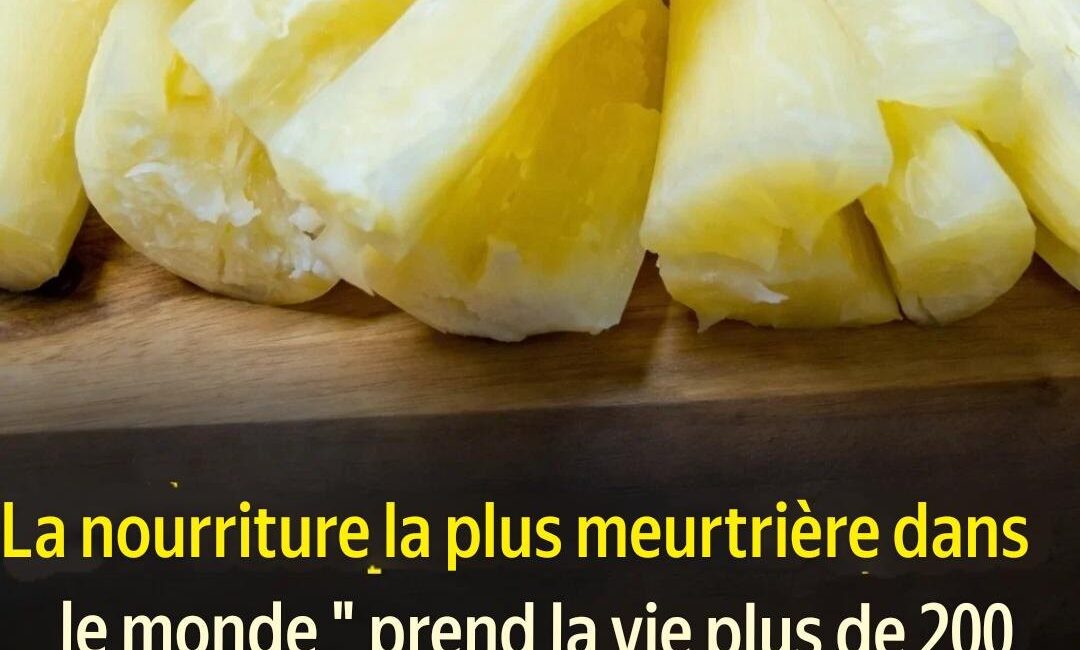
The Misleading Label: “The Deadliest Food in the World”
Calling cassava the “deadliest food” is both dramatic and misleading.
While it has caused deaths, it is not inherently dangerous when handled correctly.
Concept to Learn: Context vs Sensationalism
Labels like “deadliest” often:
- Simplify complex realities
- Attract attention
- Ignore important nuances
The truth is more balanced:
👉 Cassava is safe when prepared correctly and dangerous when not.
Modern Efforts to Improve Cassava Safety
Efforts to reduce risks include:
- Education programs on proper preparation
- Development of low-toxin cassava varieties
- Improved food processing techniques
These initiatives aim to:
- Protect vulnerable populations
- Preserve cassava as a vital food source
The Deeper Lesson: Respecting Food and Knowledge
Cassava teaches an important lesson:
👉 Not all danger comes from unfamiliar sources.
👉 Sometimes, it comes from what we depend on most.
The key is not fear, but understanding.
Conclusion: A Food of Survival, Knowledge, and Balance
Cassava is a powerful symbol of the relationship between humans and nature.
It represents:
- Survival in challenging environments
- The importance of traditional knowledge
- The balance between risk and nourishment
It is neither purely dangerous nor purely safe.
It is:
👉 A reminder that knowledge transforms risk into life.
Understanding cassava is not just about food—it is about awareness, adaptation, and the ability of human societies to thrive even in the face of complexity.
And that is what truly makes this story remarkable.