- A vascular event
- A warning bleed
- Arterial instability
While more common in hemorrhagic stroke, severe sudden headache should never be ignored.
The FAST Rule
Medical professionals use FAST:
F – Face drooping
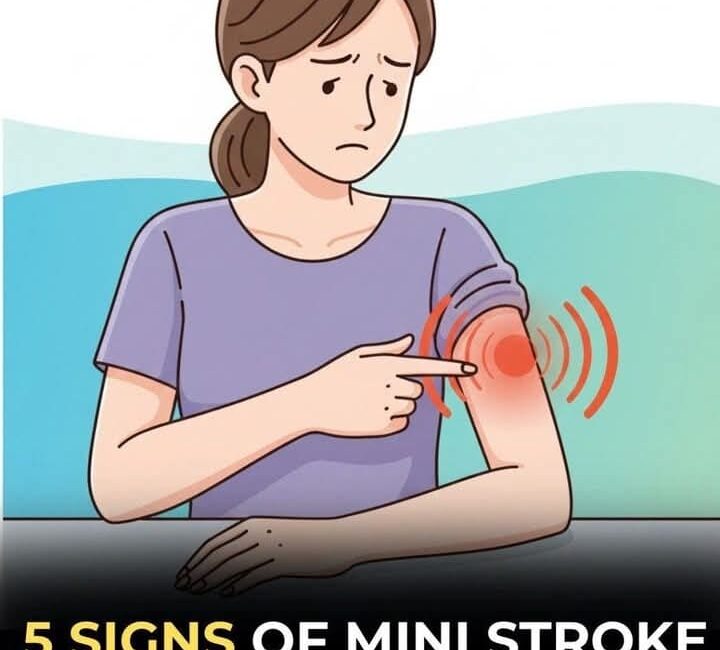
A – Arm weakness
S – Speech difficulty
T – Time to call emergency services
Even if symptoms resolve within minutes:
Call emergency services.
Do not wait.
Do not “see if it happens again.”
Time matters.
Why Symptoms Disappear — and Why That’s Dangerous
In a TIA:
The blockage resolves spontaneously.
Blood flow returns.
Symptoms fade.
But:
The clot source may still exist.
The artery may still be narrowed.
The heart rhythm may still be irregular.
The event is a warning shot.
Ignoring it increases risk of permanent brain damage later.
Risk Factors in the Elderly
Common contributors include:
High blood pressure
Atrial fibrillation
High cholesterol
Diabetes
Smoking
Sedentary lifestyle
Obesity
Previous TIA
Family history of stroke
Atrial fibrillation is particularly important.
It causes irregular heartbeats that can produce clots traveling to the brain.
Older adults often have undiagnosed AFib.
What To Do Immediately
If you suspect a mini stroke:
Call emergency services immediately.
Even if symptoms improve.
Emergency departments may:
- Perform brain imaging
- Check carotid arteries
- Conduct heart monitoring
- Start blood thinners
- Adjust blood pressure medication
Early intervention reduces stroke risk significantly.
Common Mistakes That Delay Help
- “It went away, so it’s fine.”
- “They’re just tired.”
- “It’s low blood sugar.”
- “Let’s wait and see.”
Waiting is the most dangerous choice.
Diagnostic Testing After a TIA
Doctors may perform:
CT scan or MRI
Carotid ultrasound
Echocardiogram
Electrocardiogram (ECG)
Blood tests
The goal:
Identify source of clot or narrowing.
Treatment depends on cause.
Prevention After a Mini Stroke
Once identified, prevention may include:
Antiplatelet medication
Anticoagulants
Blood pressure control
Cholesterol management
Lifestyle modification
Smoking cessation
Surgical intervention if arteries severely narrowed
Prevention is highly effective when started early.
Emotional Impact of a Mini Stroke
Many elderly individuals experience:
Fear
Anxiety
Confusion
Denial
Family support is crucial.
Education reduces panic.
Knowledge empowers action.
Distinguishing TIA from Other Conditions
Some conditions can mimic TIA:
- Migraines with aura
- Seizures
- Low blood sugar
- Inner ear disorders
- Anxiety attacks
Only medical evaluation can differentiate.
Never self-diagnose.
Long-Term Outlook
With prompt treatment:
Stroke risk drops dramatically.
Without treatment:
Risk of major stroke increases sharply within days to weeks.
A TIA is an opportunity.
A second chance.
A warning.
Supporting an Elderly Loved One
If you care for someone older:
Know the signs.
Keep emergency numbers accessible.
Monitor blood pressure regularly.
Encourage medication compliance.
Promote light physical activity if safe.
Attend medical appointments together.
Preparedness saves time.
Time saves brain cells.
Final Thoughts
A mini stroke is not “mini” in importance.
It is a critical warning event.
The five major signs — sudden weakness, speech difficulty, vision change, balance loss, or severe headache — demand immediate attention.
Even if symptoms vanish.
Especially in the elderly.
The brain cannot afford delays.
If something feels sudden and neurological:
Act.
Call emergency services.
Intervention in the first hours can prevent permanent damage.
Knowledge is protection.
Recognition is power.
And responding quickly could preserve independence, mobility, and quality of life for years to come.