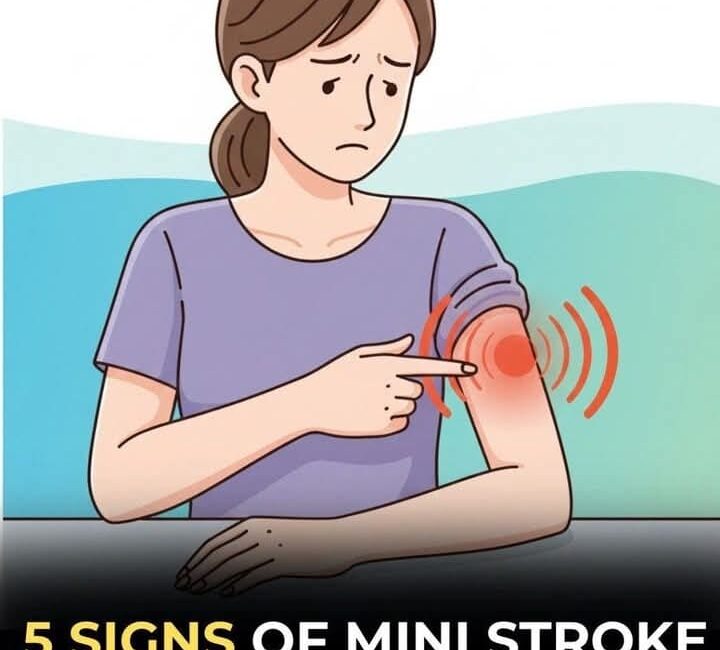
Understanding Transient Ischemic Attacks (TIAs), Why They Matter, and What To Do Immediately
A “mini stroke” sounds small.
Temporary.
Brief.
Maybe even harmless.
But medically, a mini stroke — properly called a Transient Ischemic Attack (TIA) — is not minor.
It is a warning.
A TIA is often described as a “warning stroke” because it produces stroke-like symptoms that resolve within minutes to hours — yet signals a significantly increased risk of a full stroke in the near future.
In elderly individuals especially, recognizing these signs quickly can mean the difference between prevention and permanent disability.
This article will explore:
- What a mini stroke actually is
- How it differs from a full stroke
- The 5 major warning signs
- Why symptoms may disappear
- Risk factors in older adults
- What to do immediately
- Long-term prevention strategies
- Common misconceptions
Understanding this condition clearly and calmly could save a life.
What Is a Mini Stroke?
A mini stroke, or Transient Ischemic Attack (TIA), occurs when blood flow to part of the brain is temporarily blocked.
Unlike a full ischemic stroke:
- The blockage is short-lived.
- Brain cells are deprived of oxygen briefly.
- Symptoms resolve within 24 hours — often much sooner.
But here is the critical fact:
Even though symptoms disappear, the underlying problem remains.
A TIA is often caused by:
- A small blood clot that dissolves
- A narrowed artery
- Plaque instability
- Temporary circulation disruption
It is not harmless.
Statistics show that:
- Up to 1 in 3 people who have a TIA will later experience a full stroke.
- The highest risk period is within the first 48 hours.
That makes immediate action essential.
Why Mini Strokes Are Especially Dangerous in the Elderly
As people age, blood vessels change.
They may become:
- Narrowed (atherosclerosis)
- Stiffer
- More prone to clot formation
Older adults also have higher rates of:
- High blood pressure
- Diabetes
- Atrial fibrillation
- High cholesterol
These conditions increase stroke risk.
Additionally, symptoms in elderly individuals may be dismissed as:
- Fatigue
- “Just aging”
- Dehydration
- Confusion
This delay in response increases risk.
The 5 Major Signs of a Mini Stroke in the Elderly
Even though symptoms may disappear, they follow recognizable patterns.
The key principle:
If symptoms appear suddenly and neurologically, assume emergency.
1. Sudden Weakness or Numbness on One Side of the Body
One of the most classic signs of a TIA is sudden weakness or numbness affecting:
- Face
- Arm
- Leg
Typically on one side.
You might notice:
- Drooping mouth
- Difficulty lifting one arm
- Leg dragging
- Tingling or loss of sensation
Ask the person to:
Smile.
Raise both arms.
If one side drops — this is serious.
Even if it improves after minutes.
2. Sudden Trouble Speaking or Understanding Speech
Speech changes are extremely important.
You may observe:
- Slurred speech
- Inability to find words
- Confused responses
- Difficulty understanding simple sentences
This can resemble:
Momentary disorientation.
But sudden onset is the key clue.
If someone cannot repeat a simple sentence clearly, it may indicate brain blood flow interruption.
3. Sudden Vision Changes
Vision disturbances may include:
- Blurred vision
- Double vision
- Temporary blindness in one eye
- Partial visual field loss
In elderly individuals, temporary vision loss is sometimes misattributed to:
- Eye strain
- Cataracts
- Fatigue
But if it happens suddenly and resolves quickly, consider TIA.
4. Sudden Loss of Balance or Coordination
The person may:
- Stagger
- Feel dizzy
- Lose coordination
- Struggle to walk normally
This is especially common in posterior circulation TIAs affecting the brainstem or cerebellum.
Because older adults may already have balance issues, this symptom is often minimized.
Sudden and unexplained is the red flag.
5. Sudden Severe Headache (Less Common but Important)
A sudden intense headache without known cause may signal:
Click page 2 to continue