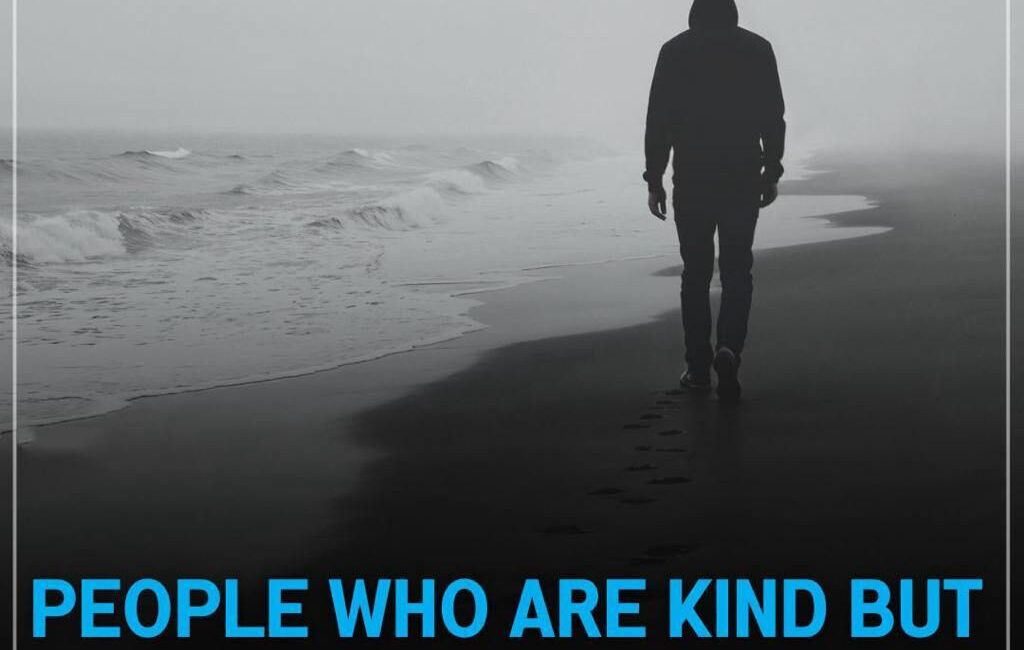
When most people picture a kind-hearted individual, they imagine someone constantly surrounded by love, laughter, and company — the center of every group, the friend everyone turns to. Yet in reality, the most compassionate, gentle souls are often the ones walking alone. They move through life quietly, preferring meaningful connection over popularity, depth over noise, and sincerity over social performance.
It’s a strange paradox — how can the warmest hearts have the smallest circles? Why would someone who gives so much love and light to the world end up isolated or overlooked? The truth lies in the nature of kindness itself. Real kindness is not performative. It’s not loud, and it doesn’t demand recognition. True kindness often lives in stillness, patience, and authenticity — qualities that don’t always blend well with the chaotic pace and superficial patterns of modern relationships.
Kind individuals often possess a rare sensitivity that allows them to see beyond appearances. They read emotions, sense pain, and offer compassion without expecting anything in return. But that same emotional intelligence and self-awareness can make them more cautious, selective, and introspective. They value sincerity so deeply that they’d rather be alone than surrounded by people who don’t understand or respect their essence.
If you’ve ever wondered why the gentlest souls you know tend to have the fewest friends, these nine quiet behaviors will help you understand. These patterns aren’t signs of weakness. They’re reflections of strength — the kind of quiet power that grows from integrity, empathy, and emotional maturity.
1. They Listen Deeply Instead of Talking Loudly
In a world that often rewards volume over value, kind people are the quiet ones who choose to listen before they speak. They don’t interrupt or compete for attention. Instead, they make space for others.
Their listening is active and intentional. When you speak to them, they don’t just hear your words — they absorb your emotions. They notice the tremor in your voice, the shift in your body language, the hesitation behind your smile. They remember what you tell them, even the small details that others forget.
But this depth of listening comes with a trade-off. In large social settings, they can easily fade into the background. They’re not the ones dominating conversations or telling stories just to keep attention. They prefer one-on-one exchanges, where authenticity thrives over performance.
This makes them seem quiet or withdrawn to casual acquaintances. Yet, those who take the time to really engage with them discover a profound depth. They realize that kind people may not talk the most, but when they do, their words carry weight — wisdom, empathy, and truth.
Because they listen so deeply, they form slow but meaningful connections. And in a culture obsessed with speed, that kind of depth often goes unnoticed.
2. They Stay Away From Gossip and Group Drama
Many social bonds are built on gossip — shared secrets, mutual judgment, and small bursts of excitement at someone else’s expense. But kind people don’t find comfort in negativity. They understand that gossip is a form of emotional pollution, and they’d rather walk away than participate in it.
When conversations turn toxic, they go silent. They don’t attack or scold; they simply step back. For them, peace is more valuable than inclusion.
This can sometimes make them appear distant or “too serious.” Friends who thrive on gossip might even label them boring or unapproachable. But that’s not the case. They’re simply protecting their energy.
They know that constant exposure to negativity changes a person’s energy. So, they choose to keep their mind and heart clear. Their friendships are built on trust, respect, and emotional safety — not entertainment or judgment.
In the short term, this choice may leave them with fewer friends. But in the long term, it preserves their mental health and integrity. They may not have a large circle, but the few relationships they maintain are genuine, supportive, and drama-free.
3. They Set Boundaries Quietly
One of the most misunderstood aspects of kindness is boundaries. Many assume that kind people say yes to everything — that they’re always available, always giving, and never saying no. But the truth is, the kindest people often understand the importance of protecting their own peace.
True compassion includes self-compassion.
Kind individuals give wholeheartedly, but they also know their limits. When they feel drained or overwhelmed, they step back. They might decline invitations, take longer to reply to messages, or spend time alone. This isn’t because they don’t care. It’s because they care deeply — and constant giving without rest would burn them out.
Their boundaries are rarely announced. They don’t lecture others about respecting them. Instead, they lead by quiet example. They remove themselves from environments that feel wrong. They distance themselves from people who take without giving.
To those who misunderstand, this can look like coldness or detachment. But for kind souls, it’s an act of preservation. Boundaries aren’t walls; they’re gates that keep their compassion pure and sustainable.
4. They Feel Empathy Deeply — Sometimes Too Deeply
Empathy is the heartbeat of kindness. Kind people don’t just understand others’ emotions — they feel them.
If someone near them is sad, they sense it instantly. They may absorb that sadness like a sponge, carrying it with them long after the conversation ends. A single moment of conflict can linger in their mind for days. A friend’s pain can feel like their own.
This emotional sensitivity is a double-edged sword. It makes them compassionate, comforting, and understanding — but it also leaves them vulnerable to exhaustion. When you feel everything, the world can become overwhelming.
To protect themselves, kind individuals often need solitude. They withdraw not to escape others, but to recover from feeling so much. Their quiet moments are a form of healing — a way to process emotions that run deeper than most people realize.
Because of this, they might avoid large gatherings, loud parties, or emotionally charged groups. They prefer calm spaces where they can breathe and reconnect with themselves.
Empathy gives them incredible emotional insight, but it also sets them apart. Not everyone can handle that level of sensitivity, and not everyone appreciates it. So while their hearts are wide open, their friendships tend to be few — and precious.
5. They Don’t Crave Attention or Validation
Kind people are rarely the ones posting their every thought online, fishing for likes or compliments. Their sense of worth doesn’t come from how visible they are — it comes from how aligned they feel with their values.
They don’t need to be the star of the room. They find fulfillment in helping others quietly, often without recognition. A simple thank-you is enough, and even when it doesn’t come, they don’t dwell on it.
This humility can make them easy to overlook. In a society where self-promotion often replaces authenticity, kind people can seem invisible. But they’re not seeking applause. They’re seeking meaning.
They understand that true validation is internal. It’s knowing that they acted with integrity, even if no one noticed. It’s sleeping peacefully at night because they didn’t compromise their morals.
Their self-assurance is quiet, but it’s powerful. They may not chase attention — but when you meet one, you feel their calm strength immediately.
6. They Value Quality Over Quantity in Relationships
For kind individuals, friendship is not a numbers game. They’re not interested in collecting contacts or hosting large social circles. What matters to them is connection — real, deep, mutual connection.
They don’t want to just know people; they want to understand them. They crave conversations that go beyond the surface: hopes, fears, purpose, growth.
This level of depth is rare in a fast-paced world. Many people prefer lighter connections — easy, casual, temporary. That’s fine, but it doesn’t resonate with someone who values emotional intimacy.
Because they seek quality, kind people often find themselves waiting. They wait for the right people who match their wavelength. And while they wait, they spend much of their time alone.
This solitude isn’t loneliness — it’s intentional space. They’d rather have one or two genuine friendships than twenty superficial ones. And when they find those few, they cherish them fiercely.
7. They Forgive, But They Don’t Forget
Kind individuals are naturally forgiving. They understand that people make mistakes and that everyone is fighting unseen battles. Their empathy allows them to see both sides, to extend grace where others might seek revenge.
But forgiveness doesn’t mean ignorance. When someone repeatedly disrespects or hurts them, they remember. They may forgive the act, but they quietly distance themselves from the behavior.
This confuses people who equate kindness with weakness. But kind people aren’t naïve — they’re discerning. They know when someone’s apology is sincere and when it’s manipulation.
Their forgiveness is not an invitation to hurt them again. It’s a way of freeing themselves from resentment. They let go, but they learn. That wisdom, though silent, shapes how they move through the world — careful, compassionate, but firm.
8. They Are Honest, Even When It’s Uncomfortable
Kindness is often mistaken for people-pleasing. But true kindness isn’t about avoiding discomfort — it’s about honesty with compassion.
Kind individuals don’t lie to spare feelings if the lie would cause harm later. They’ll tell the truth, but gently. Their goal is never to humiliate, but to help others grow.
This can make them stand out in social circles where superficial flattery is common. Some people don’t appreciate honest feedback, even when it’s given with care. As a result, kind individuals may be misunderstood or even avoided by those who prefer comfort over truth.
But they don’t change who they are. They know that real kindness sometimes requires courage — the courage to be truthful, to set boundaries, to say no, to walk away. Their honesty builds deep trust with those who value integrity.
Over time, they become the friend people turn to not for comfort alone, but for clarity.
9. They Protect Their Energy — and That Can Make Them Appear Distant
The kindest people often carry a deep awareness of their energy. They know how easily their emotional batteries can be drained by chaos, negativity, or shallow interaction.
So they guard their peace carefully. They might avoid certain gatherings, stop responding to energy-draining texts, or spend weekends alone instead of at parties.
To the outside world, this can look like withdrawal or coldness. But in truth, it’s a survival mechanism. Kindness requires energy. And when that energy is constantly depleted, it turns into exhaustion.
By being selective about where they place their attention, kind people ensure that their compassion remains authentic. They don’t want to give others the tired, fragmented version of themselves. They want to give from a full heart.
So yes — they often appear quiet, reserved, or even solitary. But that solitude isn’t loneliness. It’s maintenance — a way of staying balanced, kind, and emotionally available for the people who truly matter.
The Deeper Psychology of Kind People and Loneliness
Beneath these behaviors lies something deeper — an emotional landscape shaped by sensitivity, self-awareness, and introspection.
Kind people are often empaths, meaning they unconsciously absorb the feelings and energies of those around them. In crowded or intense environments, this can become overwhelming. They may retreat, not out of disinterest, but out of necessity.
Additionally, kind individuals tend to think deeply about their relationships. They notice when dynamics shift, when authenticity fades, when conversations become transactional. Their sensitivity makes them aware of subtle emotional cues that others might miss.
This can lead to quiet heartbreak. When someone they love acts insincere or manipulative, they feel it profoundly. They may not confront the person immediately, but they’ll slowly withdraw.
Over time, these patterns create a smaller but truer circle of trust.
Society’s Misunderstanding of Kindness
Modern culture often glorifies loud confidence, extroversion, and visibility. We celebrate those who promote themselves boldly, network aggressively, and stay constantly connected.
In this landscape, kindness — which is patient, soft-spoken, and humble — can seem outdated. People mistake it for weakness or passivity. They overlook it because it doesn’t demand attention.
But kindness is not weakness. It is controlled strength. It’s the ability to stay compassionate in a world that rewards selfishness. It’s emotional intelligence in action — the art of balancing care for others with care for oneself.
The kind people who walk alone aren’t lonely by default. They’ve simply chosen peace over performance.
The Strength Hidden in Solitude
Click page 2 for more