
There is something magical about walking through a garden that feels alive with personality. Not just filled with flowers and greenery, but infused with color, creativity, warmth, and imagination. A beautiful garden does more than showcase plants — it creates emotion. It becomes a space where people slow down, breathe more deeply, reconnect with nature, and feel inspired simply by being there.
And sometimes, the smallest details create the biggest transformation.
That is exactly why one colorful DIY project is suddenly capturing attention everywhere. People are taking ordinary gray concrete pavers — the kind most homeowners barely notice — and transforming them into vibrant rainbow stepping stones that completely change the atmosphere of their outdoor spaces.
At first glance, concrete pavers are practical but uninspiring. They are associated with functionality rather than beauty:
- neutral pathways,
- plain patios,
- and basic landscaping.
But once coated in brilliant rainbow shades like bright red, glowing orange, sunny yellow, lush green, ocean blue, and rich purple, those same dull stones become something entirely different.
Suddenly the garden feels:
- whimsical,
- artistic,
- joyful,
- playful,
- and deeply personal.
The transformation is dramatic because color changes emotional perception instantly.
A once-forgotten garden trail becomes a cheerful pathway that looks almost enchanted. Visitors stop to admire it. Children become fascinated by it. Neighbors ask where the stepping stones were purchased. And the entire outdoor environment feels brighter, more welcoming, and more alive.
What makes this DIY project especially appealing is that it combines:
- affordable landscaping,
- outdoor décor,
- artistic expression,
- and personalized garden design in a way that feels both accessible and visually striking.
It proves something important about design:
you do not need expensive renovations or luxury landscaping to create an unforgettable outdoor space.
Sometimes all it takes is color, imagination, and the willingness to see ordinary materials differently.
Why Outdoor Spaces Matter More Than Ever
Modern life keeps people indoors constantly.
Many individuals spend most of their days:
- staring at screens,
- sitting in offices,
- navigating stress,
- or moving through crowded environments.
As a result, outdoor spaces have become increasingly important as places of emotional restoration.
Gardens are no longer viewed simply as lawns or decorative yards.
They are becoming:
- wellness spaces,
- creative retreats,
- entertainment areas,
- meditation zones,
- and personal sanctuaries.
Even small visual upgrades can dramatically affect how an outdoor space feels emotionally.
Rainbow stepping stones are powerful because they instantly inject:
- positivity,
- movement,
- personality,
- and visual energy into a landscape.
They turn pathways into experiences.
The Emotional Power of Color in Garden Design
Color psychology plays an enormous role in how people experience spaces.
Bright colors naturally stimulate:
- happiness,
- creativity,
- optimism,
- and emotional warmth.
Neutral gray concrete often fades into the background emotionally. But vibrant rainbow tones activate attention immediately.
Each color contributes something unique:
- Red adds energy and excitement.
- Orange creates warmth and friendliness.
- Yellow introduces optimism and brightness.
- Green connects naturally to growth and balance.
- Blue feels calming and peaceful.
- Purple introduces richness and imagination.
Together, these shades create dynamic emotional movement throughout the garden.
This is why rainbow pathways feel so enchanting.
They guide not only the eye but also the mood.
Why DIY Garden Projects Are Becoming So Popular
People increasingly want outdoor spaces that feel:
- unique,
- expressive,
- and emotionally connected to their personalities.
Mass-produced landscaping can sometimes feel sterile or generic.
DIY projects allow homeowners to create environments that reflect:
- creativity,
- individuality,
- and emotional warmth.
Rainbow stepping stones are especially appealing because they combine:
- simplicity,
- affordability,
- and dramatic visual impact.
The project is approachable even for beginners, yet the results feel surprisingly artistic and professional.
The Hidden Beauty of Concrete Pavers
Concrete pavers are often overlooked because of their utilitarian appearance.
But they are actually perfect canvases for creative transformation because they offer:
- durability,
- flat surfaces,
- weather resistance,
- and structural strength.
Once painted, they become functional outdoor art pieces.
Unlike delicate decorations, painted pavers can withstand:
- foot traffic,
- outdoor exposure,
- and changing seasons.
This combination of beauty and practicality makes them ideal for garden pathways.
How to Create Rainbow Garden Stepping Stones
One reason this project has become so widespread is because it is surprisingly simple.
You do not need advanced landscaping skills.
You do not need expensive equipment.
You do not need professional design experience.
With basic materials and a little creativity, almost anyone can completely transform a garden path.
Materials You Will Need
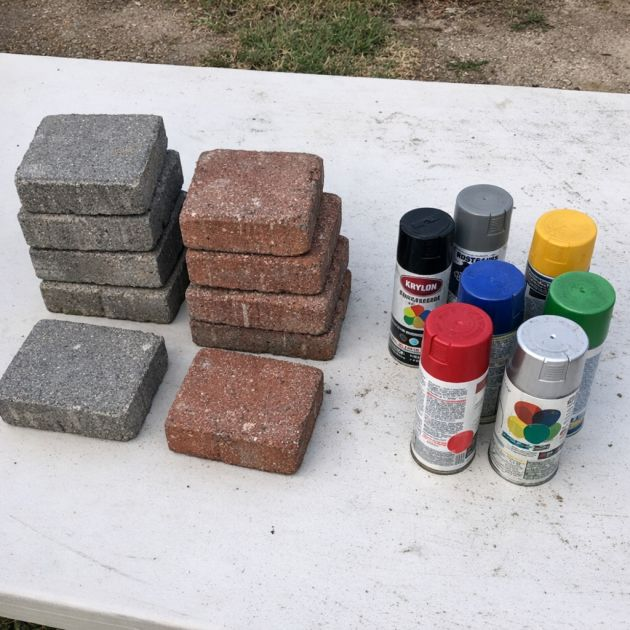
To begin, gather:
- Plain concrete pavers
- Spray paint in rainbow colors
- Drop cloth or newspaper
- Painter’s tape
- Protective gloves
- Outdoor workspace
Optional additions include:
- stencils,
- sealant,
- glow-in-the-dark paint,
- metallic accents,
- or decorative edging.
The affordability of the materials is part of what makes this project so exciting.
Step 1: Prepare the Workspace
Choose an outdoor area with good ventilation.
Lay down:
- drop cloths,
- cardboard,
- or newspapers to protect surrounding surfaces.
This step is important because spray paint travels easily and can stain unintended areas.
Organization during setup makes the painting process smoother and more enjoyable.
Step 2: Arrange the Pavers
Place the concrete pavers with enough space between them for easy access.
At this stage, the plain gray stones still appear ordinary and industrial.
That contrast makes the final transformation even more dramatic later.
Step 3: Plan the Rainbow Pattern
Before painting, decide on:
- color sequence,
- arrangement style,
- and pathway mood.
Some people prefer:
- full rainbow gradients,
- random colorful placement,
- alternating tones,
- or soft ombré transitions.
This planning stage turns the project into a form of artistic expression rather than simple painting.
Step 4: Apply the Paint
Shake each spray paint can thoroughly before use.
Apply thin, even coats while holding the can several inches away from the surface.
Patience matters here.
Light layers create smoother finishes and prevent dripping.
As the colors begin covering the gray concrete, the transformation becomes immediately exciting.
The pavers suddenly stop looking industrial and start looking joyful.
Step 5: Add Additional Coats
Most vibrant colors require:
- two or three coats for maximum richness.
Layering intensifies saturation and creates stronger visual impact.
Bright pigments especially benefit from multiple coats because they appear more luminous outdoors under natural sunlight.
Step 6: Create Patterns and Designs
For additional creativity, use painter’s tape or stencils to create:
- stripes,
- geometric shapes,
- floral patterns,
- inspirational words,
- stars,
- or abstract art.
This customization transforms each stepping stone into an individual artistic piece.
No two pathways ever need to look alike.
Step 7: Arrange the Finished Stones in the Garden
Once dry, place the stepping stones along:
- flower beds,
- grassy paths,
- vegetable gardens,
- patios,
- or side yard walkways.
The placement dramatically affects the emotional atmosphere of the space.
Curved pathways feel whimsical and storybook-like.
Straight paths feel modern and bold.
Spiral or zigzag layouts feel artistic and playful.
Why Rainbow Pathways Feel So Magical
Click page 2 to continue