Introduction: When Food Becomes Art
In today’s world, cooking is no longer just about satisfying hunger—it has evolved into a powerful form of self-expression, creativity, and even emotional storytelling. A dish can communicate elegance, care, and imagination without a single word being spoken. Among the many creative culinary presentations emerging in modern kitchens, one concept stands out for its beauty and originality: the unveiled bouquet of deviled eggs designed to resemble delicate tulips.
This dish transforms a familiar classic—deviled eggs—into an artistic centerpiece that feels almost too beautiful to eat. It blends visual aesthetics with rich, savory flavors, making it perfect for gatherings, celebrations, or simply elevating your everyday meals. But beyond the visual appeal, this recipe also teaches valuable culinary principles: precision, balance of flavors, presentation techniques, and the importance of detail.
In this in-depth guide, you will not only learn how to create this edible bouquet step by step, but also understand the deeper concepts behind it—why each step matters, how to personalize it, and how to elevate it into a truly memorable experience.
Understanding the Concept: What Is an Unveiled Egg Bouquet?
Before diving into the technical steps, it’s important to understand the idea behind this dish.
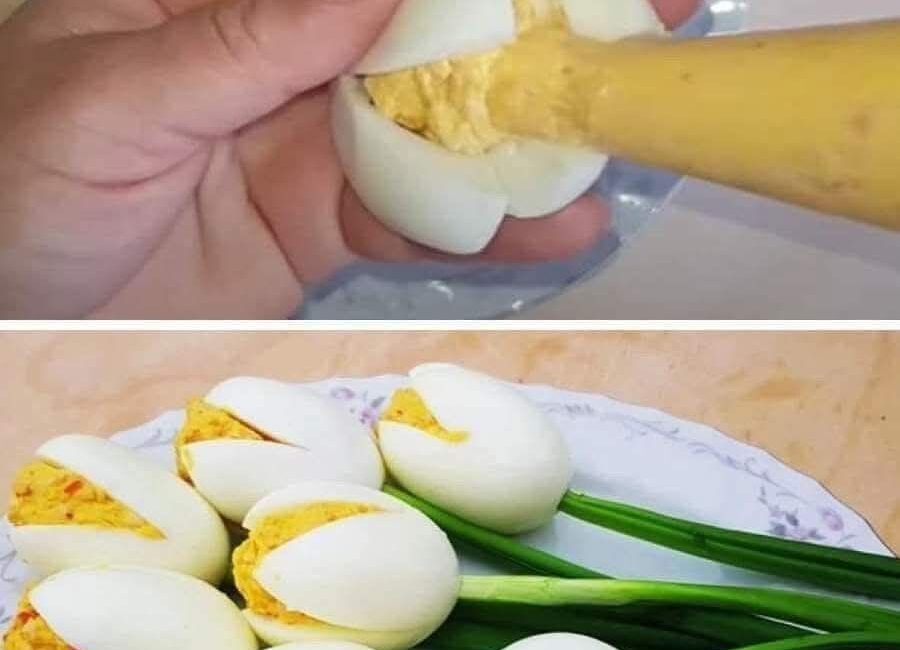
An unveiled bouquet of eggs is essentially a reinterpretation of deviled eggs, shaped and styled to resemble blooming tulips. The egg whites act as petals, the filling becomes the center of the flower, and green onions serve as stems. When arranged together, they create the illusion of a fresh bouquet—except it’s entirely edible.
This concept works because it combines three powerful elements:
- Familiarity: Deviled eggs are widely loved and recognizable.
- Surprise: The floral design creates an unexpected visual twist.
- Elegance: The presentation elevates a simple dish into something luxurious.
This combination is what makes the recipe so impactful—it appeals both emotionally and sensorially.
The Foundation: Choosing and Boiling the Perfect Eggs
Why Egg Quality Matters
The success of this dish begins with the eggs themselves. Choosing high-quality eggs ensures better taste, texture, and structure. Fresh eggs have firmer whites, which helps maintain the petal shape when cut.
The Science of Boiling Eggs
Boiling eggs may seem simple, but doing it correctly is crucial. Overcooked eggs develop a gray-green ring around the yolk and a rubbery texture, while undercooked eggs won’t hold their shape.
To achieve perfection:
- Place eggs in a pot and cover them with cold water.
- Bring the water to a gentle boil.
- Once boiling, reduce heat and let them simmer for about 9–12 minutes.
- Immediately transfer them to ice water to stop the cooking process.
Concept to Learn: Thermal Control
Cooking eggs teaches you about temperature control. Sudden cooling prevents overcooking and makes peeling easier by separating the membrane from the shell.
Shaping the Petals: Turning Eggs into Tulips
The Cutting Technique
This is where creativity meets precision.
Using a sharp knife, carefully cut a cross at the top of each egg. The cuts should extend slightly outward, mimicking the opening petals of a tulip. This step requires patience and a steady hand.
Why Precision Matters
If the cuts are too deep, the egg may fall apart. If too shallow, the “petals” won’t open properly. The goal is balance—creating structure while allowing flexibility.
Removing the Yolks
Gently scoop out the yolks without damaging the outer shell. This hollow space will later hold the flavorful filling.
Concept to Learn: Structural Integrity in Food
This step teaches how to manipulate food structure without breaking it. It’s similar to carving or sculpting—every movement must be controlled.
Creating the Filling: Flavor, Texture, and Balance
Ingredients Overview
The filling combines:
- Egg yolks (for richness)
- Crab meat (for a subtle seafood flavor)
- Cream cheese (for smoothness)
- Salt and paprika (for seasoning and depth)
Mixing for Perfection
Mash the yolks until smooth, then blend with the other ingredients. The goal is a creamy, lump-free mixture that holds its shape when piped.
Why This Combination Works
- Yolks provide a creamy base.
- Cream cheese adds stability and a luxurious texture.
- Crab meat introduces a delicate, slightly sweet contrast.
- Paprika enhances both flavor and visual appeal.
Concept to Learn: Flavor Balance
A great dish balances richness, saltiness, and subtle sweetness. No single ingredient should overpower the others.
The Art of Filling: Precision and Presentation
Using a Piping Bag
Transfer the mixture into a piping bag for better control. If unavailable, a simple plastic bag with a cut corner works just as well.
Filling Technique
Pipe the mixture into the hollow eggs, allowing it to slightly overflow to mimic the natural center of a flower.
Why This Step Is Important
The filling is not just about taste—it defines the visual identity of the tulip. A neat, well-shaped center enhances the illusion of a real flower.
Concept to Learn: Controlled Placement
This step teaches accuracy and consistency—skills essential in both cooking and presentation.
Creating the Stems: Completing the Illusion
Using Green Onions
Pierce a small hole at the base of each egg and insert a green onion. This becomes the “stem” of the tulip.
Why Green Onions?
- They are sturdy enough to hold the egg.
- Their color enhances the floral illusion.
- They add a fresh, slightly sharp flavor that balances the richness of the filling.
Concept to Learn: Visual Harmony
The combination of white eggs, yellow filling, and green stems creates a natural, visually pleasing color palette.
Presentation Mastery: Turning Food into a Bouquet
Creating the Garden Effect
Arrange the eggs on a platter lined with lettuce or kale. This mimics grass and enhances the bouquet appearance.
Spacing and Composition
Avoid overcrowding. Allow space between each “flower” so the shapes remain distinct.
Layering for Depth
Place some eggs slightly higher than others to create a more natural, dynamic arrangement.
Concept to Learn: Visual Composition
Presentation follows principles similar to art—balance, spacing, and contrast.
Adding Color: Elevating the Visual Experience
Natural Food Coloring
To create different tulip colors, add natural coloring to the filling:
- Beet juice for pink
- Turmeric for deeper yellow
- Spinach extract for green tones
Why Color Matters
Click page 2 to continue