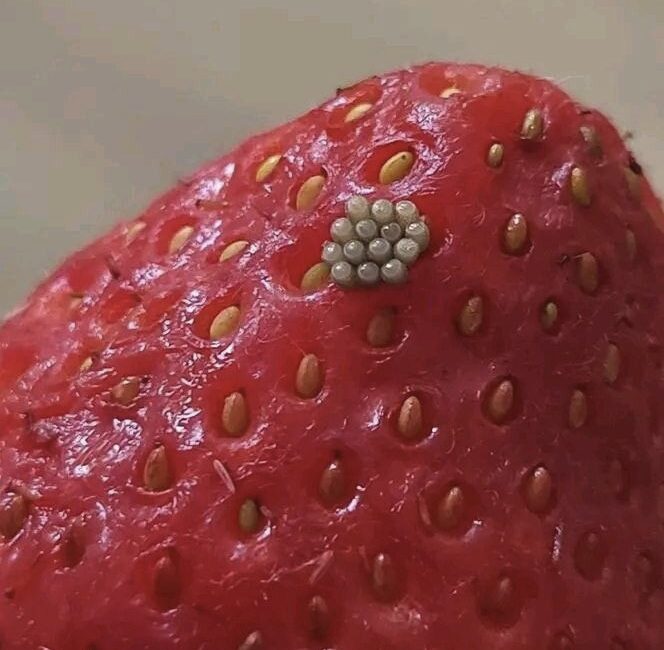
Few things are as unsettling as preparing something fresh and healthy—like a bowl of strawberries—only to suddenly notice tiny white, wiggling creatures emerging after soaking them in salt water. The moment triggers immediate questions: Is this normal? Is it dangerous? Should I throw everything away?
This experience, which has become increasingly common and widely discussed, is not just about food—it is about perception, safety, biology, and understanding the hidden realities of what we eat. According to the scenario described , such discoveries often involve small white larvae emerging from fruits like strawberries after soaking, leading to concern and confusion.
This article will take you far beyond the surface reaction. You will learn what these organisms actually are, why they appear, whether they are dangerous, and how to make informed decisions without panic. Most importantly, you will gain a deeper understanding of how nature, agriculture, and food safety intersect in ways that are often invisible—until suddenly, they are not.
The Strawberry: A Beautiful but Vulnerable Fruit
Strawberries are one of the most beloved fruits in the world. Their bright red color, sweet flavor, and soft texture make them a favorite across cultures. But what many people do not realize is that strawberries are also among the most exposed fruits.
Unlike fruits with thick skins—such as bananas or oranges—strawberries have:
- A delicate outer surface
- Tiny openings
- Seeds (achenes) embedded on the outside
This structure makes them more vulnerable to:
- Insects
- Environmental contamination
- Microorganisms
👉 Concept to learn: Surface Exposure
Fruits with exposed surfaces are more likely to interact with their environment, including insects and bacteria.
This is not a flaw—it is simply how nature works.
What Are the White Worms You See After Soaking?
When strawberries are soaked in salt water and small white worms emerge, they are usually:
👉 Insect larvae (often fruit fly larvae or similar small insects)
These larvae are:
- Tiny
- White or translucent
- Previously hidden inside or on the surface of the fruit
Why Do They Appear Only After Soaking?
This is where it becomes interesting.
Salt water creates an environment that:
- Irritates the larvae
- Forces them out of hiding
- Makes them visible
Before soaking, they may be:
- Inside tiny crevices
- Embedded near the surface
- Too small to notice
👉 Concept to learn: Stimulus Response
Organisms react to environmental changes. Salt acts as a trigger, causing larvae to move.
So the worms were not “created” by the salt water—they were already there.
How Do These Larvae Get Into Strawberries?
To understand this, you need to think like nature.
Insects are constantly searching for:
- Food sources
- Safe places to reproduce
Strawberries are ideal because:
- They are soft
- They are nutrient-rich
- They are accessible
Certain insects lay eggs directly on or inside the fruit. When the eggs hatch, the larvae begin feeding.
According to the explanation , this is a natural agricultural occurrence, especially in environments where fruits are exposed to open air and insects.
Does This Mean the Fruit Is Unsafe?
This is the most important question.
The Honest Answer: It Depends
Not Automatically Dangerous
In many cases:
- These larvae are not harmful if accidentally ingested
- They are part of natural ecosystems
However…
Not Appetizing or Ideal
Even if not dangerous, they indicate:
- Contamination
- Insect activity
- Reduced food quality
👉 Concept to learn: Food Safety vs Food Acceptability
- Safety = will it harm you?
- Acceptability = would you want to eat it?
Something can be technically safe but still unacceptable.
Should You Throw the Strawberries Away?
Let’s be practical and clear.
If You See Visible Larvae
👉 Yes, it is recommended to discard them.
Why?
- You cannot guarantee full removal
- It indicates deeper contamination
- It affects both hygiene and peace of mind
If You Do Not See Anything but Want to Be Safe
You can:
- Wash thoroughly
- Inspect carefully
- Remove damaged parts
But once you see active larvae, the safest decision is to throw them away.
Why This Happens More Often Than You Think
This is not a rare phenomenon—it is just rarely noticed.
Reasons
- Increased Awareness
People are paying more attention to food quality. - Viral Content
Social media has made these discoveries more visible. - Organic Farming
Less pesticide use means more natural insect presence.
👉 Concept to learn: Trade-off in Organic Farming
- Less chemicals
- More natural exposure
There is no perfect system—only different balances.
The Psychological Reaction: Why It Feels So Disturbing
Seeing small clusters of worms triggers a strong emotional response.
This is not random.
👉 Concept to learn: Trypophobia
Click page 2 to continue