Bread has been one of humanity’s most essential foods for thousands of years. From the earliest flatbreads baked over fire to the crusty artisan loaves found in modern bakeries, bread has long symbolized nourishment, comfort, and community. Despite its simplicity—often made with just flour, water, yeast, and salt—bread behaves in surprisingly complex ways once it leaves the oven.
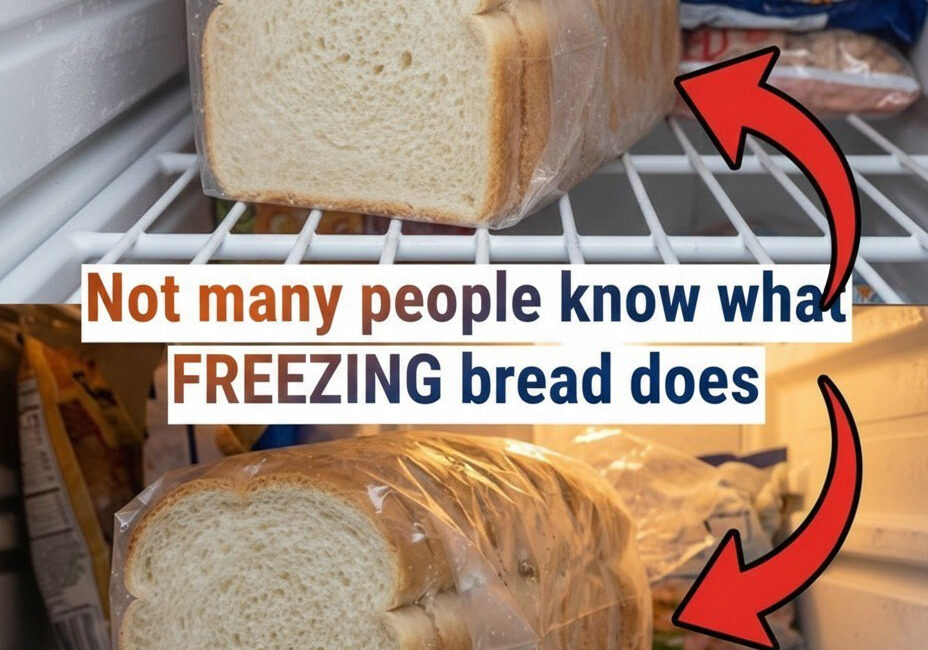
One common habit in households around the world is freezing bread. Some people freeze bread to extend its shelf life. Others do it to avoid food waste or to preserve fresh bakery loaves for later. Yet many people wonder whether freezing bread changes its quality, taste, or nutritional value.
Does freezing bread ruin it? Does it preserve it perfectly? Why does bread sometimes taste different after being frozen and thawed?
Behind these everyday questions lies a fascinating combination of chemistry, physics, and food science. Bread is not just a simple baked product—it is a delicate structure of starch, water, proteins, and air. When it enters the freezer, a series of microscopic changes begin to take place.
Understanding these processes can help people store bread better, maintain its flavor and texture, and avoid the disappointment of a dry or crumbly slice.
The freezer may seem like a simple storage tool, but when it comes to bread, it becomes a laboratory where temperature, moisture, and molecular structures interact in subtle and surprising ways.
The Hidden Structure of Bread
To understand what happens when bread goes into the freezer, it helps to first understand what bread actually is on a microscopic level.
Bread may appear solid, but in reality it is a highly complex structure composed of tiny air pockets surrounded by networks of starch and gluten proteins.
During baking, yeast produces carbon dioxide gas. This gas forms bubbles inside the dough, which expand as heat causes the dough to rise. When the bread bakes fully, these bubbles become the soft, airy crumb we see inside a loaf.
At the same time, the starch molecules from flour absorb water and gelatinize, forming a semi-solid structure that stabilizes the bread’s shape. Gluten proteins create a flexible network that holds everything together.
The result is a delicate matrix made of:
- Water, which keeps the bread moist
- Starch, which provides structure
- Proteins, mainly gluten, which give elasticity
- Air pockets, which create softness
This structure is stable at room temperature but constantly changing over time.
As bread sits on the counter, it begins a natural aging process known as staling.
Freezing interrupts this process in fascinating ways.
The Science of Bread Staling
Many people assume bread becomes stale simply because it dries out.
In reality, staling is mostly caused by changes in starch molecules.
When bread is baked, starch molecules absorb water and expand. This process is called gelatinization. It is what gives freshly baked bread its soft and tender texture.
However, once the bread cools, these starch molecules slowly begin reorganizing themselves into a more rigid crystalline structure. This process is known as starch retrogradation.
Retrogradation causes several noticeable effects:
- Bread becomes firmer
- The crumb feels drier
- The texture becomes crumbly
Interestingly, the bread may still contain the same amount of moisture. The water is simply redistributed within the structure, making the bread feel dry.
This process happens most rapidly at temperatures between 0°C and 10°C, which is why storing bread in the refrigerator actually makes it stale faster.
The freezer, however, works differently.
What Happens When Bread Is Frozen
When bread enters the freezer, temperatures drop below the point where most molecular movement occurs.
This slows down the chemical reactions responsible for staling.
At around –18°C (0°F), the water inside bread begins to freeze and form ice crystals. These crystals immobilize water molecules, preventing them from interacting with starch structures.
As a result, the process of starch retrogradation slows dramatically.
In simple terms, freezing pauses the aging process of bread.
This is why bread stored in the freezer can remain fresh for weeks or even months, while bread left on the counter becomes stale within a few days.
However, freezing does introduce some changes of its own.
Ice Crystals and Bread Texture
Water makes up a significant portion of bread’s internal structure.
When bread freezes, the water within the crumb turns into ice. As it freezes, the water expands slightly and forms microscopic crystals.
If bread is frozen slowly, these ice crystals can grow large enough to damage the delicate structure of the crumb.
Large ice crystals may:
- Break cell walls in the bread
- Create small cavities in the crumb
- Lead to a slightly drier texture after thawing
However, when bread is frozen quickly, the ice crystals remain smaller and cause less structural damage.
This is why commercial bakeries often use flash freezing, a process that rapidly freezes bread to preserve its original texture.
In household freezers, freezing happens more slowly, but the effects are usually minimal if the bread is wrapped properly.
Why Frozen Bread Often Tastes Fresh Again
One surprising aspect of freezing bread is that when thawed correctly, it often tastes remarkably similar to freshly baked bread.
This happens because freezing halts the staling process at the moment the bread enters the freezer.
If bread is frozen while still fresh, its texture and flavor are essentially preserved in time.
When the bread thaws, the starch structures resume their normal behavior, but they start from the point at which freezing paused them.
Reheating bread in an oven can even reverse some staling effects by re-gelatinizing starch molecules and redistributing moisture.
This is why frozen bread that is warmed briefly often regains softness and aroma.
Nutritional Changes in Frozen Bread
A common question about freezing bread concerns nutrition.
Does freezing change the nutrients inside bread?
The answer is mostly no.
The major nutrients in bread—carbohydrates, proteins, fiber, vitamins, and minerals—remain stable during freezing.
However, freezing can create a subtle nutritional effect related to starch digestion.
When bread is frozen and later thawed, some of the starch can convert into resistant starch.
Resistant starch behaves differently from normal starch in the digestive system. Instead of being rapidly broken down into glucose, it passes into the large intestine where it functions more like dietary fiber.
This can lead to several potential benefits:
- Slower blood sugar rise after eating
- Improved gut microbiome activity
- Slightly lower calorie absorption
Although the effect is modest, it demonstrates how food storage methods can influence digestion.
Preventing Freezer Burn in Bread
Click page 2 to continue