Tomatoes are among the most beloved crops in home gardens around the world. Their bright flavor, versatility in the kitchen, and remarkable productivity make them a staple for gardeners from backyard enthusiasts to professional growers. Yet many tomato beds share a common flaw that quietly limits their potential: bare soil.
At first glance, leaving the ground exposed beneath tomato plants may seem logical. After all, many traditional gardening methods emphasize neat rows and clear spaces around crops. Bare soil appears tidy and organized. However, from an ecological perspective, exposed ground represents lost opportunity. It also invites a cascade of problems that gardeners often struggle to manage: weeds, soil erosion, pest infestations, and rapid moisture loss.
Nature rarely leaves soil uncovered. In natural ecosystems, plants grow in layers—tall plants above, medium-height plants in the middle, and low-growing groundcovers hugging the soil surface. This layered structure stabilizes the environment, protects soil biology, and supports beneficial insects.
Tomatoes thrive when their growing conditions mimic these natural patterns. Instead of leaving empty space between stems, gardeners can create a living floor beneath their tomato canopy. Carefully selected companion plants grow low and close to the ground, filling unused space while providing multiple ecological services.
These companions can fix nitrogen in the soil, attract predatory insects, repel pests through aromatic compounds, suppress weeds, and regulate soil temperature and moisture. Some even function as trap crops, drawing pests away from tomatoes entirely.
When chosen wisely, these plants do not compete with tomatoes. Instead, they support them. The result is a garden bed that behaves more like a miniature ecosystem than a simple planting row.
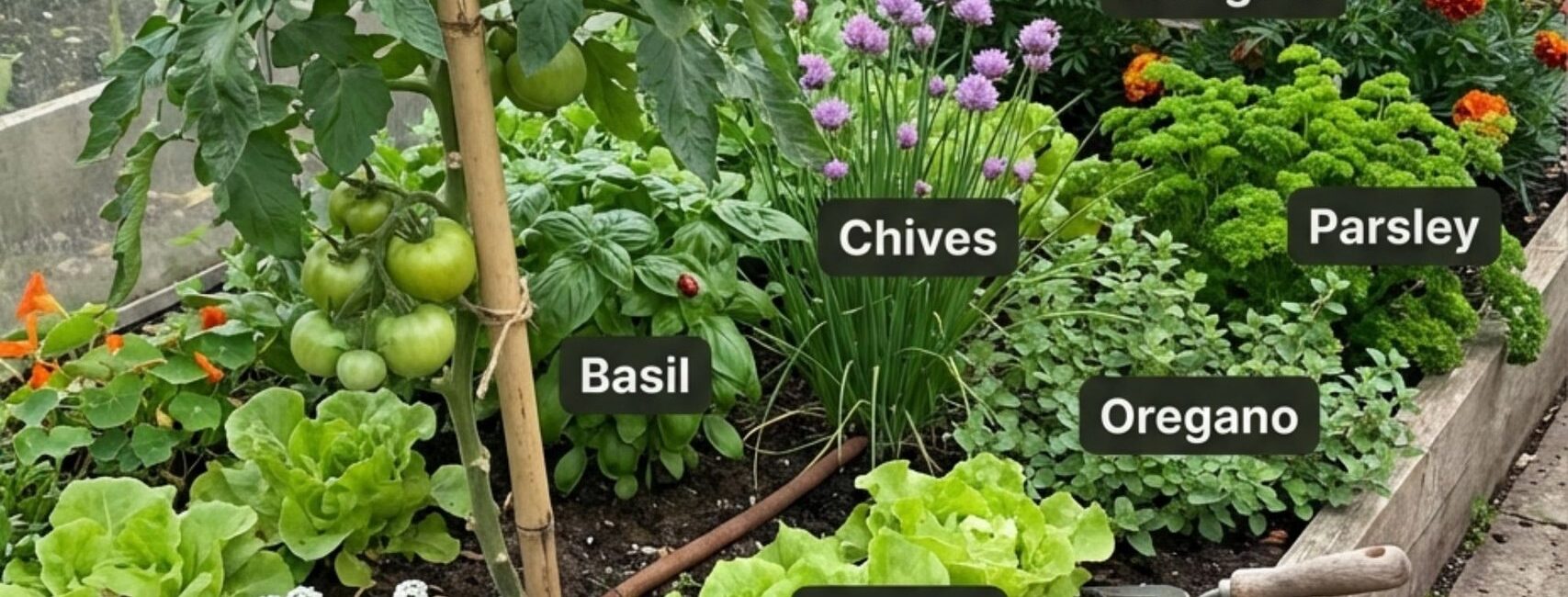
This article explores the concept of companion planting beneath tomatoes in depth. It explains why bare soil creates problems, how layered planting systems work, and how specific companion plants—such as basil, white clover, marigolds, sweet alyssum, parsley, chives, nasturtium, oregano, and lettuce—can transform tomato beds into thriving, self-supporting communities.
By understanding the biological interactions occurring beneath the tomato canopy, gardeners can cultivate healthier plants, reduce pest pressure, conserve water, and harvest more abundant crops with less effort.
Why Bare Soil Creates Problems in Tomato Beds
To understand the value of companion plants, it helps to examine what happens when soil is left uncovered.
Bare soil may look clean and orderly, but it introduces several hidden challenges.
Rapid Moisture Loss
Soil exposed to sunlight heats quickly. As temperature rises, moisture evaporates from the surface. Tomatoes require consistent moisture for healthy growth and fruit development, yet exposed soil loses water rapidly during warm weather.
Companion plants function as living mulch, shading the soil surface and reducing evaporation.
Weed Invasion
Weeds are opportunistic plants that thrive in open spaces. Bare soil provides ideal conditions for weed seeds to germinate.
Once weeds take hold, they compete with tomatoes for water and nutrients. Frequent weeding becomes necessary to maintain the bed.
Dense groundcover plants block sunlight from reaching weed seeds, preventing many of them from sprouting.
Pest Accessibility
Open soil allows pests easy access to tomato plants. Insects can locate host plants more easily when there are no competing scents or visual distractions.
Companion plants create a more complex environment. Aromatic foliage and diverse plant shapes confuse pests and make it harder for them to locate tomatoes.
Soil Temperature Extremes
During hot summer days, exposed soil can become excessively warm. High soil temperatures stress plant roots and disrupt microbial life.
Groundcover plants moderate temperature fluctuations by shading the soil and maintaining a cooler microclimate.
Understanding the Concept of Companion Planting
Companion planting is an agricultural strategy that pairs different plant species together so that they benefit each other.
This practice has deep roots in traditional farming systems. Indigenous agricultural cultures around the world developed planting combinations that maximized productivity while minimizing pests.
One famous example is the Three Sisters planting method, which combines corn, beans, and squash in a mutually supportive system.
In tomato beds, companion plants provide several ecological functions.
Nitrogen Fixation
Some plants, particularly legumes, form partnerships with soil bacteria that convert atmospheric nitrogen into a form plants can absorb.
This process enriches the soil with nutrients.
Pest Confusion
Many pests locate their host plants using scent and visual cues. Aromatic herbs release volatile oils that mask the scent of tomatoes.
This phenomenon is sometimes called chemical camouflage.
Predator Attraction
Flowering companion plants provide nectar and pollen for beneficial insects. These insects, such as hoverflies and parasitic wasps, prey on pests that attack tomatoes.
Soil Coverage
Low-growing plants act as living mulch, covering soil surfaces and protecting moisture.
When these functions combine, the tomato bed becomes more resilient and self-regulating.
Basil: Aromatic Protection and Flavorful Partnership
Few companion plants are as closely associated with tomatoes as basil. The pairing appears frequently in both gardens and kitchens, and the relationship extends beyond culinary tradition.
Basil releases aromatic compounds known as essential oils. These oils contain substances such as eugenol and linalool, which insects often find unpleasant.
Many gardeners report reduced populations of aphids, whiteflies, and certain moth species when basil grows near tomatoes.
While scientific evidence about flavor enhancement remains debated, some growers claim that basil planted nearby improves tomato taste.
Regardless of flavor effects, basil contributes valuable pest resistance and thrives in similar growing conditions as tomatoes: warm temperatures, full sunlight, and moderately rich soil.
When planted near the base of tomato plants, basil also fills vertical space without interfering with airflow.
White Clover: The Living Nitrogen Factory
White clover is a remarkable plant in the context of sustainable gardening.
Unlike most plants, clover forms a partnership with bacteria known as Rhizobium, which live inside nodules on the plant’s roots. These bacteria capture nitrogen from the air and convert it into compounds that plants can use.
This natural fertilization process enriches soil fertility without synthetic fertilizers.
White clover also forms a dense carpet across the soil surface. This living mulch suppresses weeds while protecting soil from erosion.
Another advantage is moisture retention. Clover leaves shade the soil, slowing evaporation and keeping root zones cooler during hot weather.
Because clover grows low and spreads horizontally, it rarely interferes with tomato growth above.
Marigolds: Natural Soil Defenders
Marigolds have long been used as companion plants in vegetable gardens. Their value lies partly in their roots.
French marigolds release chemicals into the soil that can suppress populations of certain parasitic nematodes. Nematodes are microscopic worms that attack plant roots, weakening crops and reducing yields.
The strong scent of marigold foliage also deters some insect pests, including whiteflies and flea beetles.
In addition to pest control benefits, marigolds produce bright orange and yellow flowers that attract pollinators and beneficial insects.
Their cheerful blooms add visual beauty to tomato beds while supporting the ecosystem beneath.
Sweet Alyssum: A Tiny Flower with Powerful Ecological Impact
Click page 2 to continue