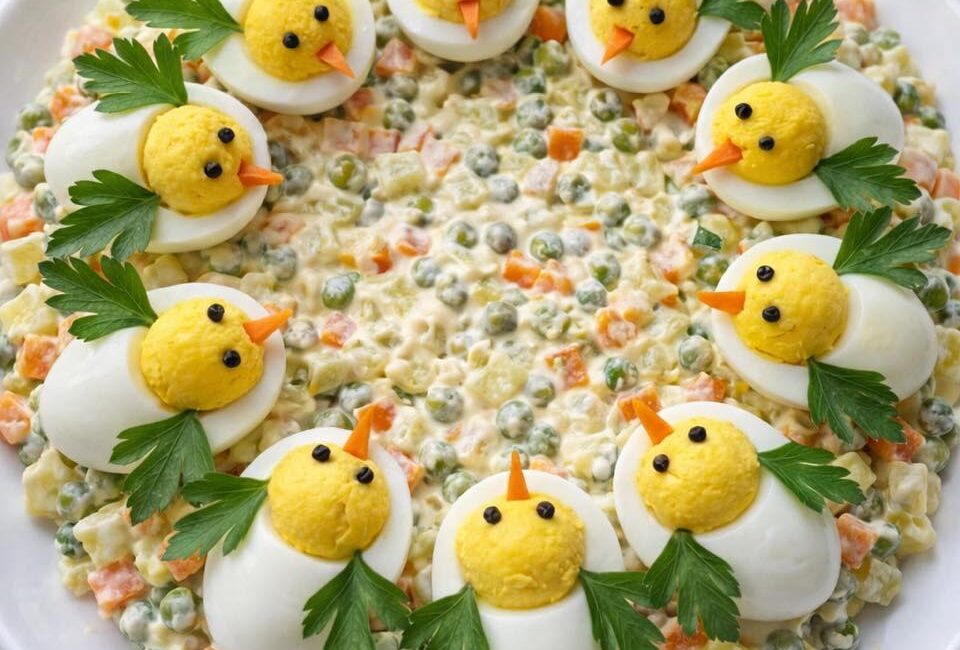
Food has always carried meanings that extend far beyond simple nourishment. Across cultures and generations, meals have served as expressions of hospitality, celebration, memory, and creativity. Certain dishes even become symbolic centerpieces during special occasions, blending taste, visual charm, and shared experiences around the table. One particularly delightful example of this tradition is Festive Chick Deviled Egg Potato Salad—a playful and visually engaging dish that transforms classic potato salad and deviled eggs into an imaginative presentation resembling tiny chicks.
At first glance, the recipe might appear whimsical or decorative, but beneath the charming appearance lies a thoughtfully balanced combination of flavors and textures. Creamy potatoes provide a hearty base. Bright vegetables add freshness and color. Tangy pickles and mustard introduce complexity. Finally, deviled eggs shaped like cheerful chicks crown the dish with both flavor and personality.
The result is more than a simple salad. It becomes an edible centerpiece capable of elevating a family gathering, spring celebration, or festive table. Beyond its visual appeal, the recipe also demonstrates useful culinary techniques—from cooking vegetables properly to building balanced dressings and shaping decorative food elements.
This article explores the dish in depth. Rather than presenting it as just a list of ingredients and instructions, we will examine the culinary science behind potato salad, the history of deviled eggs, the cultural symbolism of eggs and springtime foods, and the artistic techniques used to create decorative chick shapes. Along the way, practical tips will ensure that the final result tastes just as impressive as it looks.
By understanding the principles behind the recipe, cooks can confidently recreate the dish and even adapt it creatively for their own gatherings.
The Cultural Roots of Potato Salad and Deviled Eggs
Before diving into the preparation, it helps to understand the culinary traditions behind the two main components of the dish.
Potato Salad: A Dish with Global Variations
Potato salad appears in many cuisines around the world. The concept is simple: cooked potatoes combined with seasonings, herbs, and a creamy or tangy dressing. Yet the specific flavors vary dramatically depending on cultural influences.
In parts of Europe, potato salads are often dressed with vinegar and oil rather than mayonnaise. These versions tend to be lighter and served warm. In other regions, creamy versions dominate, often enriched with eggs, pickles, or mustard.
Potatoes themselves became widespread in global cuisine after being introduced from the Americas centuries ago. Because they grow well in many climates and store efficiently, potatoes quickly became a staple ingredient across continents.
The creamy potato salad familiar to many people today evolved gradually as mayonnaise became widely available. The addition of vegetables such as carrots and peas further enhanced both flavor and visual appeal.
Deviled Eggs: A Classic Appetizer with a Spicy History
Deviled eggs have an equally fascinating culinary story. The term “deviled” historically referred to foods that were highly seasoned, particularly with mustard, pepper, or spices.
The basic preparation involves boiling eggs, removing the yolks, and mixing them with flavorful ingredients before returning the filling to the egg whites. The creamy mixture contrasts beautifully with the smooth egg white shell.
Over time, deviled eggs became a staple appetizer for gatherings, picnics, and celebrations. Their simple ingredients and elegant appearance made them particularly popular for festive meals.
In this recipe, deviled eggs are transformed into adorable chick shapes, adding a playful visual dimension that makes the dish especially appealing for springtime celebrations.
Why This Dish Works: The Balance of Flavor and Texture
Successful recipes often rely on a balance between several sensory elements. The Festive Chick Deviled Egg Potato Salad achieves harmony by combining contrasting flavors and textures.
Creaminess
Mayonnaise and egg yolks create a rich, smooth texture that coats the potatoes and vegetables.
Freshness
Peas and carrots introduce sweetness and brightness, preventing the salad from feeling too heavy.
Tanginess
Mustard and pickle juice provide acidity, which cuts through the richness of the mayonnaise.
Soft and Firm Textures
Tender potatoes contrast with the slight firmness of vegetables and the delicate structure of egg whites.
When these elements are balanced correctly, each bite delivers complexity rather than monotony.
Understanding these flavor relationships helps cooks adjust the recipe according to personal taste preferences.
Selecting the Best Ingredients for Success
Every great dish begins with quality ingredients. Even a simple salad can taste extraordinary when prepared with fresh, carefully chosen components.
Choosing Potatoes
The type of potato affects the texture of the finished salad.
Waxy potatoes, such as red or Yukon varieties, hold their shape better after cooking. They create a salad with defined chunks rather than a mashed consistency.
Starchy potatoes break down more easily, producing a softer texture.
For this dish, waxy potatoes are generally preferred because they maintain structure while absorbing the dressing.
Carrots and Peas
Carrots provide subtle sweetness and vibrant color. Dicing them finely ensures they blend evenly with the potatoes.
Peas contribute freshness and bright green contrast. Frozen peas work well because they are typically harvested and frozen at peak freshness.
Pickles and Acidity
Dill pickles add both crunch and tangy flavor. Some cooks prefer to omit them, but their acidity can significantly enhance the salad’s complexity.
Pickle juice or lemon juice performs an important culinary function. Acid brightens the dish and prevents the richness of mayonnaise from becoming overwhelming.
Preparing the Potato Salad Base
The foundation of the dish is the potato salad itself. Proper technique ensures the vegetables cook evenly and maintain their structure.
Cooking Potatoes
Potatoes should be placed in cold salted water before heating. Starting with cold water allows them to cook evenly from the inside out.
If potatoes are dropped directly into boiling water, the outer layers may soften too quickly while the interior remains firm.
Cooking continues until the potatoes are fork-tender, meaning a fork slides in easily but the pieces still hold their shape.
Overcooking can cause potatoes to crumble when mixed with dressing.
Cooking Carrots with Potatoes
Adding carrots during the final minutes of cooking is an efficient technique. The carrots soften slightly without becoming mushy.
Because carrots require less cooking time than potatoes, introducing them near the end ensures both vegetables reach ideal texture simultaneously.
Blanching Peas
Peas cook quickly. Brief blanching in hot water—about two minutes—is usually sufficient.
Blanching preserves their bright green color while maintaining a slight firmness.
Building the Dressing: The Science of Flavor Balance
The dressing combines several ingredients that work together chemically to produce balanced flavor.
Mayonnaise as an Emulsion
Mayonnaise is an emulsion, meaning oil and water-based ingredients are suspended together through the action of egg yolks.
This structure creates a creamy texture capable of coating vegetables evenly.
Mustard’s Role
Click page 2 to continue