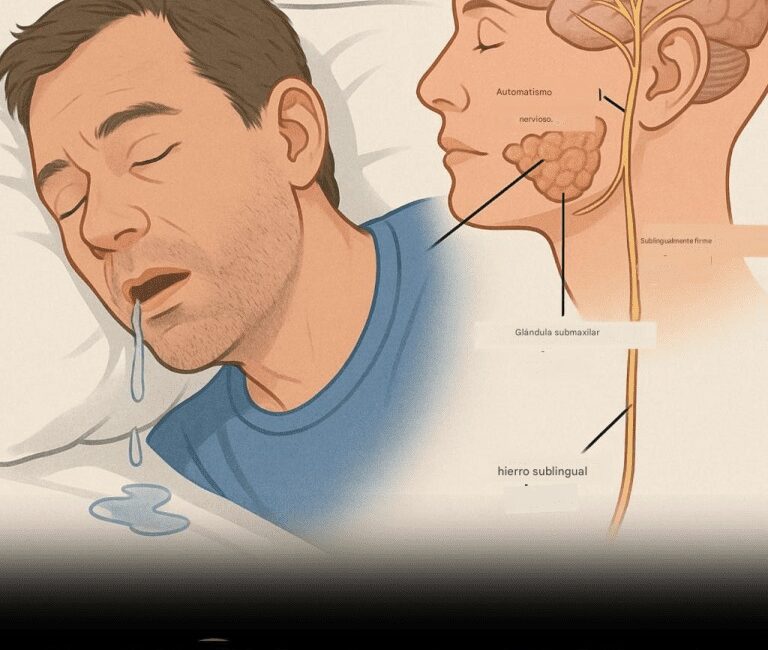
A Deep, Comprehensive Guide to Nighttime Drooling, What It Means, and When to Pay Attention
Drooling while sleeping is something many people dismiss as harmless — even embarrassing. It can feel minor, awkward, or simply inconvenient. You wake up, flip the pillow over, and move on with your day.
But sometimes, persistent nighttime drooling is not just about sleeping on your side.
It can be a signal.
Saliva production, swallowing reflexes, breathing patterns, nerve control, muscle tone, and even gastrointestinal health all influence whether saliva stays where it belongs.
In this in-depth guide, we will explore:
- Why drooling happens
- When it’s normal
- When it might signal an underlying health issue
- Six medical conditions linked to excessive drooling during sleep
- What to look for
- When to seek medical attention
- And how to address the problem safely
This article is educational, not diagnostic. If drooling is persistent or accompanied by other symptoms, consulting a healthcare professional is important.
Understanding Drooling: What Is Actually Happening?
Drooling, medically called sialorrhea, occurs when saliva escapes the mouth unintentionally.
There are two main reasons this happens:
- Excess saliva production
- Difficulty controlling or swallowing saliva
During sleep, saliva production normally decreases. However, muscle tone also relaxes. The swallowing reflex slows down. If the mouth falls open and saliva pools, gravity may allow it to escape.
Occasional drooling is common.
Persistent drooling may indicate something deeper.
Why We Produce Saliva
Saliva is essential. It:
- Lubricates food
- Aids digestion
- Protects teeth
- Maintains oral health
- Fights bacteria
The average adult produces between 0.5 to 1.5 liters of saliva per day.
This production is controlled by:
- The autonomic nervous system
- Salivary glands
- Brainstem swallowing centers
Any disruption in these systems can alter saliva flow or control.
When Is Nighttime Drooling Normal?
Drooling can be normal if:
- You sleep deeply
- You sleep on your side or stomach
- You are congested
- You are extremely tired
- You recently changed medications
In these cases, drooling is mechanical.
But if drooling is frequent, worsening, or accompanied by other symptoms, it may warrant investigation.
1. Sleep Apnea
One of the most overlooked causes of nighttime drooling is obstructive sleep apnea (OSA).
What Is Sleep Apnea?
Sleep apnea is a condition where breathing repeatedly stops and starts during sleep.
In obstructive sleep apnea:
- Throat muscles relax excessively
- Airway collapses partially
- Breathing becomes labored
- Mouth breathing increases
When you breathe through your mouth at night, saliva accumulates and may escape.
Other Signs of Sleep Apnea:
- Loud snoring
- Gasping for air during sleep
- Morning headaches
- Daytime fatigue
- Poor concentration
- Dry mouth upon waking
Sleep apnea is associated with:
- High blood pressure
- Heart disease
- Stroke
- Diabetes
Drooling combined with heavy snoring and daytime exhaustion should prompt evaluation.
2. Gastroesophageal Reflux Disease (GERD)
GERD is a digestive condition where stomach acid flows back into the esophagus.
How GERD Causes Drooling
When acid rises into the esophagus:
- The body increases saliva production to neutralize acid
- This is called “water brash”
- Excess saliva may accumulate during sleep
GERD symptoms may worsen when lying flat.
Additional Signs:
- Heartburn
- Sour taste in mouth
- Chronic cough
- Hoarseness
- Chest discomfort
Nighttime drooling accompanied by reflux symptoms should not be ignored.
Untreated GERD can damage the esophagus over time.
3. Neurological Disorders
Saliva control depends heavily on nerve coordination.
Certain neurological conditions impair muscle control and swallowing reflexes.
Parkinson’s Disease
In Parkinson’s:
- Muscle rigidity affects swallowing
- Automatic swallowing frequency decreases
- Saliva pools and escapes
Drooling is common in Parkinson’s patients.
Other symptoms include:
- Tremors
- Slowed movement
- Stiffness
- Facial masking
Stroke
A previous stroke can affect facial muscles and swallowing reflexes.
Signs may include:
- One-sided weakness
- Slurred speech
- Facial drooping
- Difficulty swallowing
Amyotrophic Lateral Sclerosis (ALS)
ALS affects motor neurons controlling muscles.
Drooling may occur due to:
- Weak facial muscles
- Impaired swallowing
Neurological causes are serious and require medical evaluation.
4. Sinus Infections and Chronic Nasal Congestion
When nasal passages are blocked:
- You breathe through your mouth
- Mouth remains open
- Saliva escapes more easily
Chronic sinusitis, allergies, or nasal polyps can contribute.
Click page 2 to continue