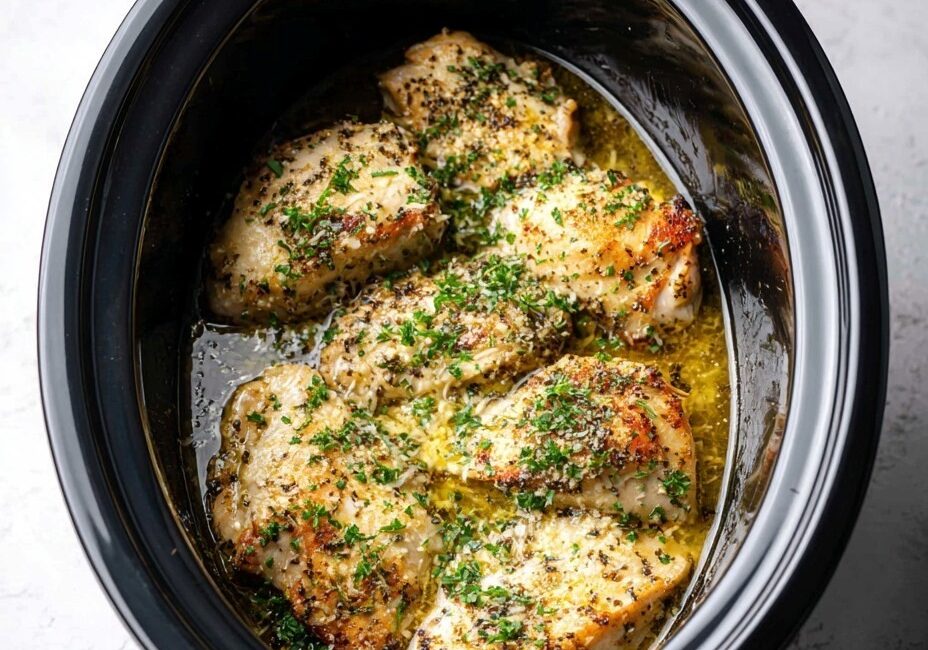
Some recipes don’t just feed people—they win them over. They quiet conversations. They make forks move faster. They create that moment where everyone at the table takes a bite, pauses, and then immediately goes back for more. Garlic Parmesan chicken is one of those dishes.
What makes this version so remarkable is not complexity, rare ingredients, or professional-level technique. It’s the opposite. This dish proves a powerful truth about cooking: when a few humble ingredients are treated with respect and combined thoughtfully, the result can feel luxurious, comforting, and irresistible.
Five everyday ingredients. One pan. A sauce so creamy and savory it clings to every bite of chicken. And a flavor profile that feels indulgent without being heavy, familiar without being boring.
This article isn’t just about a recipe. It’s about why this dish works so well, how each ingredient earns its place, and how something so simple can become a repeat favorite that disappears faster than you expect.
Why Garlic Parmesan Chicken Has Universal Appeal
Before diving into technique, it helps to understand why garlic Parmesan chicken resonates with so many people.
At its core, this dish sits at the intersection of three deeply satisfying elements:
- Umami richness from Parmesan cheese
- Aromatic warmth from garlic
- Comforting creaminess from a simple sauce
These flavors are familiar across cultures. Garlic is one of the most widely used ingredients in the world. Parmesan brings salt, depth, and nuttiness. Chicken provides a neutral, tender canvas that absorbs flavor beautifully.
Nothing here challenges the palate. Instead, it reassures it.
That’s why this dish works just as well for a casual weeknight dinner as it does for guests. It feels special without trying too hard.
The Power of Limitation: Why Five Ingredients Matter
In modern cooking culture, it’s easy to equate “good” with “complex.” Long ingredient lists can feel impressive, but they often dilute focus. When too many flavors compete, nothing stands out.
This garlic Parmesan chicken thrives because it is limited.
Each ingredient has a clear role:
- One provides protein and structure
- One builds aroma
- One creates richness
- One adds salt and depth
- One brings everything together into a sauce
There is no filler. No excess. No distraction.
This restraint is what allows the dish to taste cohesive instead of cluttered.
Ingredient One: Chicken – The Foundation of the Dish
Chicken is often underestimated, treated as a default protein rather than a star. But in this recipe, chicken does exactly what it should: it carries flavor.
Boneless, skinless chicken breasts or thighs both work, but they behave slightly differently.
- Chicken breasts give a leaner result and soak up sauce beautifully when cooked carefully.
- Chicken thighs bring extra juiciness and richness thanks to their higher fat content.
Either choice becomes tender when cooked gently and finished in sauce.
The key is not overcooking. Chicken doesn’t need aggression. It needs patience and even heat so it stays moist and receptive to the sauce that follows.
Ingredient Two: Garlic – The Aromatic Backbone
Garlic is not just flavor here—it’s atmosphere.
When garlic hits warm fat, it releases compounds that trigger immediate hunger. That smell is deeply ingrained in human memory. It signals comfort, nourishment, and anticipation.
In this dish, garlic should be:
- Fresh, not powdered
- Finely minced or gently crushed
- Cooked just until fragrant
Burned garlic turns bitter and ruins the sauce. Gently cooked garlic turns sweet, nutty, and mellow, setting the stage for everything else.
This is where patience matters. A few extra seconds of care make all the difference.
Ingredient Three: Cream – The Unifier
Cream is the quiet hero of this dish.
It doesn’t shout. It doesn’t dominate. Instead, it connects.
Cream:
- Softens garlic’s sharpness
- Carries Parmesan evenly
- Coats chicken without heaviness
- Creates that “lick-the-plate” texture
The sauce doesn’t rely on flour or complicated reductions. It thickens naturally as cream warms and cheese melts into it.
This simplicity gives the dish its silky, restaurant-quality feel—without any technical stress.
Ingredient Four: Parmesan – Depth, Salt, and Umami
Parmesan is more than a cheese. It’s seasoning.
True Parmesan brings:
- Saltiness
- Umami
- Nutty complexity
- A slight sharpness that cuts through cream
When melted into warm cream, Parmesan doesn’t just add flavor—it transforms the sauce’s structure, making it thicker, more cohesive, and deeply savory.
The key is using finely grated Parmesan so it melts smoothly instead of clumping.
This is where “simple” becomes “elegant.”
Ingredient Five: Butter or Oil – The Flavor Carrier
Fat is not optional here. It’s essential.
Whether you use butter, olive oil, or a combination, this ingredient:
- Prevents sticking
- Carries garlic flavor
- Helps brown the chicken
- Adds richness
Butter brings sweetness and roundness. Olive oil adds fruitiness and balance. Either works beautifully, depending on preference.
What matters most is using enough to coat the pan lightly and create an inviting base for the garlic.
How These Ingredients Become More Than the Sum of Their Parts
Individually, none of these ingredients are extraordinary. Together, they form a system.
- Garlic perfumes the fat
- Chicken absorbs flavor
- Cream mellows intensity
- Parmesan adds depth
- Fat ties everything together
This interaction is why the dish tastes “complete” without needing herbs, spices, or extras.
It’s also why people keep going back for seconds. Nothing feels missing.
The One-Pan Magic: Why Technique Matters More Than Tools
This dish shines in a single pan, and that’s not accidental.
Cooking everything in one pan allows:
- Flavor layering
- Browning without waste
- Sauce development using fond (the browned bits left behind)
Those browned bits from the chicken dissolve into the sauce, adding complexity without adding ingredients.
This is how professional kitchens build flavor quietly—by letting the pan do the work.
Step-by-Step: How the Dish Comes Together
While this article focuses on understanding rather than strict instruction, the flow matters.
- The chicken is seasoned lightly and browned until golden.
- It’s removed temporarily to prevent overcooking.
- Garlic is added to the same pan, blooming in fat.
- Cream is poured in, loosening the fond.
- Parmesan is stirred in until the sauce thickens.
- Chicken returns to the pan to finish cooking gently in sauce.
That’s it.
No complicated timing. No special equipment. Just attention.
Texture: The Secret Reason This Dish Disappears So Fast
Flavor gets people interested. Texture keeps them eating.
This garlic Parmesan chicken succeeds because it delivers:
- Tender chicken
- A sauce that clings, not pools
- No dryness
- No greasiness
Click page 2 to continue