The Hidden Chemistry Behind Cloudy Glass and the Simple Method That Restores Crystal Clarity
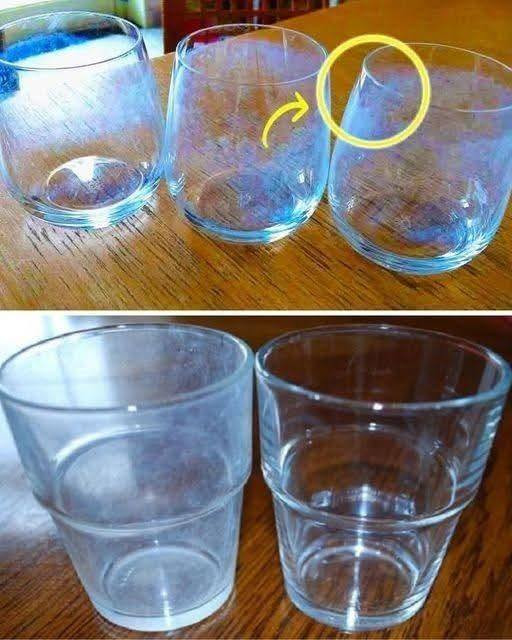
Few things quietly ruin the pleasure of a meal like cloudy glasses. You take a glass from the cupboard expecting sparkle, and instead you’re greeted by a dull, chalky white film that refuses to disappear no matter how many times the glass has been washed. The water is clean. The detergent smells fresh. The dishwasher finished its cycle perfectly. And yet the glass looks old, tired, and permanently stained.
This phenomenon—often called white patina, glass clouding, or etching residue—is one of the most common and misunderstood kitchen problems. Many people assume the glass is damaged forever. Others blame cheap glassware. Some replace entire sets repeatedly, never realizing the real issue has nothing to do with quality and everything to do with chemistry.
The truth is reassuring: in many cases, white patina is not permanent damage. It is removable. And the solution does not require expensive products, professional polishing, or throwing your glasses away.
This article explores what white patina really is, why it appears, how to tell if it’s reversible, and the surprisingly simple “cool trick” that can restore your glasses to a brilliant, like-new shine.
What Is White Patina on Glasses, Really?
White patina is not dirt in the usual sense. It is not grease, food residue, or soap scum. It is a mineral-based film that forms gradually on the surface of glass.
In most homes, the culprit is hard water.
Hard water contains dissolved minerals—mainly calcium and magnesium. When water evaporates during washing and drying, these minerals remain behind. Over time, layer upon layer builds up, creating a cloudy, milky appearance.
This film scatters light instead of letting it pass cleanly through the glass. The glass is still transparent, but it no longer sparkles.
Why Regular Washing Makes It Worse
Ironically, the more you wash cloudy glasses without addressing the underlying issue, the worse the patina becomes.
Here’s why:
- Dishwasher detergents are alkaline
- Hard water minerals react with alkaline substances
- Heat accelerates mineral deposition
- Rinse cycles often fail to fully remove residue
Each wash adds microscopic mineral layers. Eventually, the glass reaches a point where normal washing does nothing at all.
This is why people often say, “I’ve tried everything.” In reality, they’ve tried the same thing repeatedly.
The Crucial Difference: Patina vs Etching
Before attempting any removal method, it’s important to understand whether the cloudiness is removable patina or permanent etching.
They look similar, but they are not the same.
White Patina (Reversible)
- Feels smooth to the touch
- Disappears temporarily when wet
- Looks like a film or haze
- Can be reduced or removed with acids
Glass Etching (Permanent)
- Feels slightly rough
- Does not disappear when wet
- Looks frosted or pitted
- Caused by chemical damage to the glass itself
Etching occurs when glass is exposed to overly aggressive detergents or extremely soft water over long periods. The surface of the glass is literally eroded.
The good news is that most household cloudiness is patina, not etching.
Why Vinegar Alone Sometimes Fails
Many people try vinegar, see partial improvement, and conclude it doesn’t work.
The problem is not vinegar—it’s method.
A quick rinse with vinegar rarely removes years of mineral buildup. Patina forms slowly and requires time, contact, and repetition to dissolve fully.
Acid dissolves mineral deposits, but it must be allowed to work.
The Cool Trick That Actually Works
The most effective method to remove white patina combines heat, acid, and time.
The trick is a warm vinegar soak, followed by gentle mechanical polishing.
This method works because:
- Heat expands the glass surface slightly
- Warm acid penetrates mineral layers more efficiently
- Soaking allows full chemical reaction
- Gentle friction removes loosened residue without scratching
This is not a harsh or risky method. It is controlled, gradual, and surprisingly powerful.
Step-by-Step: The Vinegar Revival Method
Step 1: Prepare the Solution
- Use white distilled vinegar
- Heat it until warm (not boiling)
- Pour enough into a bowl or basin to fully submerge the glasses
Warm vinegar works faster because molecular movement increases with temperature.
Step 2: Soak the Glasses
- Submerge the glasses completely
- Let them soak for 20–30 minutes
- Rotate occasionally to ensure even exposure
For heavily clouded glasses, soaking up to 60 minutes is safe.
Step 3: Gentle Polishing
After soaking:
- Remove one glass at a time
- Use a soft microfiber cloth or sponge
- Rub gently in circular motions
- Focus on areas where patina is most visible
Do not use abrasive pads. The goal is to lift dissolved minerals, not scratch glass.
Step 4: Rinse Thoroughly
- Rinse with warm water
- Ensure all vinegar residue is removed
At this stage, many glasses already look dramatically clearer.
Step 5: Dry Properly (Critical Step)
- Dry immediately with a clean lint-free towel
- Do not air-dry
Air-drying allows minerals in tap water to redeposit instantly.
When Baking Soda Helps (And When It Doesn’t)
Baking soda is mildly abrasive. It does not dissolve minerals, but it can help polish softened deposits after vinegar treatment.
Use it only:
- After soaking in vinegar
- As a paste with water
- With a very soft cloth
Never use baking soda alone on dry patina. It may spread residue or create micro-scratches.
Why Dishwashers Cause Patina in the First Place
Dishwashers are efficient but unforgiving.
Click page 2 to continue