The Science, the Myth, and the Simple Habit That Changes Everything
There is a very specific kind of disappointment that comes with pulling freshly washed laundry out of the machine, only to realize that instead of feeling soft, light, and comforting, your clothes feel stiff, rough, or oddly crunchy. Towels that should feel luxurious scrape against your skin. Sheets that should invite sleep feel dry and lifeless. Even clothes that smell “clean” somehow feel wrong.
Most people assume softness comes from expensive detergents, heavily scented fabric softeners, or special washing machines. The truth is far simpler—and far more surprising.
Laundry softness has very little to do with brand names or marketing claims. It has everything to do with chemistry, water quality, and one humble ingredient that most people already have at home.
That ingredient is white vinegar.
Before dismissing this idea, pause for a moment. Vinegar does not make clothes smell sour. It does not damage fabric when used correctly. And it does not behave like traditional fabric softeners. In fact, it does the exact opposite of what most commercial softeners do—and that’s why it works.
This article will take you deep into why laundry becomes stiff, how modern washing habits secretly sabotage softness, and how one simple ingredient can transform the way your clothes feel, last, and even smell.
Why Laundry Loses Its Softness Over Time
To understand the solution, you need to understand the problem.
Laundry becomes stiff and rough for three main reasons:
- Detergent buildup
- Hard water minerals
- Overwashing and heat damage
Let’s break these down.
Detergent Is Not Your Friend in Excess
Modern detergents are powerful. Too powerful, in fact. Most people use far more detergent than necessary, believing more soap equals cleaner clothes. What actually happens is the opposite.
Excess detergent does not rinse out completely. Instead, it coats fabric fibers, creating a residue that traps dirt, body oils, and minerals. Over time, this residue hardens, making clothes feel stiff and heavy.
Towels suffer the most because their looped fibers trap residue easily. Once those fibers are coated, they lose their ability to absorb water—and softness disappears.
Hard Water Is the Silent Saboteur
If you live in an area with hard water, your laundry is fighting a losing battle.
Hard water contains minerals like calcium and magnesium. These minerals bind to detergent and fabric fibers, forming insoluble deposits that make clothes feel rough and dull. Even the best detergent cannot fully overcome this.
Many people blame their washing machine or detergent, never realizing that water itself is the issue.
Heat and Overwashing Break Fibers Down
High heat weakens fabric fibers. Frequent washing, especially with hot water, damages cotton and synthetic blends alike. The fibers lose flexibility, making fabric feel rigid instead of soft.
Add dryer heat to the equation, and softness fades even faster.
Why Commercial Fabric Softeners Make Things Worse
Fabric softeners feel like the obvious solution. They promise softness, fragrance, and comfort. But what they actually do is coat fabric with a thin layer of waxy chemicals.
This coating:
- Masks stiffness instead of fixing it
- Reduces towel absorbency
- Traps odors and bacteria
- Causes long-term buildup that stiffens fabric over time
In other words, fabric softener gives short-term softness and long-term damage.
This is where vinegar enters the story—not as a perfume or coating, but as a reset button.
The Secret Ingredient: White Vinegar
White distilled vinegar is a mild acid. That one fact explains almost everything about its laundry magic.
Vinegar:
- Dissolves detergent residue
- Breaks down mineral deposits from hard water
- Restores fabric flexibility
- Neutralizes odors instead of masking them
It does not soften fabric by coating it. It softens fabric by removing what’s making it stiff.
That’s the key difference.
Why Vinegar Makes Laundry “Soft as a Cloud”
Softness is not about adding something. It’s about removing buildup.
When vinegar enters the rinse cycle, it reacts with alkaline detergent residue and mineral deposits. These substances dissolve and rinse away, leaving fibers clean, flexible, and free.
The result is fabric that moves naturally again.
Towels regain fluffiness. Clothes feel lighter. Sheets drape instead of crunch.
And no—your laundry does not smell like vinegar. The scent evaporates completely as clothes dry.
How to Use Vinegar Correctly in Laundry
Using vinegar is simple, but technique matters.
The Basic Method
- Use plain white distilled vinegar
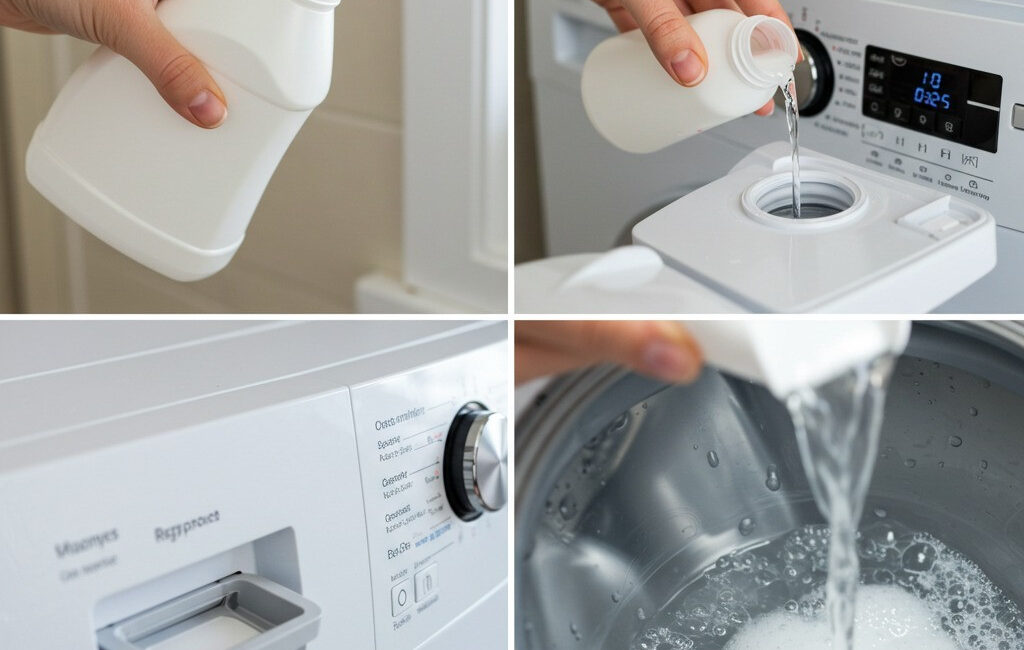
- Add ½ to 1 cup to the fabric softener compartment or directly into the rinse cycle
- Do not mix vinegar with detergent in the wash cycle
Vinegar works best in the rinse, where it can neutralize residue without interfering with cleaning.
For Towels and Sheets
Towels and sheets often need a deeper reset.
Once every few weeks:
Click page 2 to continue