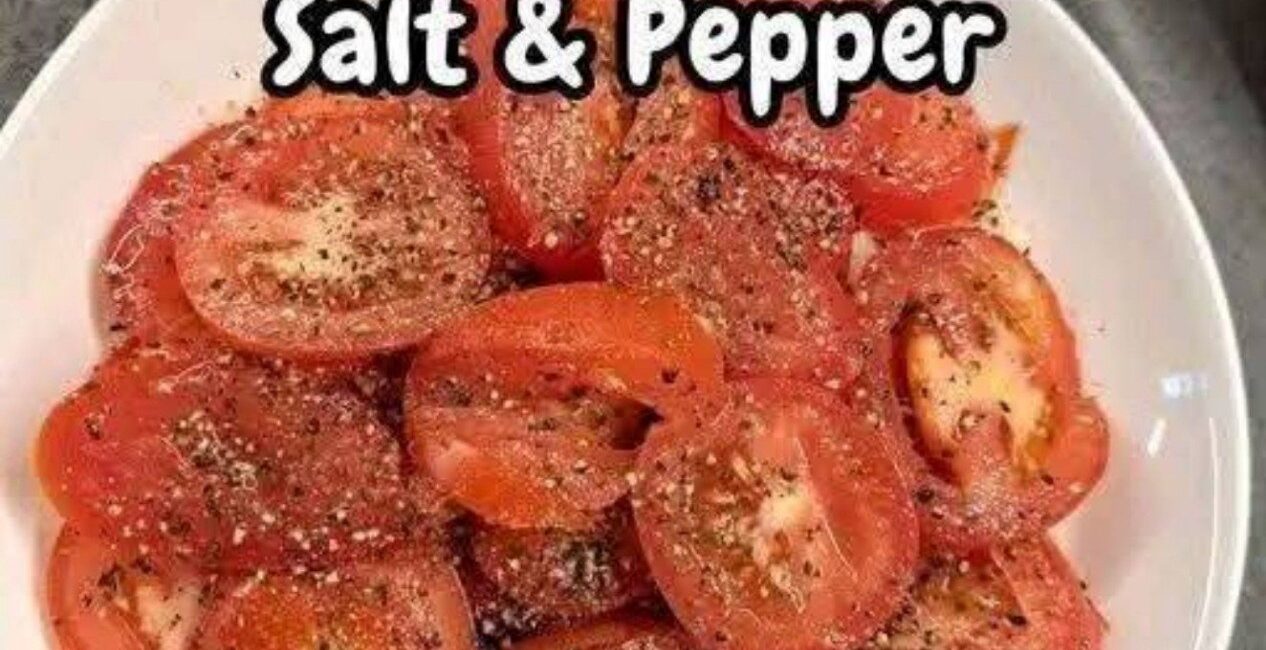
The Simplest Snack That Quietly Does More Than You Expect
At first glance, sliced tomato with nothing but salt and pepper sounds almost too basic to deserve attention. No oil, no cheese, no bread, no herbs—just a red fruit cut open and lightly seasoned. For some people, it feels unfinished, even strange. For others, it is a small ritual, a summer habit, or a childhood memory.
Yet this humble plate has survived generations, cultures, and food trends. That alone is worth examining. When a food combination remains popular without marketing hype or culinary tricks, it usually means the body understands something the mind hasn’t fully articulated.
So yes—many people eat sliced tomato with just salt and pepper. And no, it’s not just about taste. The simplicity hides a set of nutritional, sensory, and even psychological benefits that explain why this snack keeps reappearing, especially among people who value balance and clarity in their diet.
Why Tomato Works on Its Own
Tomatoes are unusual. Botanically, they are fruits, but nutritionally and culturally, they behave like vegetables. They contain natural sugars, acids, water, and aromatic compounds in a delicate balance. When eaten raw, especially at peak ripeness, they already carry complexity.
A good tomato has:
- Natural umami (that savory depth people crave)
- Mild sweetness
- Bright acidity
- High water content
Salt doesn’t add flavor to tomatoes—it reveals what’s already there. A small pinch pulls moisture to the surface and intensifies sweetness and umami. Pepper adds gentle heat and aromatic sharpness, activating taste receptors without overpowering the fruit.
This is why the combination feels complete despite its minimalism.
The Sensory Effect: Why It Feels So Satisfying
One reason this snack surprises people is how satisfying it feels for something so light. That satisfaction comes from sensory balance.
The crunch of fresh flesh, the burst of juice, the contrast between cool tomato and sharp seasoning—all of this stimulates the mouth fully. When the senses are engaged, the brain registers satiety more quickly. You feel like you’ve eaten “something,” not just nibbled.
This matters in a world where many snacks are engineered to be eaten mindlessly. Tomato with salt and pepper demands attention. You taste it.
Nutritional Benefits Without the Noise
From a nutritional perspective, sliced tomato with salt and pepper is quietly powerful.
Tomatoes are rich in:
- Lycopene, a potent antioxidant
- Vitamin C
- Potassium
- Water-soluble fiber
- Natural plant compounds that support cellular health
Eating them raw preserves heat-sensitive nutrients. Adding salt helps with mineral balance and can improve absorption for some people, especially those who sweat easily or eat very clean diets. Pepper contains piperine, which may enhance the bioavailability of certain compounds.
The snack is:
- Low in calories
- Low in sugar
- Free of ultra-processed ingredients
- Gentle on digestion for most people
It delivers hydration, micronutrients, and flavor without burdening the body.
Why People Either Love It or Hate It
This snack tends to divide people sharply. The difference often comes down to tomato quality and expectation.
A bland, watery tomato makes the experience disappointing. A ripe, in-season tomato makes it memorable. People who dislike it often judge the idea based on poor tomatoes, not the concept itself.
Expectation also plays a role. If you approach it as a “replacement” for a richer snack, it will feel lacking. If you approach it as a standalone moment—refreshing, clean, intentional—it makes sense.
This dish doesn’t shout. It whispers.
The Psychological Comfort of Simple Foods
There’s a deeper reason simple foods like this feel good, especially during stressful periods. They reduce decision fatigue. No recipes, no guilt, no complexity.
Eating sliced tomato with salt and pepper can feel grounding. It reconnects you to basic hunger and basic satisfaction. You eat because you’re hungry, not because you’re bored, emotional, or chasing stimulation.
In that sense, it’s not just a snack. It’s a pause.
Cultural Roots You Might Not Realize
This combination isn’t new or trendy. Variations of it exist across cultures:
- Mediterranean households often serve tomatoes with salt as a side
- In parts of Southern Europe, raw tomato with seasoning is a daily staple
- Many people grew up eating tomatoes straight from the garden with salt
The universality suggests a shared human response to the tomato’s chemistry. Long before nutrition labels, people noticed how good it felt.
When This Snack Is Especially Useful
Sliced tomato with salt and pepper shines in specific moments:
- When you want something refreshing but not sweet
- When you’re cutting back on heavy or processed foods
- When you need a light snack that won’t spike energy levels
- When appetite is low but the body needs nutrients
- During hot weather, when hydration matters
It’s also useful as a reset snack—something that recalibrates taste buds away from overstimulation.
When It Might Not Be Ideal
Despite its benefits, this snack isn’t universal.
It may not suit:
- People with tomato sensitivity or acid reflux
- Those who need higher protein or fat in snacks
- Situations where long-lasting satiety is required
In those cases, it works better as a side or appetizer rather than a standalone meal.
The Real Reason People Keep Coming Back to It
The appeal of sliced tomato with salt and pepper isn’t hype or nostalgia alone. It’s honesty. The food is exactly what it appears to be. No disguise. No marketing. No manipulation.
In a food environment full of engineered flavors and exaggerated promises, something simple that delivers quiet satisfaction feels almost radical.
You don’t “love it” because it’s exciting. You love it because it makes sense.
Final Thought: Simplicity Isn’t Lack—It’s Precision
Eating sliced tomato with salt and pepper is not about deprivation. It’s about precision. It’s about letting one ingredient speak clearly instead of burying it under layers.
Some foods need complexity. Others need respect.
This one needs a knife, a pinch of salt, a turn of pepper, and a moment of attention. That’s all. 🍅