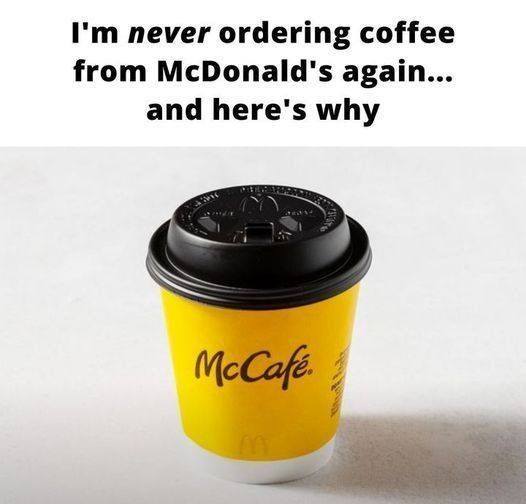
“I’m never ordering coffee from McDonald’s again… and here’s why.”
You’ve probably seen that headline—or one just like it—circulating online alongside photos of McCafé cups, videos of coffee machines being opened, or alarming claims about what’s “really inside” fast-food coffee equipment. The implication is clear and unsettling: that there is a hidden hygiene scandal lurking behind one of the world’s most familiar cups of coffee.
But as with most viral food scares, the truth is more complicated, more boring, and far more instructive than the headline suggests.
This article breaks down what people mean when they talk about “dirty” McCafé coffee machines, what is actually true, what is exaggerated, how commercial coffee machines really work, why misunderstandings spread so fast, and what matters if you’re deciding whether to trust—or avoid—fast-food coffee altogether.
No conspiracy. No blind defense. Just reality.
Why This Claim Keeps Going Viral
The idea that McDonald’s coffee machines are secretly filthy resurfaces every few years for a simple reason: coffee machines are opaque.
Customers never see:
- Inside the machine
- The tubing
- The water lines
- The milk systems
- The internal cleaning cycles
Anything hidden invites imagination. Add a photo or video showing residue inside any coffee machine—often taken during deep maintenance—and suddenly the narrative writes itself.
Fast food magnifies this effect because McDonald’s is:
- Everywhere
- Familiar
- Mass-produced
- Symbolic of industrial food
People expect “cheap” to mean “dirty,” even when that assumption doesn’t hold up under scrutiny.
What a McCafé Coffee Machine Actually Is
McDonald’s does not use small café espresso machines. McCafé locations use commercial-grade, automated coffee systems, often supplied by major manufacturers designed for high-volume environments.
These machines are:
- Closed systems
- Programmed with automatic cleaning cycles
- Designed to meet food-safety regulations
- Built for consistency, not artisanal flair
They are far closer to machines used in hospitals, airports, and large office cafeterias than to a home espresso machine.
This matters because how they are cleaned is fundamentally different.
The Real Source of the “Dirty Machine” Accusation
Most of the viral claims stem from three misunderstood realities.
1. Coffee Residue Looks Worse Than It Is
Coffee contains oils, tannins, and minerals. These naturally leave dark stains inside machines over time—even when machines are cleaned correctly.
When a machine is opened for:
- Repairs
- Deep servicing
- Part replacement
The interior may look unpleasant to the untrained eye. Dark stains are not automatically mold, bacteria, or neglect. They are often cosmetic residue on non-food-contact parts.
Photos taken during servicing are frequently misrepresented as “daily operating conditions.”
2. Milk Systems Are Always the Focus of Fear
Milk lines in any coffee machine—McDonald’s, Starbucks, boutique cafés—require strict cleaning because milk spoils quickly.
This is where fear escalates:
- Videos show milk tubing
- Residue looks alarming
- People assume neglect
The reality is that modern McCafé machines run automated milk-line cleaning cycles daily, sometimes multiple times per day, using heat and approved cleaning solutions.
Is it possible for a location to skip procedures? Yes.
Is that unique to McDonald’s? Absolutely not.
3. “Former Employees” and Anecdotes
Many viral posts rely on statements like:
“I worked at McDonald’s and I’ll never drink the coffee again.”
These anecdotes:
- Are unverified
- Often refer to specific locations
- May describe temporary lapses, not systemic issues
- Are influenced by personal bias or resentment
Every large food chain has employees who witnessed bad practices at some point. That does not define the system as a whole.
How McDonald’s Coffee Cleaning Actually Works
McDonald’s operates under standardized food-safety protocols that are often stricter than those in small independent cafés.
Typical McCafé procedures include:
- Daily automated cleaning cycles
- Scheduled deep cleaning
- Regular inspections
- Mandatory maintenance logs
- Machine lockouts if cleaning is skipped
In many machines, coffee cannot be served unless the cleaning cycle has been completed, because the machine software enforces it.
This does not mean perfection. It means structure.
Are McCafé Machines Cleaner Than Small Cafés?
Here’s the uncomfortable truth many people don’t expect:
Large chains often have more consistent hygiene than small cafés.
Why?
- Corporate standards
- Audits
- Documentation
- Training requirements
- Legal exposure
A small café may rely entirely on the habits of one or two staff members. If they forget to clean milk lines or skip maintenance, no automated system stops them.
Consistency is not glamour—but it is safety.
Where McDonald’s Can Fall Short
Honesty matters, so let’s be clear.
Potential issues include:
- High staff turnover
- Rushed shifts
- Inexperienced employees
- Busy hours delaying cleaning cycles
These risks exist in any high-volume food environment.
A poorly managed location can fall behind. That does not mean all McCafé machines are dirty. It means management quality matters more than brand.
The Psychology Behind “I’ll Never Drink It Again”
Food disgust spreads faster than food poisoning statistics.
Once a person imagines:
- Bacteria
- Mold
- Old milk
- Hidden grime
The emotional response overrides logic. Even safe food becomes unacceptable.
This is why:
- One photo can ruin a product forever
- Corrections rarely go viral
- Fear sticks longer than facts
The reaction is human, not stupid.
What Health Authorities Actually Care About
Food safety regulators focus on:
- Temperature control
- Cross-contamination
- Cleaning frequency
- Approved chemicals
- Documentation
They do not care whether a machine looks dirty inside a non-contact panel. They care whether food-contact surfaces are safe.
McDonald’s locations are subject to:
- Routine inspections
- Surprise audits
- Penalties for violations
Failures are documented publicly in many countries.
Coffee Itself Is Not High Risk
Plain black coffee is:
- Hot
- Acidic
- Low-risk for bacterial growth
Milk-based drinks carry higher risk, but still far less than raw foods.
If there were widespread hygiene failures, patterns of illness would emerge quickly—and they haven’t.
So… Is There Really a “Dirty Secret”?
No secret. No grand cover-up.
What exists instead is:
- Industrial machinery people don’t understand
- Visuals taken out of context
- Anecdotes elevated to universal truth
- Distrust of large corporations
- Internet outrage economics
McCafé coffee machines are not magically cleaner than others—but they are not uniquely dirty either.
They are boring, regulated, automated systems designed for volume, not romance.
Should You Stop Drinking McDonald’s Coffee?
That depends on taste, not fear.
Avoid it if:
- You dislike the flavor
- You prefer specialty coffee
- You want artisanal preparation
Not because of viral hygiene claims unsupported by evidence.
The Bigger Lesson
The real story here isn’t about McDonald’s.
It’s about how easily:
- Hidden systems trigger fear
- Images replace understanding
- Scale becomes suspicion
- Familiar brands become targets
When something is everywhere, people assume something must be wrong.
Sometimes the truth is simpler: it’s just a machine doing its job.
Final Thought
If McDonald’s coffee machines were truly unsafe on a systemic level, regulators, lawsuits, and public health data would have exposed it long ago.
The “dirty secret” isn’t inside the machine.