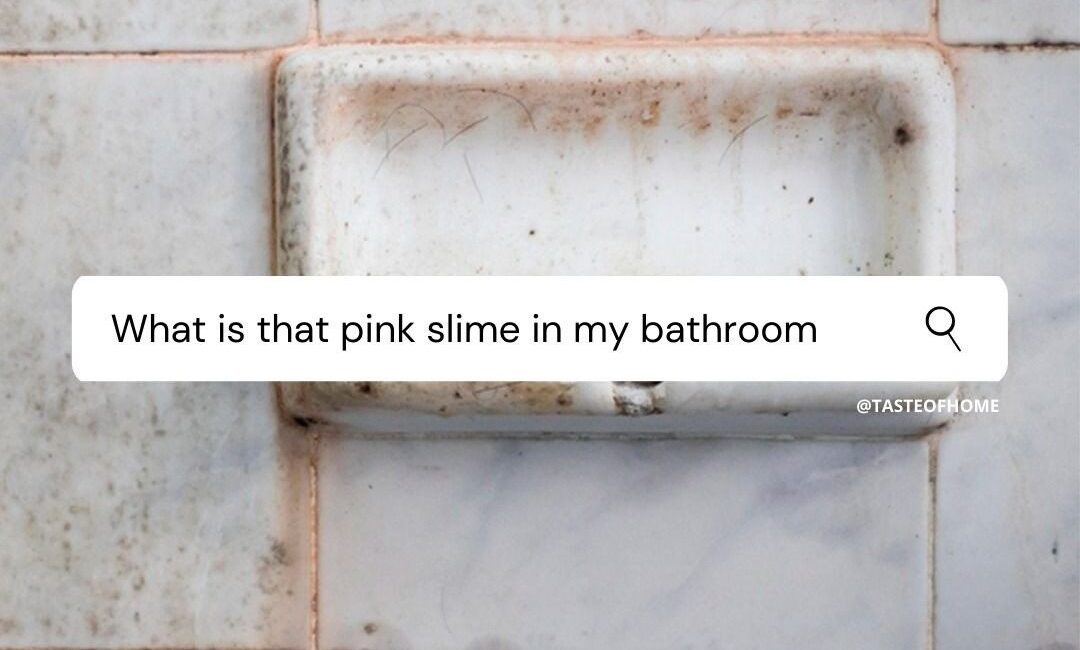
If you’ve ever lifted the toilet lid or stepped into the shower and noticed a strange pink or reddish film clinging to the bowl, the grout, the shower curtain, or the drain edges, your first reaction was probably disgust… followed by confusion. It looks like mold. It feels slimy. It spreads quickly. And no matter how often you clean, it seems to return with stubborn persistence.
The good news is that this unsettling substance is not what most people fear.
The bad news is that it is alive—and understanding what it actually is matters more than you might think.
This pink or red slime is one of the most misunderstood bathroom intruders, and its persistence has everything to do with modern plumbing, humidity, and the invisible ecosystems living inside our homes.
WHAT THE PINK OR RED SLIME ACTUALLY IS
Despite its mold-like appearance, the pink or reddish residue you’re seeing is not mold in most cases. It is a bacterial biofilm, most commonly caused by a microorganism called Serratia marcescens.
This bacterium thrives in moist environments and feeds on:
- Soap residue
- Shampoo and conditioner runoff
- Body oils
- Organic debris in water
Bathrooms provide the perfect habitat. Warmth, humidity, and constant moisture create an environment where this bacterium can grow rapidly and visibly.
The pink color is not rust, dye, or mineral buildup. It’s a pigment produced naturally by the bacteria as it multiplies.
WHY IT APPEARS MOST OFTEN IN TOILETS AND SHOWERS
The places where this slime shows up are not random. It favors areas that remain damp for long periods and are frequently exposed to organic matter.
Common hotspots include:
- The waterline inside toilet bowls
- Shower walls and corners
- Tile grout and caulking
- Shower curtains and liners
- Sink drains and overflow holes
These areas stay moist even after cleaning, allowing bacteria to re-establish quickly.
WHY IT COMES BACK SO FAST AFTER CLEANING
One of the most frustrating aspects of pink slime is how quickly it returns. You scrub it away, only to find it reappearing days later.
This happens because:
- You’re removing visible bacteria, not the entire biofilm
- Moisture remains after cleaning
- Soap residue continues to provide nutrients
- Spores or bacteria remain in microscopic cracks
Unless moisture and residue are addressed, cleaning alone becomes a temporary fix.
IS IT DANGEROUS TO YOUR HEALTH?
For most healthy individuals, Serratia marcescens is considered low risk. Casual exposure through skin contact is generally not harmful.
However, there are important caveats.
This bacterium can pose a higher risk for:
- People with weakened immune systems
- Individuals with open wounds
- Those with respiratory vulnerabilities
In rare cases, it has been associated with infections in clinical settings. That does not mean your bathroom is dangerous—but it does mean the slime should not be ignored or allowed to accumulate.
WHY IT’S MORE COMMON IN MODERN HOMES
Ironically, this issue has become more common as homes have become more energy-efficient.
Modern bathrooms often:
- Retain humidity longer
- Have less natural ventilation
- Use low-flow plumbing that leaves more residue
- Rely on synthetic materials that trap moisture
Older homes with draftier construction and more airflow were less hospitable to persistent bacterial growth.
WHY PEOPLE MISTAKE IT FOR MOLD OR RUST
The color is deceptive. Pink, red, or orange staining naturally triggers assumptions of mold or mineral deposits.
Key differences:
- Mold often appears fuzzy or patchy
- Rust is usually hard, crusty, and localized
- Pink slime is smooth, slimy, and spreads evenly
Understanding this distinction helps you choose the right cleaning approach.
HOW TO REMOVE IT EFFECTIVELY
Eliminating pink slime requires more than surface cleaning. The goal is to break down the biofilm and reduce moisture.
Effective strategies include:
- Using disinfecting cleaners rather than mild soaps
- Scrubbing grout, caulk, and hidden crevices
- Washing shower curtains regularly
- Drying surfaces after use
Bleach-based cleaners are effective, but must be used carefully and with proper ventilation.
HOW TO PREVENT IT FROM RETURNING
Prevention is about changing the environment the bacteria love.
Key prevention steps:
- Improve bathroom ventilation
- Run exhaust fans during and after showers
- Wipe down wet surfaces
- Reduce soap buildup
- Clean regularly before buildup becomes visible
The less moisture and residue available, the harder it is for the bacteria to re-establish.
WHY IGNORING IT IS A BAD IDEA
While pink slime is not typically dangerous, ignoring it allows biofilms to thicken and spread. Over time, it becomes harder to remove and can stain surfaces permanently.
It also signals excess moisture, which can lead to other issues like:
- Mold growth
- Deteriorating grout and caulk
- Unpleasant odors
Treating it early keeps your bathroom healthier and easier to maintain.
A FINAL THOUGHT
The pink or red slime in your bathroom is not a sign of poor hygiene or neglect. It’s a byproduct of modern living, moisture, and microscopic life doing what it does best—surviving.
Once you understand what it is, why it appears, and how it thrives, it becomes far less mysterious and far more manageable.
The key isn’t fear.
It’s awareness, consistency, and moisture control.
Because in the quiet corners of your bathroom, life is always happening—even when you don’t see it.