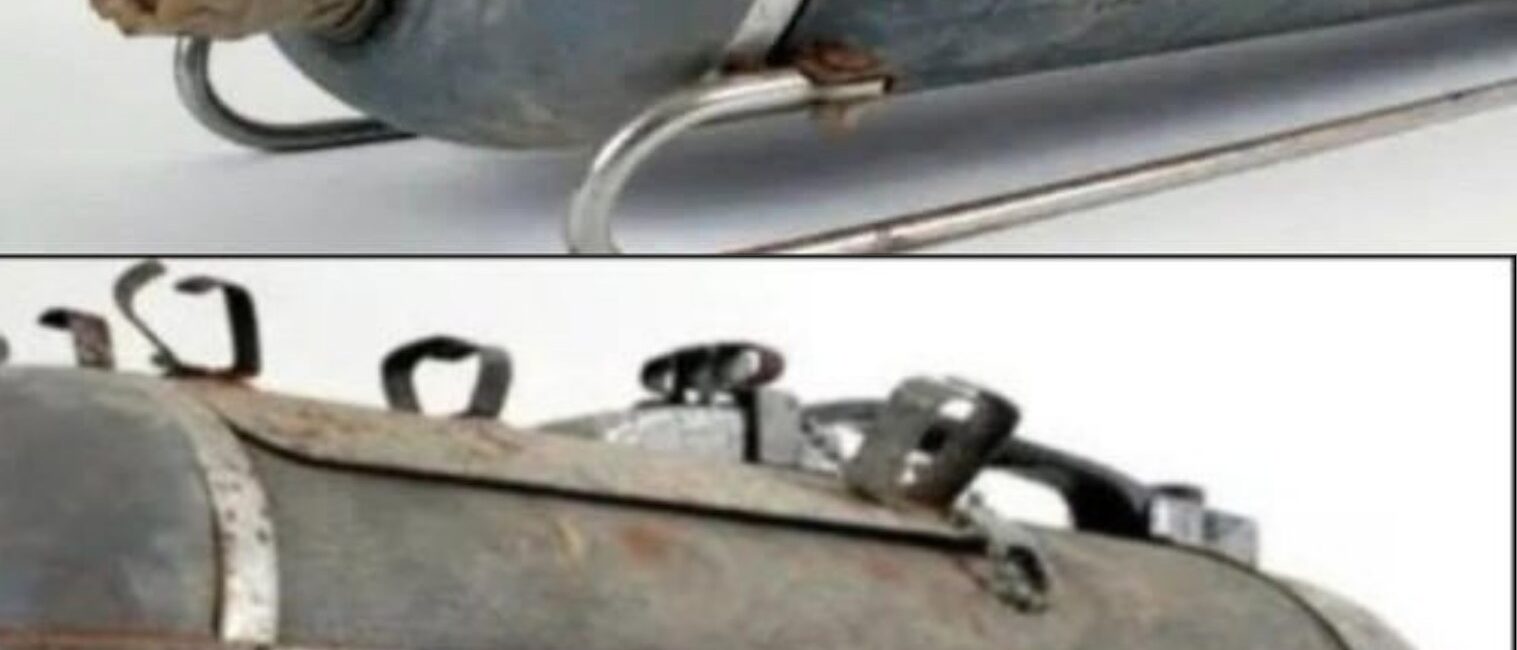
There are few moments more intriguing than stumbling upon an object that clearly meant something once, yet now seems completely disconnected from modern life. It might be heavy, awkward, oddly shaped, and utterly resistant to easy explanation. You turn it over in your hands, examine its bolts and curves, and feel certain of one thing: this was important to someone, somewhere, at some point in time. But what was it for?
That sense of mystery is exactly what unfolded when an unusual metal object was discovered at a yard sale and later shared online. The finder admitted openly: “I have no idea what this is.” And judging by the flood of guesses that followed, neither did anyone else—at least not at first.
At a glance, the object looked industrial. It was bulky, metallic, and far from elegant. There were no digital displays, no power cords, no sleek surfaces. It didn’t resemble anything typically found in a modern household. People speculated wildly. Some thought it might be a piece of agricultural equipment. Others guessed a medical device, a factory tool, or even something military-related. The guesses piled up, but none quite fit.
Then, slowly, as fragments of historical knowledge came together, the truth emerged. This strange, forgotten object was not exotic at all in purpose. It was, in fact, an early version of a vacuum cleaner.
That revelation surprised almost everyone—and for good reason. Modern vacuum cleaners are so familiar, so lightweight, and so electrically efficient that it is difficult to imagine them in any other form. Yet the path to the machines we use today was long, complex, and deeply rooted in the social and technological transformations of the nineteenth century.
This object, once dismissed as incomprehensible, turned out to be a powerful reminder of how everyday technology evolves—and how easily we forget the labor, ingenuity, and sheer physical effort that once defined ordinary domestic tasks.
WHY OLD OBJECTS CONFUSE US SO COMPLETELY
When people encounter an unfamiliar antique tool, confusion is almost guaranteed. The reason is not ignorance, but context. Modern life has reshaped our expectations so thoroughly that anything built before electricity, plastic, and miniaturization feels alien.
We are accustomed to devices that are:
- Lightweight
- Compact
- Powered by electricity or batteries
- Designed for ease and convenience
Older tools were built under very different assumptions. Strength mattered more than portability. Durability outweighed comfort. Human muscle was the primary power source. Materials like iron and steel dominated design because they were available, affordable, and reliable.
Without understanding these historical constraints, early household technology can look bizarre, excessive, or even intimidating.
CLEANLINESS BEFORE MODERN CONVENIENCE
To understand why such a machine existed at all, it is necessary to understand how attitudes toward cleanliness were changing during the nineteenth century.
For most of human history, dust, dirt, and debris inside the home were accepted facts of life. Floors were swept, rugs were shaken outdoors, and furniture was wiped by hand. Cleaning was labor-intensive, repetitive, and never fully effective. Dust simply returned.
But during the nineteenth century, something changed.
Advances in medicine and public health began linking cleanliness to disease prevention. Germ theory, although still developing, started influencing how people thought about hygiene. Urbanization brought people into closer quarters, making sanitation more important than ever. The idea of a “clean home” shifted from aesthetic preference to moral and health responsibility.
Households—particularly in growing middle-class communities—began seeking better ways to control dust and dirt.
THE LIMITATIONS OF TRADITIONAL CLEANING METHODS
Before vacuum cleaners, cleaning relied on methods that were effective only to a point.
Brooms pushed dust around more than they removed it. Rugs had to be dragged outdoors and beaten, a physically exhausting task that scattered dust into the air. Furniture accumulated grime in crevices that were nearly impossible to reach.
These methods shared a common problem: they displaced dirt rather than capturing it.
As homes became more enclosed and furnished, this limitation became more obvious. People wanted a way to remove dust from the home entirely, not just redistribute it.
This desire set the stage for innovation.
EARLY ATTEMPTS AT MECHANICAL CLEANING
Inventors began experimenting with mechanical solutions to dust removal long before electricity entered the picture. These early devices were ambitious, clunky, and often impractical—but they represented a major conceptual leap.
Instead of brushing dirt away, they attempted to suck it up.
The principle of suction was already understood through bellows, pumps, and industrial air-moving devices. The challenge was adapting that principle for domestic use.
Early vacuum machines often relied on:
- Hand-pumped bellows
- Crank-operated fans
- Lever-driven suction chambers
Operating them required constant physical effort. Users had to pump or crank continuously to maintain airflow. The machines were heavy and difficult to maneuver, often requiring two people to operate efficiently.
Despite these drawbacks, they worked—at least partially.
WHY THESE MACHINES LOOKED SO INDUSTRIAL
The object found at the yard sale puzzled people largely because it looked more like factory equipment than a household appliance. This was not a design accident.
Early domestic machines borrowed heavily from industrial engineering. The same materials, construction techniques, and mechanical principles used in factories were adapted for home use. There was little distinction between “industrial” and “domestic” aesthetics.
Metal housings were common because:
- They were durable
- They could withstand repeated stress
- Alternatives like molded plastics did not exist
Designers prioritized function over comfort. If a machine worked, it was considered successful—even if it was heavy, noisy, or awkward.
THE PHYSICALITY OF EARLY VACUUM CLEANING
Using one of these early vacuum devices was nothing like pushing a modern upright cleaner across a carpet.
Cleaning was an exercise.
Users had to:
- Maintain steady pumping or cranking
- Control airflow manually
- Empty dust compartments frequently
- Move a heavy device across the floor
This made vacuum cleaning a task that required time, strength, and patience. It was not something done casually or daily. Instead, it was often reserved for thorough cleaning sessions, much like laundering or scrubbing floors.
Yet for all its difficulty, the process was revolutionary. For the first time, dust could be captured and contained rather than spread.
WHY THESE MACHINES NEVER BECAME UNIVERSAL
Despite their innovation, early vacuum cleaners were not widely adopted in every household. Several factors limited their popularity:
- High cost relative to income
- Physical effort required to operate
- Size and storage challenges
- Maintenance demands
For many families, traditional cleaning methods remained more practical. These early machines often appealed to wealthier households or institutions that valued technological novelty.
Nevertheless, they played a critical role in shaping future designs.
THE TRANSITION TO ELECTRIC POWER
As electricity became more accessible in the late nineteenth and early twentieth centuries, inventors revisited the concept of vacuum cleaning with renewed optimism.
Electric motors solved the biggest problem: human fatigue.
By replacing manual pumping with motorized suction, designers could:
- Reduce physical effort dramatically
- Improve suction consistency
- Miniaturize components over time
The electric vacuum cleaner transformed cleaning from a strenuous chore into a manageable routine.
But none of this progress would have been possible without the earlier mechanical experiments.
WHY THIS DISCOVERY FASCINATED SO MANY PEOPLE
When the mystery object was identified as an early vacuum cleaner, reactions ranged from disbelief to awe. People were struck by how unfamiliar such a familiar tool once looked.
This fascination reveals something important about modern life: we rarely think about how our conveniences came to be.
We flip switches without considering what life was like before electricity. We clean without considering how exhausting that task once was. We benefit from generations of incremental improvement without seeing the trial-and-error behind it.
This object shattered the illusion that progress is smooth or obvious.
THE POWER OF COLLECTIVE CURIOSITY
The process of identifying the object also highlighted the strength of collective problem-solving. No single person had the full answer at first. Instead, bits of knowledge accumulated gradually.
Some recognized mechanical features. Others recalled seeing similar devices in old photographs or family stories. Slowly, a coherent picture formed.
This kind of collaborative investigation mirrors how innovation itself works: progress emerges from shared ideas, not isolated genius.
WHAT THIS OBJECT TEACHES US ABOUT TECHNOLOGY
This early vacuum cleaner is more than a curiosity. It teaches several enduring lessons:
- Technology evolves through imperfect stages
- Early solutions often look awkward in hindsight
- Practical usefulness does not always equal comfort
- Innovation is driven by need, not elegance
Every modern appliance has ancestors that were heavier, louder, and harder to use.
WHY WE SHOULD PAY ATTENTION TO OBJECTS LIKE THIS
It is tempting to dismiss old tools as obsolete or irrelevant. But doing so erases valuable stories about human ingenuity.
Objects like this reveal:
- How people lived
- What they valued
- What problems they struggled to solve
They also remind us that what feels indispensable today may look absurd tomorrow.
FROM YARD SALE CURIOSITY TO HISTORICAL ARTIFACT
What began as a puzzling yard sale find became a window into domestic history. Once its purpose was understood, the object transformed from junk into artifact.
This shift in perception is powerful. It shows how knowledge changes value—not just monetary value, but cultural and emotional value.
Understanding an object gives it meaning.
THE QUIET HEROES OF DAILY LIFE
Vacuum cleaners are rarely celebrated. They are background tools, quietly keeping homes clean. Yet their evolution reflects massive changes in technology, labor, and social expectations.
The strange metal machine that baffled so many people represents the moment when cleaning began to shift from endless labor toward mechanical assistance.
It is a symbol of progress built not on glamour, but persistence.
A FINAL REFLECTION
The next time you encounter an object that seems pointless or strange, consider this: it may be a survivor from a time when life demanded more physical effort, more patience, and more creativity.
What looks useless today may once have been revolutionary.
And sometimes, the most ordinary tools hide the most extraordinary histories—waiting quietly for someone curious enough to ask, “What is this?”