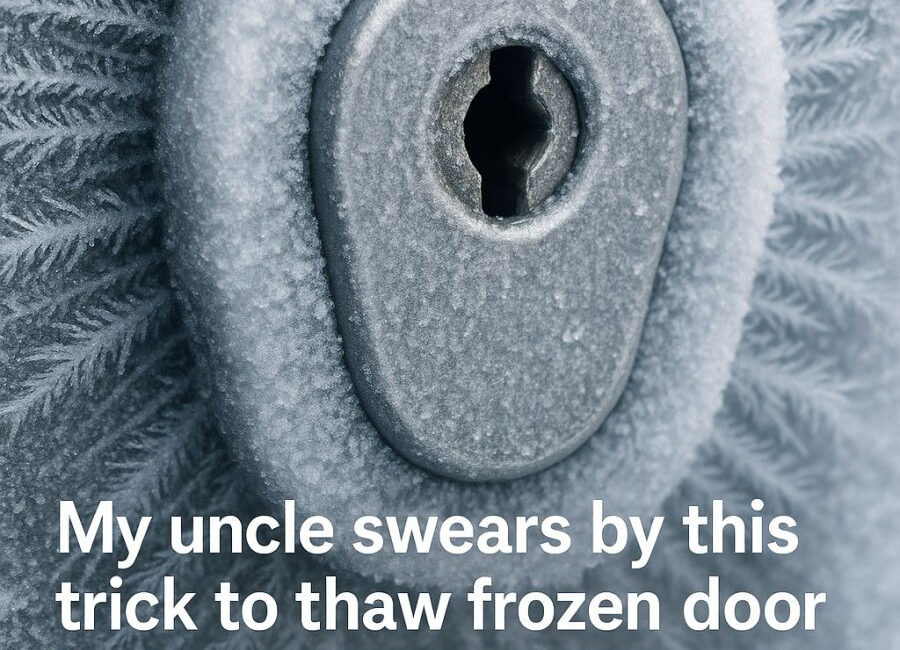
Winter has a way of turning small inconveniences into full-blown crises. You wake up late, rush outside, already thinking about traffic, deadlines, or responsibilities — and then it happens. Your key won’t go in. Or it goes in but refuses to turn. The lock is frozen solid. In that moment, the cold feels personal.
Frozen door locks are one of those problems that seem minor until you’re standing outside in sub-zero temperatures, fingers numb, breath fogging the air, and patience evaporating by the second. It doesn’t matter whether it’s your car door, your front door, or a garage lock. When it freezes, everything stops.
Over the years, my uncle — the kind of man who has lived through enough winters to respect them — found a solution so simple and effective that he treats it like a secret weapon. No chemicals. No fire. No damage. No waiting around shivering for ten minutes.
One minute. That’s all it takes.
WHY DO DOOR LOCKS FREEZE IN THE FIRST PLACE?
To understand why this trick works so well, it helps to understand the problem itself.
Door locks freeze because moisture gets inside the lock cylinder. This moisture can come from snow, freezing rain, condensation, or even humidity in the air. Once temperatures drop below freezing, that moisture turns into ice.
Inside a lock, even a tiny amount of ice can immobilize the delicate pins and springs that allow the key to turn. The lock isn’t broken — it’s simply frozen in place.
Wind chill makes it worse. Metal locks lose heat quickly, and cold air accelerates freezing. That’s why locks on cars and exterior doors are especially vulnerable.
WHY FORCING THE KEY MAKES EVERYTHING WORSE
The natural instinct is to push harder. Twist more aggressively. Wiggle the key. This is where many people cause expensive damage.
When a lock is frozen:
• The pins cannot move freely
• The key is fighting solid ice
• The internal mechanism is rigid
Forcing the key can bend it, snap it, or permanently damage the lock cylinder. In cars, this can lead to costly repairs. In homes, it can compromise security.
The golden rule of frozen locks is simple: never force it.
THE 1-MINUTE TRICK MY UNCLE SWEARS BY
The beauty of this trick is that it uses something almost everyone already owns.
No special tools.
No chemicals.
No risky improvisation.
Just a hairdryer.
That’s it.
WHY A HAIRDRYER IS THE PERFECT TOOL
A hairdryer provides controlled, concentrated heat. Unlike open flames or boiling water, it allows you to warm the lock gradually and evenly without introducing new moisture or risking damage.
It melts the ice inside the lock instead of shocking it.
And most importantly, it does so safely.
STEP-BY-STEP: HOW TO THAW A FROZEN LOCK IN ONE MINUTE
Step 1: Get the Hairdryer Ready
Plug in a standard hairdryer and set it to the highest heat setting. You do not need maximum airflow — heat is the priority.
If you’re dealing with a car lock and you’re near a power source, an extension cord makes this easy. For home doors, it’s even simpler.
Step 2: Position the Heat Correctly
Hold the hairdryer about six inches away from the lock. Aim directly at the keyhole, not the surrounding door.
Do not press the hairdryer directly against the lock. Allow the heat to circulate.
Step 3: Apply Heat Evenly
Move the dryer slowly back and forth across the lock. This prevents overheating one spot and ensures the entire internal mechanism warms up.
After about 30 seconds, you’ll often feel the metal start to lose its icy bite.
Step 4: Test the Key Gently
After one minute or less, insert the key and try turning it gently. If it doesn’t move yet, apply heat for another 20–30 seconds and try again.
The moment the ice melts, the key will turn smoothly — no force required.
WHY THIS METHOD WORKS SO FAST
The ice inside a lock is thin. It doesn’t require extreme heat — just enough warmth to raise the internal temperature above freezing.
The hairdryer:
• Targets the exact problem area
• Melts ice without adding water
• Avoids thermal shock to metal
• Preserves the integrity of the lock
Unlike pouring hot water, which melts ice briefly but leaves moisture behind, a hairdryer evaporates residual moisture instead of creating more.
That’s why the lock doesn’t refreeze immediately afterward.
COMMON “WINTER HACKS” THAT DO MORE HARM THAN GOOD
Over the years, countless viral hacks have circulated — many of them dangerous.
Using a lighter or match near the key can damage the lock, burn your hands, or even crack the metal due to sudden temperature changes.
Pouring boiling water might work for seconds, but once that water cools, it freezes again — often worse than before.
Breathing on the lock introduces moisture, which freezes almost instantly in cold weather.
These methods may look clever online, but in real winter conditions, they often create bigger problems.
WHAT TO DO IF YOU DON’T HAVE A HAIRDRYER
Sometimes you’re stranded without access to power. In those cases, a commercial lock de-icer is the safest alternative.
Keeping a small bottle in your car during winter can be a lifesaver. Unlike improvised methods, de-icers are designed to melt ice without damaging the lock.
Still, they are a backup — not a replacement — for the hairdryer method when power is available.
HOW TO PREVENT DOOR LOCKS FROM FREEZING IN THE FIRST PLACE
The best solution is prevention.
Applying a graphite-based lubricant or a lock-specific winter lubricant before cold weather arrives helps repel moisture.
Avoid oil-based products, which can attract dirt and worsen freezing over time.
For home locks, simple covers or weather shields can reduce exposure to snow and freezing rain.
For cars, keeping doors clean and dry before parking overnight reduces moisture buildup.
WHEN A FROZEN LOCK IS A WARNING SIGN
If your locks freeze frequently, it may signal deeper issues:
• Excess moisture inside the door
• Poor insulation
• Worn seals or damaged lock components
Repeated freezing can eventually cause corrosion or mechanical failure. If the problem persists, a professional inspection may save you from future lockouts.
In some situations, a frozen lock can also be a safety issue — especially if it prevents emergency access or exit.
WHY SIMPLE SOLUTIONS ARE OFTEN THE BEST
There’s something almost comforting about this trick. In a world of complicated gadgets and expensive fixes, a simple household item solves a frustrating problem in seconds.
No drama.
No damage.
No panic.
Just heat, patience, and understanding how things work.
My uncle doesn’t swear by this trick because it’s clever. He swears by it because it’s reliable — winter after winter.
And once you try it, you’ll understand why.
The next time the cold tries to lock you out, you won’t fight it.
You’ll melt it — calmly, safely, and in under a minute.