Chicken is one of the most widely consumed proteins in the world. It is affordable, versatile, easy to cook, and deeply embedded in everyday meals across cultures. Because it is so familiar, many people assume that every part of the chicken is equally safe to eat as long as it is cooked. That assumption is precisely where the danger begins.
Not all parts of the chicken are the same from a health perspective. Some parts concentrate toxins, bacteria, parasites, and metabolic waste. Others pose higher risks due to how chickens are raised, processed, and stored in modern food systems. These risks do not always cause immediate illness, which makes them even more dangerous. Instead, they may contribute to long-term inflammation, immune stress, digestive problems, and chronic disease.
Traditional food cultures were aware of these risks long before modern science explained them. Certain parts of the chicken were consistently avoided, removed, or fed to animals instead of humans. Today, however, convenience, lack of knowledge, and misinformation have led many people to consume parts that were once considered unsafe.
Below are three chicken parts widely regarded as “dirty” or “poisonous” in traditional and modern health perspectives, along with the biological reasons they should be avoided.
1. CHICKEN LUNGS — THE MOST TOXIC AND DANGEROUS PART
Chicken lungs are one of the most hazardous parts of the bird, yet many people consume them unknowingly. They are small, spongy organs embedded deep in the rib cavity, often difficult to remove completely during processing. Because of this, they frequently remain in whole chickens and are accidentally eaten.
From a biological standpoint, the lungs function as filters. Their purpose is to trap airborne pathogens, dust, bacteria, and environmental contaminants. Unlike human lungs, chicken lungs are fixed in place and constantly exposed to inhaled particles from their environment, including ammonia from waste, industrial farm air pollutants, and microbial spores.
These contaminants do not disappear with cooking. High heat may kill some bacteria, but toxins, heavy metals, and accumulated pollutants remain stable. Consuming chicken lungs introduces these concentrated substances directly into the digestive system.
Medical observations and food safety experts consistently identify chicken lungs as a reservoir for pathogens. They are particularly associated with respiratory bacteria and parasites that can survive standard cooking temperatures. In some regions, poultry lungs are explicitly banned from commercial sale due to contamination risks.
Long-term consumption of contaminated organ tissue may strain the immune system and contribute to chronic inflammation. For individuals with weakened immunity, digestive disorders, or liver conditions, the risk is significantly higher.
Chicken lungs are not a nutritional organ. They provide minimal protein and virtually no beneficial nutrients that cannot be obtained safely from other parts of the chicken.
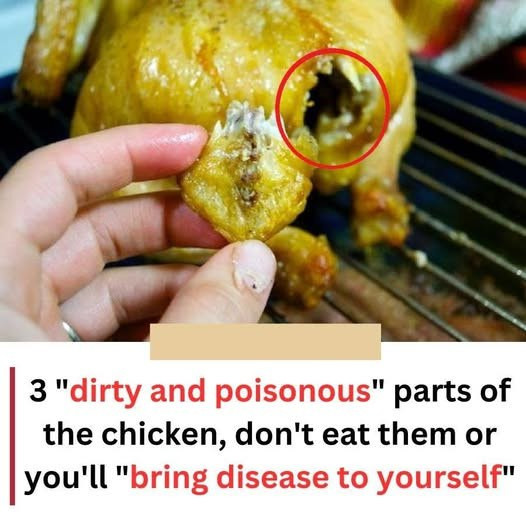
2. CHICKEN TAIL (PYGOSTYLE) — A FAT-HEAVY TOXIN STORAGE ZONE
The chicken tail, often called the “parson’s nose” or pygostyle, is a small triangular piece at the rear of the bird. It is prized in some cuisines for its rich flavor and fatty texture. However, that same fat content makes it one of the most problematic parts of the chicken.
Fat tissue in animals acts as a storage site for toxins. This includes pesticide residues, antibiotics, growth promoters, and environmental chemicals absorbed during the animal’s life. Modern commercial chickens are frequently exposed to these substances through feed, water, and living conditions.
The tail contains a disproportionately high concentration of fat compared to other parts of the chicken. As a result, it accumulates more chemical residues than muscle meat. Cooking does not eliminate these toxins. In fact, heat can sometimes increase the bioavailability of fat-soluble contaminants.
Additionally, the tail houses oil glands used by birds to maintain feather condition. These glands secrete substances that are not intended for human consumption. When eaten, they can irritate the digestive tract and place additional stress on the liver.
Regular consumption of toxin-rich fat has been associated with metabolic disruption, increased inflammation, and long-term cardiovascular strain. For individuals already managing cholesterol issues, fatty liver disease, or hormonal imbalances, the risk compounds further.
From a nutritional standpoint, the tail offers little benefit beyond calories. Its high saturated fat content provides no essential advantage over safer protein sources.
3. CHICKEN SKIN — A BACTERIAL AND CHEMICAL MAGNET
Chicken skin is often considered harmless or even desirable because of its flavor and texture. While occasional consumption may not cause immediate harm, regular intake poses significant health risks that are frequently underestimated.
The skin acts as the bird’s protective barrier, meaning it comes into direct contact with fecal matter, bacteria, processing chemicals, and environmental contaminants. During slaughter and processing, bacteria such as Salmonella and Campylobacter are most commonly found on the skin surface.
Even thorough cooking does not guarantee complete elimination of bacterial toxins. While heat kills live bacteria, it does not neutralize all endotoxins released during bacterial breakdown. These toxins can trigger inflammatory responses in the gut and immune system.
Chicken skin also retains chemical residues more effectively than muscle meat. Antibiotics, preservatives, and disinfectants used during processing tend to accumulate in fatty tissue and skin layers.
Nutritionally, chicken skin is almost entirely fat, with minimal protein and no fiber. Its frequent consumption contributes to excessive saturated fat intake, which is associated with insulin resistance, cardiovascular disease, and systemic inflammation.
In traditional food preparation, chicken skin was often removed before cooking or reserved for animal feed. Its modern popularity is largely driven by flavor-enhancing cooking methods rather than nutritional value.
WHY THESE PARTS ARE CALLED “DIRTY” IN TRADITIONAL WISDOM
The term “dirty” does not refer to appearance alone. In traditional dietary systems, “dirty” foods are those that burden the body’s detoxification systems, especially the liver, kidneys, and intestines. These foods increase internal waste rather than nourishing tissues.
Chicken lungs, tail, and skin all fall into this category because they concentrate substances the body must work to eliminate rather than use. Over time, this burden accumulates silently, contributing to fatigue, inflammation, weakened immunity, and chronic disease.
Modern science increasingly confirms what traditional wisdom observed through experience: not all edible parts are beneficial.
SAFER PARTS OF THE CHICKEN TO CONSUME
Muscle meat such as breast and thigh, when properly cleaned and cooked, provides high-quality protein, essential amino acids, and important minerals. These parts contain significantly fewer toxins and lower bacterial risk when handled correctly.
Removing skin, trimming visible fat, and avoiding internal organs reduces exposure to harmful substances while preserving nutritional value.
Choosing high-quality poultry sources, practicing proper storage, and cooking thoroughly remain essential steps for food safety.
THE LONG-TERM HEALTH CONSEQUENCES OF IGNORING THESE RISKS
Health damage from contaminated foods rarely appears overnight. It develops gradually through repeated exposure. Consuming toxin-rich chicken parts occasionally may not cause noticeable symptoms, but regular intake increases cumulative risk.
Potential long-term effects include chronic digestive issues, immune dysregulation, hormonal disruption, metabolic imbalance, and increased susceptibility to inflammatory diseases.
For children, pregnant women, and individuals with compromised health, these risks are amplified due to lower tolerance for toxic load.
A FINAL WORD ON CONSCIOUS EATING
Eating safely is not about fear. It is about awareness. Understanding which parts of food nourish the body and which burden it allows for informed, intelligent choices.
The chicken remains a valuable and nutritious food when consumed wisely. Avoiding its most contaminated parts is a simple yet powerful step toward protecting long-term health.
Traditional knowledge and modern science align on this point: what you leave off your plate can be just as important as what you put on it.