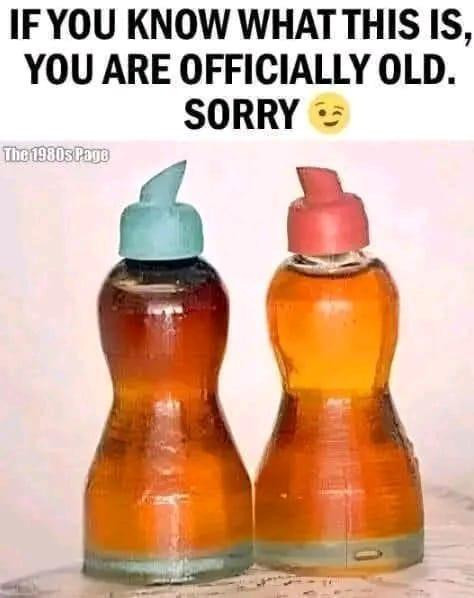
In a world that changes faster than ever—where everything is sleek, digital, and designed for convenience—nostalgia has become a kind of emotional time machine. It carries us back to an era when life felt simpler, slower, and somehow warmer. So when an image of two old bottles with colorful spouts starts circulating online, causing thousands of people to comment “Oh my God, I remember those!”, it’s not just about recognizing an object—it’s about reconnecting with a feeling.
Those bottles, with their soft curves and distinct red and green caps, once lived on nearly every kitchen counter. They weren’t fancy. They weren’t high-tech. But they were everywhere. They were the silent witnesses of family dinners, of greasy pans scrubbed clean after Sunday meals, of laughter echoing from the kitchen sink. And if you instantly recognized them, congratulations—you might just be “officially vintage.”
Let’s dive deep into why these humble dish soap bottles mean so much to so many, how they shaped an entire generation’s domestic life, and why they remain powerful symbols of nostalgia in a world that has forgotten how to slow down.
The Iconic Bottles: Simple, Familiar, Unforgettable
Before smartphones, before online shopping, before minimalist branding—there were these bottles. Round, squeezable, and topped with bright plastic spouts, they were functional and charming in their own right.
They weren’t just containers; they were part of the kitchen’s personality. Whether you were in North America, Europe, or North Africa, some version of these bottles likely sat by your sink. The design was instantly recognizable: a firm plastic body that could be gripped easily with wet hands, a flexible spout that dispensed soap with perfect precision, and those unforgettable colors—bright red or green caps that stood out in any kitchen.
The colors weren’t random. Green was freshness, cleanliness, the color of mint and lemon scent. Red, on the other hand, was warmth and energy—the spark of life in daily chores. You might not have noticed it then, but brands knew exactly what they were doing.
These bottles didn’t just hold soap—they held memory.
A Glimpse Into the Past: The 1980s Kitchen Revolution
The 1980s and early 1990s were decades of rapid change in home life. More women were joining the workforce, technology was creeping into homes, and the concept of “convenience” was becoming a central part of consumer culture.
Household products had to adapt. People wanted things that made chores faster, cleaner, and easier. Dish soap bottles were redesigned from rigid glass containers into flexible plastic squeeze bottles—a small but revolutionary change.
The squeeze spout was more than a gimmick. It meant you didn’t have to pour. You didn’t have to waste. A quick press and you got exactly what you needed. It sounds trivial now, but at the time, this was innovation at its most human level: simple, effective, and satisfying.
Every press of that spout was part of a new rhythm in daily life—a rhythm that mixed work, family, and home into something balanced.
Marketing Magic: The Birth of the Emotional Brand
The 1980s weren’t just about technology—they were about storytelling. Brands realized that people didn’t buy soap; they bought feelings.
Television commercials showed smiling mothers washing dishes with their kids. The sunlight glowed through kitchen curtains. The voiceover promised not just clean dishes, but clean living—a home where love and care were expressed through small acts like rinsing plates and drying silverware.
Even the design of the bottles echoed that optimism. Rounded edges, cheerful colors, playful typography—everything was designed to evoke trust and joy. These bottles stood on shelves not as sterile cleaning products, but as friendly household companions.
And for millions, they became exactly that.
The Emotional Architecture of Nostalgia
There’s a reason a simple image of these bottles can hit people right in the heart. Nostalgia isn’t just remembering—it’s reliving through sensation.
The feel of warm water on your hands, the smell of lemon soap, the faint squeak of a sponge against a plate—all these sensory details form emotional fingerprints.
That’s why older generations see these bottles and instantly remember the sound of laughter in the kitchen, or the sight of their mother’s hands covered in bubbles. It wasn’t just cleaning—it was bonding, it was care, it was love expressed through work.
Today, we see the same activity differently. Washing dishes is something to avoid, something to automate. But back then, it was a shared ritual—a simple, quiet space for conversation and connection.
That’s what these bottles represent: not the product itself, but the world that surrounded it.
The Generational Divide: Recognition and Forgetting
For the Older Generation
If you grew up in the 70s or 80s, these bottles are like visual time machines. You remember exactly where they stood by the sink. You remember the soap’s smell—citrusy, floral, sometimes so strong it lingered in your clothes.
You might even remember the tiny details: the texture of the bottle’s ridges, the way it flexed when squeezed, the pop sound of the spout cap. Seeing that image online now is both comforting and a little shocking—it’s a reminder that the everyday things of your youth have become artifacts of another era.
You’re not old—you’re vintage.
For the Younger Generation
But for those born in the late 1990s or later, the sight of those bottles is a mystery. Many have never seen such designs outside of retro memes or old TV shows. Their dish soap comes in minimalistic, pastel-toned bottles with sleek fonts that whisper “eco-friendly” rather than shout “fresh and clean.”
To them, the red and green caps might look cartoonish, outdated, even funny. But that’s what makes the generational contrast so beautiful—because what one group sees as outdated, another sees as comforting. Nostalgia, after all, is personal history in emotional form.
The Cultural Significance of Dish Soap Bottles
Household objects rarely get the credit they deserve for shaping culture. Yet items like these bottles reflect entire eras of social evolution.
A Symbol of Routine and Family Life
They represent the quiet, unnoticed labor that holds families together—the daily routines that give life rhythm. Before fast food and delivery apps, kitchens were sacred spaces. People cooked together, cleaned together, lived together.
That bottle by the sink was always there. It saw everything.
A Design That Taught Simplicity
Its form was elegant in function. No complicated caps, no gimmicky attachments, just a simple squeeze mechanism that lasted for years. Modern designers call this honest design—objects that serve their purpose without pretension.
It’s no wonder people miss it. It wasn’t about branding; it was about belonging.
The Transition to Modernity: From Squeeze Bottles to Minimalism
As the 2000s arrived, consumer tastes shifted dramatically. “Modern” became synonymous with “minimal.” Packaging got simpler. Fonts became smaller. Transparency replaced color.
The loud reds and greens of the 80s gave way to muted tones and clear plastic, emphasizing cleanliness and sustainability. Brands stopped advertising emotions and started advertising ethics—biodegradable, plant-based, non-toxic.
While this change was necessary for a world growing conscious of waste, it also stripped products of their personality. The old bottles, by contrast, felt alive—like part of the household rather than another item on the grocery list.
We traded personality for perfection, and something human was lost in the process.
The Shift Toward Sustainability and Technology
Click page 2 for more