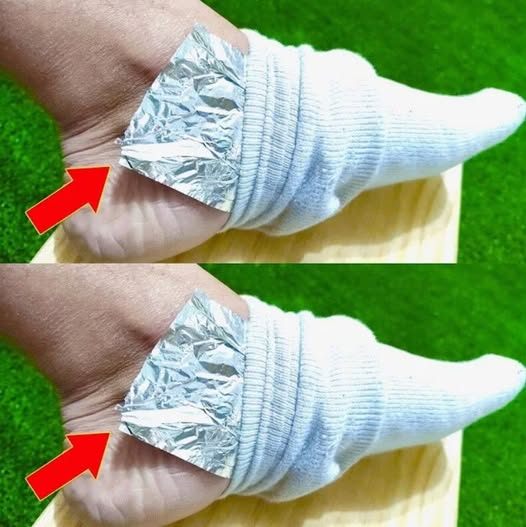
Every few months, social media bursts with another “life-changing” home remedy that promises to replace expensive medicines and save you countless pharmacy trips. Among them, one headline continues to capture attention: “Put aluminum foil on your feet and stop spending money at the pharmacy!”
It sounds almost magical — a roll of foil from your kitchen transforming into a miracle cure for pain, colds, fatigue, and inflammation. But is there any truth to it? What happens when you actually wrap your feet in aluminum foil? And why do so many people swear by this practice even without evidence?
Let’s unpack this shiny mystery in detail — from where it started to what science really says — and discover what actually helps your feet heal and your body feel better.
1. The Curious Claim: What People Say About Aluminum Foil on Feet
The viral posts you see on Facebook, TikTok, or Pinterest often come with bold, almost unbelievable promises. According to these claims, wrapping aluminum foil around your feet can:
- Relieve pain and inflammation
- Cure the common cold or flu
- Improve circulation
- Balance body energy
- Help you sleep better
- Detoxify the body
The posts usually end with a catchy line like “Stop spending money at the pharmacy!” or “Doctors don’t want you to know this secret!” — phrases crafted to catch your eye and make you think you’ve stumbled on hidden wisdom.
But to understand where this idea came from, we have to go back — long before social media.
2. Where the Idea Came From: A Folk Remedy That Never Died
Wrapping foil around the body, especially the feet, didn’t start as a TikTok challenge. It’s an old folk practice from parts of Eastern Europe and Russia. In traditional healing methods, people believed that metal could help rebalance the body’s natural “energy field.” Aluminum foil, being shiny and reflective, was thought to bounce away “negative energy” or external “cold” that caused pain.
In some villages, foil was used as a homemade compress to warm sore joints, especially for those suffering from arthritis, back pain, or rheumatism. The sensation of warmth it produced was comforting, and people interpreted that comfort as healing.
The modern internet simply repackaged that old belief — mixing ancient superstition with modern clickbait.
3. The Science of Aluminum Foil: What It Actually Does
Let’s look at aluminum foil from a scientific perspective.
Aluminum foil is made of aluminum, a metal that’s highly reflective and a good conductor of heat and electricity. When you wrap foil around your skin, a few physical things happen:
a) It traps heat.
Foil reflects body heat back toward the skin. That’s why it feels warm when you wrap it around your feet — it’s literally reflecting your own warmth back to you.
b) It blocks air and moisture.
Aluminum foil creates a sealed barrier that prevents sweat or air from escaping, so your feet may get sweaty or damp.
c) It doesn’t let the skin breathe.
Foil is not breathable like cloth, which means moisture builds up easily, and over time this can cause irritation or rashes.
d) It cannot absorb toxins or draw out “bad energy.”
The human body eliminates toxins through the liver, kidneys, and skin — not through metal contact. Foil doesn’t extract or absorb anything.
e) It doesn’t deliver minerals or energy.
Unlike magnetic bracelets or copper therapy (which are also debatable), aluminum foil doesn’t react biologically with your body. It’s chemically inert in this form.
So what you feel — warmth or relaxation — is purely a thermal effect, not a biological healing process.
4. Why People Think It Works: The Power of the Placebo
You might be wondering: if it doesn’t really heal anything, why do some people report feeling better afterward?
The answer lies in one of the most fascinating phenomena in medicine: the placebo effect.
The placebo effect occurs when your belief in a treatment — even a fake one — actually triggers real changes in your body. Your brain releases chemicals like endorphins and dopamine, which can reduce pain and create feelings of well-being.
So, if someone truly believes that aluminum foil helps them, their body might respond with temporary relief, even though the foil itself did nothing.
This doesn’t mean people are “faking it.” The placebo effect is real and powerful. But it’s psychological, not medical.
5. The “Pharmacy” Myth: Why These Tricks Go Viral
The phrase “stop spending money at the pharmacy” is a clever emotional hook. It targets a universal frustration — that healthcare and medicine are expensive. It makes you feel like you’re rebelling against big corporations by choosing a simple, cheap household solution.
But this narrative creates a dangerous illusion. It suggests that doctors and pharmacies are hiding cheap cures from you — when in reality, the reason these “miracle hacks” aren’t endorsed is simple: they don’t work.
Still, the marketing works brilliantly. A shiny picture of aluminum foil, a promise of savings, and a touch of mystery — that’s all it takes for millions of shares.
6. The Hidden Risks of Wrapping Foil Around Your Feet
Even though foil seems harmless, there are risks to using it directly on skin — especially for long periods.
1. Skin irritation
Foil traps sweat and heat, creating the perfect environment for bacteria and fungi to grow. You could end up with redness, itching, or athlete’s foot.
2. Allergic reactions
Some people have mild sensitivities to metals. Prolonged contact can cause rashes or dermatitis.
3. Overheating
If your feet are wrapped too tightly or for too long, your skin temperature can rise excessively, leading to discomfort or even minor burns.
4. Circulation problems
Wrapping foil too snugly can restrict blood flow, especially around the ankles or toes. This is particularly risky for diabetics or people with poor circulation.
5. False sense of safety
Perhaps the most harmful aspect: people may delay proper treatment for real issues (like infection or neuropathy) because they’re relying on a shiny piece of metal.
7. What Happens When You Actually Try It
Let’s imagine a simple test. You wrap your feet in aluminum foil before bed. For the first few minutes, it feels warm — your body heat bouncing back from the metal surface. After a while, your feet may start to sweat. The warmth feels soothing, especially if you had a long day of standing or walking.
By morning, when you unwrap your feet, they feel relaxed. But that’s not because the foil “healed” you — it’s because the warmth relaxed your muscles, much like a hot towel or foot bath would. The difference? The towel has real therapeutic value through moist heat therapy, while foil just traps existing heat.
8. The “Energy” Myth: Pseudoscience at Work
Some versions of the aluminum foil remedy say it “balances your body’s energy field” or “restores bioelectric currents.” This language sounds scientific but has no measurable basis in physics or biology.
Your body does produce small electrical signals — neurons use them to transmit information. But these currents are microscopic and contained within your cells and tissues. Wrapping foil around your skin doesn’t influence them.
There’s no known mechanism by which aluminum can “rebalance” these bio-currents. What these explanations do is borrow the language of science to make superstition sound credible.
9. What Aluminum Foil Is Good For
To give foil some credit, it’s an excellent material — just not for health remedies. Here’s what aluminum foil genuinely excels at:
- Cooking and baking: Reflects heat evenly for perfect roasting.
- Food storage: Keeps moisture and air out, preserving freshness.
- Insulation: Reflects heat in emergency blankets to prevent hypothermia.
- Cleaning: Scrunched-up foil can scrub rust or burnt pans.
So yes — aluminum foil is useful. Just not for curing your flu or detoxifying your body.
10. Real Ways to Heal Foot Pain, Fatigue, or Inflammation
If your goal is to soothe your feet, boost circulation, or relieve pain, here are proven and scientifically supported methods you can rely on:
a) Warm foot baths
Click page 2 for more