A Closer Look at the Benefits of the Greater Burdock Root
In the vast world of herbal medicine, few plants have attracted as much interest and reverence as greater burdock root (Arctium lappa). Known for its tenacious burrs that cling to clothing and fur, burdock is far more than a common weed. Beneath its rough exterior lies a potent root that has been valued for centuries for its wide-ranging health properties — particularly its potential role in supporting cancer treatment and cellular health.
This humble plant, often overlooked in modern diets, has deep roots in both Eastern and Western traditional medicine. From Japan to Europe, herbalists have used burdock root for its detoxifying, antioxidant, and anti-inflammatory properties. Today, modern science is revisiting this ancient wisdom, uncovering bioactive compounds that may contribute to disease prevention, immune system regulation, and complementary cancer support.
In this comprehensive exploration, we will dive deeply into everything you need to know about greater burdock root — its history, composition, mechanisms of action, and its promising potential as a natural ally in the fight against chronic diseases.
1. The Origins and History of Burdock
Ancient Roots in Medicine
Greater burdock (Arctium lappa) is native to Europe and Northern Asia, but it has spread across the world, thriving in temperate climates. For thousands of years, healers have used it as a cleansing herb, believed to purify the blood, strengthen internal organs, and balance energy systems.
In Traditional Chinese Medicine (TCM), burdock is known as Niú Bàng Gēn. It is classified as a cooling herb that disperses wind and heat — terms describing its ability to relieve fever, sore throat, and inflammation. In Japan, it is called gobo, and it is still a popular root vegetable, valued for its earthy flavor and health benefits.
In European folk medicine, burdock was a cornerstone of detox remedies. Herbalists of the Middle Ages prescribed it for arthritis, skin diseases, and digestive problems. The famous 17th-century English herbalist Nicholas Culpeper described burdock as a remedy that “cleanses the blood and strengthens the liver.”
Over time, this plant’s reputation has grown beyond folklore. In modern naturopathy, it is viewed as a supportive herb for the liver, kidneys, lymphatic system, and even as a complementary therapy for cancer care.
2. Botanical Description
Greater burdock is a biennial plant, meaning it has a two-year life cycle. In its first year, it develops a rosette of large, heart-shaped leaves. In the second year, it sends up tall stalks that can reach over two meters high, adorned with purple-pink thistle-like flowers surrounded by sticky burrs.
The Root — Nature’s Hidden Powerhouse
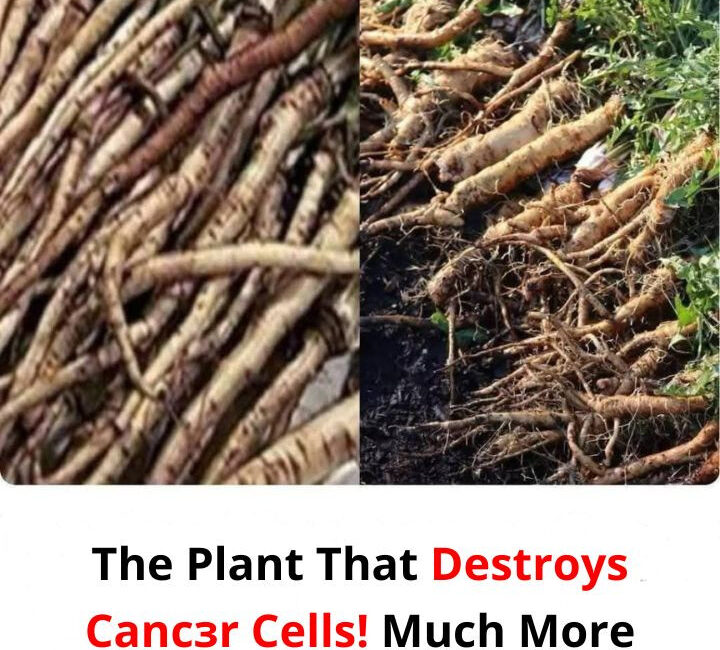
The part used for medicinal and culinary purposes is the long, slender taproot. When freshly harvested, it resembles a brown carrot — fibrous on the outside but crisp and white inside. The root contains powerful plant compounds, including polyphenols, inulin, lignans, and quercetin, which contribute to its therapeutic potential.
3. The Nutritional Composition of Burdock Root
Burdock root is packed with nutrients that contribute to both vitality and healing.
| Nutrient | Function |
|---|---|
| Inulin (soluble fiber) | Supports gut health and blood sugar balance |
| Polyphenols | Act as antioxidants and anti-inflammatory agents |
| Lignans | Possess hormone-modulating and anti-tumor potential |
| Arctigenin & Arctiin | Compounds studied for anti-cancer and antiviral effects |
| Iron, Magnesium, Potassium | Support energy, circulation, and nerve function |
| Vitamin C & E | Strengthen immunity and cellular protection |
These bioactive components contribute to burdock’s ability to detoxify, nourish, and protect the body at the cellular level.
4. Detoxification and Blood Purification
Perhaps the most traditional use of burdock root is as a natural blood purifier. Though this term may sound archaic, it aligns with modern understanding of how the body processes and eliminates toxins.
Supporting the Liver and Kidneys
Burdock stimulates the liver’s enzymatic systems, enhancing the breakdown of metabolic waste, medications, and environmental chemicals. It also promotes bile production, improving fat digestion and aiding the removal of waste through the intestines.
The kidneys, another crucial detox organ, benefit from burdock’s mild diuretic action. This helps flush out excess salts, uric acid, and heavy metals — substances that can accumulate and damage tissues over time.
Lymphatic Support
Burdock is also known as a lymphatic cleanser. The lymphatic system acts as a drainage network that removes toxins and immune debris from the body. When sluggish, it can contribute to inflammation and weakened immunity. Burdock root helps stimulate lymph flow, promoting a clearer, more resilient internal environment.
5. Antioxidant Power: Protecting Cells from Damage
One of the most compelling reasons for burdock’s resurgence in modern health circles is its rich antioxidant content.
Oxidative stress — the imbalance between free radicals and antioxidants — plays a key role in aging, inflammation, and the development of chronic diseases, including cancer. Burdock root contains potent compounds such as quercetin, phenolic acids, luteolin, and arctigenin, which neutralize free radicals and protect cells from DNA damage.
These antioxidants help shield vital organs from oxidative stress, particularly the liver, where detoxification takes place. In doing so, they support overall vitality, skin clarity, and metabolic efficiency.
6. Anti-Inflammatory Properties
Chronic inflammation is considered one of the root causes of many modern diseases — from arthritis and heart disease to neurological conditions and cancer. Burdock root has long been used to reduce swelling, soothe irritated tissues, and promote recovery from inflammatory illnesses.
Research suggests that the polyacetylenes and lignans in burdock act as natural anti-inflammatory agents. They may inhibit enzymes like COX-2, which are responsible for producing inflammatory compounds in the body.
This makes burdock root valuable for:
- Joint pain and arthritis
- Gastrointestinal inflammation
- Skin conditions such as eczema and psoriasis
- Chronic metabolic disorders
7. Burdock Root and Cancer Support: What Science Suggests
One of the most intriguing areas of burdock research lies in its potential anti-cancer activity. While no herb should ever replace conventional cancer treatment, certain plants, including burdock, may support the body’s resilience and healing processes during therapy.
Active Compounds with Anti-Tumor Potential
- Arctigenin — A lignan that has been studied for its ability to inhibit the growth of tumor cells and induce apoptosis (programmed cell death).
- Arctiin — The precursor of arctigenin, showing similar activity in laboratory models.
- Quercetin & Luteolin — Flavonoids known for reducing oxidative damage and modulating immune responses that influence tumor development.
These compounds are believed to work through several mechanisms:
- Suppressing angiogenesis (formation of new blood vessels feeding tumors)
- Blocking cancer cell proliferation
- Enhancing immune surveillance
- Reducing inflammation in surrounding tissues
Detoxification and Cellular Protection
Cancer cells thrive in toxic, oxygen-deprived environments. By improving detoxification, promoting circulation, and providing antioxidants, burdock may create conditions less favorable for disease progression.
Historical Use in Cancer Support Formulas
Burdock root is one of the key ingredients in several well-known herbal cancer support tonics developed in the early 20th century. It was valued for its ability to cleanse the blood, restore strength, and support recovery.
8. Immune System Support
A robust immune system is critical not only for fighting infections but also for identifying and destroying abnormal cells. Burdock’s immunomodulatory effects make it a natural ally in this process.
The polysaccharides and polyphenols found in burdock stimulate immune cells such as macrophages and lymphocytes. This helps improve the body’s ability to detect harmful invaders and maintain homeostasis.
Regular consumption of burdock tea or extracts may help the immune system remain balanced — not overactive (as in autoimmune disorders) nor underactive (as in chronic fatigue or infection susceptibility).
9. Digestive Health and Gut Microbiome
Burdock root is rich in inulin, a type of prebiotic fiber that nourishes beneficial gut bacteria. A healthy microbiome is essential for nutrient absorption, immune defense, and even mood regulation.
Inulin ferments in the colon, producing short-chain fatty acids (SCFAs) such as butyrate, which nourish intestinal cells and reduce inflammation. This makes burdock a valuable addition for those managing digestive imbalances like bloating, constipation, or irritable bowel syndrome (IBS).
10. Skin Health and Natural Beauty
Traditionally, burdock was used as a skin-cleansing herb, believed to improve conditions such as acne, eczema, and boils. The reasoning is simple: when the liver and lymphatic system function optimally, fewer toxins are expelled through the skin.
Modern herbalists often recommend burdock root for:
- Acne and oily skin
- Eczema and psoriasis
- Fungal or bacterial skin infections
- Dull or congested complexion
Its natural antibacterial compounds also help reduce skin inflammation and support healing from within.
11. Cardiovascular and Metabolic Benefits
Click page 2 for more