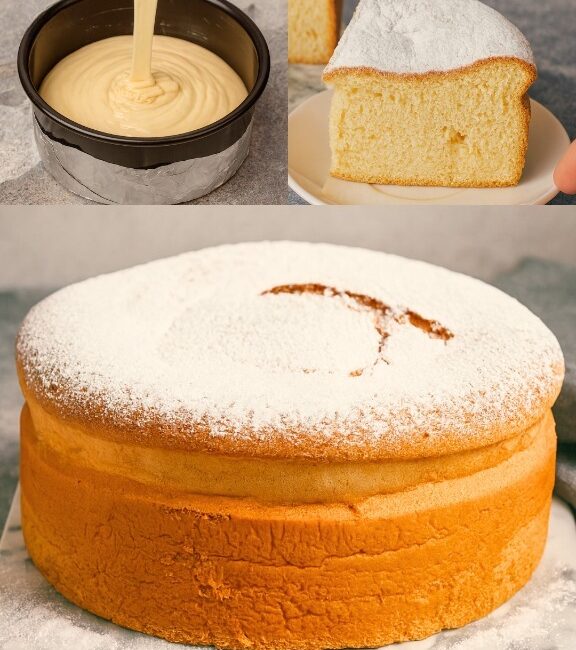
A Heavenly, Fluffy, and Irresistibly Moist Dessert That Melts in Your Mouth
There are cakes… and then there is the cake — the kind that feels so soft, so light, and so airy that it practically disappears as soon as it touches your tongue. The kind of cake that gives you that nostalgic, comforting feeling, as if you were biting into a piece of a cloud. This is not just a dessert; it’s an experience, a moment of pure sweetness and serenity.
Today, we’re diving deep into the art of creating the ultra-soft, cloud-like cake — a simple yet divine treat that’s perfect for every occasion. Whether you’re baking for a special celebration, preparing an afternoon tea, or simply craving something tender and heartwarming, this cake will never disappoint.
It’s an easy recipe, but what makes it truly exceptional lies in how it’s made — the balance of ingredients, the technique, and the love you pour into it. So let’s embark on this delightful journey together.
The Magic of Simplicity
When it comes to baking, sometimes the most extraordinary results come from the simplest ingredients. This ultra-soft cloud cake is made from everyday staples you probably already have in your kitchen:
- 4 eggs
- 120 g of sugar
- 120 g of flour
- 1 sachet (about 11 g) of baking powder
- 1 teaspoon of vanilla extract
- 3 tablespoons of oil
- 3 tablespoons of milk
That’s it. No complicated ingredients, no expensive items, and yet the result is a cake that feels luxurious, light, and utterly indulgent.
The magic lies in the technique — in how you combine and handle these ingredients. Every step contributes to that final texture: moist yet airy, sweet yet balanced, soft but not mushy. Understanding what each element does is the key to baking success.
Understanding the Ingredients: The Science Behind the Softness
Let’s look at why these specific ingredients work together so beautifully.
🥚 Eggs — The Structure and the Lift
Eggs are the backbone of this cake. When you whisk them with sugar, you incorporate air into the mixture. This air expands during baking, creating a delicate sponge-like texture. The proteins in eggs also help provide structure so that the cake holds its shape while remaining soft.
Whisking the eggs and sugar until pale and fluffy is essential. It’s not just about mixing; it’s about aeration. This step is what gives your cake that cloud-like lift.
🍬 Sugar — Sweetness and Tenderness
Sugar doesn’t just make the cake sweet — it plays multiple roles. It helps tenderize the batter by slowing down gluten formation. It also helps trap air during whisking, which enhances the cake’s fluffiness. And when baked, sugar helps create a light golden crust that adds a subtle caramelized aroma.
🌾 Flour — The Foundation
Flour provides the structure that keeps the cake together. For this recipe, all-purpose flour works perfectly. It has just the right amount of protein to hold the cake without making it heavy or dense.
Sifting the flour with baking powder before adding it to the batter is crucial — it removes lumps and ensures even distribution, preventing the cake from developing tough spots or uneven air pockets.
🧁 Baking Powder — The Secret to the Rise
The baking powder is your leavening agent. It reacts with moisture and heat to release carbon dioxide bubbles, which expand during baking and lift the batter. Without it, your cake would be flat and dense.
Combined with the air you beat into the eggs, it ensures a light and airy crumb that’s beautifully even.
🌿 Vanilla — The Aroma of Heaven
A teaspoon of vanilla might seem like a small addition, but it transforms the cake. Vanilla enhances sweetness and adds depth to the flavor. It gives that warm, cozy bakery aroma that makes every bite feel like home.
🛢️ Oil — The Moisture Keeper
Unlike butter, oil stays liquid at room temperature, which means your cake remains moist even after a few days. It gives the cake a tender, silky texture and ensures it doesn’t dry out. Just three tablespoons are enough to make a big difference.
🥛 Milk — The Soft Touch
Milk enriches the batter, making it smooth and luscious. It also helps dissolve sugar and activates the baking powder. The small quantity in this recipe contributes to the overall softness and delicate crumb.
Step-by-Step Preparation
Now that we understand the ingredients, let’s move on to the method — the real heart of this recipe.
Step 1️⃣: Whisk the Eggs and Sugar
In a large mixing bowl, crack the four eggs. Add the sugar and whisk together using an electric mixer or a hand whisk. Continue beating until the mixture becomes pale, creamy, and doubles in volume.
This step usually takes 5–7 minutes with an electric mixer. You’ll know it’s ready when the mixture leaves a thick ribbon trail when lifted. This aeration is what gives your cake its fluffy texture.
Step 2️⃣: Add the Oil, Milk, and Vanilla
Once your egg mixture is beautifully fluffy, gently incorporate the oil, milk, and vanilla. Pour them in slowly while whisking on low speed. The goal here is to maintain the air you’ve already incorporated while blending everything smoothly.
These liquids will add richness and keep the cake moist and light.
Step 3️⃣: Incorporate the Flour and Baking Powder
Sift the flour and baking powder together into a separate bowl, then gradually fold them into the wet mixture. Use a spatula or whisk gently — avoid overmixing. Overmixing can cause gluten development, which makes the cake dense.
Fold in the flour until you no longer see any dry spots. The batter should be smooth, thick, and slightly glossy.
Step 4️⃣: Pour and Bake
Grease your baking pan with butter or line it with parchment paper. Pour in the batter, tapping the pan lightly on the counter to remove any large air bubbles.
Bake in a preheated oven at 170°C (340°F) for 35–40 minutes. The slow and steady baking process allows the cake to rise evenly and develop that perfect golden top.
To check if it’s done, insert a toothpick into the center — if it comes out clean, your cake is ready.
Step 5️⃣: Cool and Decorate
Let the cake cool in the pan for 10 minutes, then transfer it to a wire rack. Once completely cool, dust the top with a generous sprinkle of powdered sugar.
The sugar melts slightly into the surface, creating a delicate snowy finish — like the first dusting of snow on a winter morning.
The Perfect Texture: What Makes It Feel Like a Cloud ☁️
The beauty of this cake lies in its texture. When baked correctly, it should have:
- A soft, springy crumb that bounces back when touched
- A slightly golden crust with a delicate crisp edge
- A moist, tender interior that almost melts in the mouth
- A subtle aroma of vanilla that fills the room
It’s light enough to enjoy on its own but versatile enough to pair with countless toppings and sauces.
Variations: Reinventing the Cloud Cake
While the classic version is already perfection, this recipe is a wonderful canvas for creativity. Here are some variations to explore:
🍫 Chocolate Cloud Cake
Replace 20 g of the flour with unsweetened cocoa powder for a rich chocolate flavor. You can also fold in chocolate chips or drizzle melted chocolate on top after baking.
🍋 Lemon Dream Cake
Add the zest of one lemon and a tablespoon of lemon juice to the batter. The citrus notes create a refreshing balance to the sweetness.
🍓 Strawberry Cloud Cake
Layer the cooled cake with whipped cream and fresh strawberries for a dreamy summer dessert. The light sponge pairs beautifully with fresh fruit.
☕ Coffee Cloud Cake
Mix a teaspoon of instant coffee with the milk before adding it to the batter. The subtle coffee flavor gives the cake a sophisticated touch.
🌰 Almond Cloud Cake
Replace a few tablespoons of flour with almond flour. The result is a nuttier, richer flavor and an even softer crumb.
Serving Ideas: From Breakfast to Celebration
This cake is incredibly versatile. Here are a few serving ideas depending on the occasion:
🥞 For Breakfast or Brunch
Serve a slice with a cup of coffee or tea. The lightness of the cake makes it perfect for mornings — not too sweet, just comforting.
🍨 For Dessert
Click page 2 for more