Cast iron stovetop grates are among the most durable and long-lasting components of a kitchen stove. They can withstand intense heat, hold heavy pots and pans, and provide a stable cooking surface for everyday culinary tasks. However, one common complaint among home cooks and professional chefs alike is how difficult these grates can be to clean. Grease, burnt-on food particles, and kitchen grime accumulate over time, making them look unsightly and potentially affecting cooking efficiency. Fortunately, there’s a highly effective, simple method to clean cast iron stovetop grates that melts away grease effortlessly, restoring them to pristine condition. This guide dives into every aspect of maintaining, cleaning, and preserving cast iron grates, ensuring your stovetop remains functional, hygienic, and visually appealing.
Why Cast Iron Grates Are Popular
Cast iron has been a staple in kitchens for centuries, prized for its durability, heat retention, and even cooking properties.
Durability and Heat Retention
Unlike aluminum or steel, cast iron is dense and heavy, allowing it to retain heat for longer periods. This feature ensures even cooking and reduces hot spots when simmering sauces or searing meats.
Versatility
Cast iron grates are suitable for high-heat cooking, making them perfect for sautéing, frying, and even baking with certain stovetop-to-oven methods.
Longevity
When maintained correctly, cast iron can last decades. Unlike non-stick or coated materials, cast iron doesn’t wear down quickly, making it a worthwhile investment for both residential and commercial kitchens.
Common Challenges in Cleaning Cast Iron Grates
Despite their durability, cast iron grates are notorious for being difficult to clean if proper methods aren’t used.
Grease Accumulation
Cooking often produces grease splatters, which can stick to grates over time. These oily residues not only look unappealing but can also become a fire hazard if left unchecked.
Burnt-On Food
When cooking over high heat, food can fall between the grates and carbonize. Scrubbing these areas with harsh chemicals or abrasive pads can damage the iron and affect its non-stick seasoning.
Rust Formation
Cast iron is susceptible to rust if it remains wet or is not properly dried and seasoned. Rust not only compromises the appearance but also affects the structural integrity of the grate.
Loss of Non-Stick Seasoning
Many cast iron grates are seasoned to create a natural non-stick surface. Aggressive cleaning methods can strip this protective layer, making the surface more prone to sticking and corrosion.
The Effortless Cleaning Method: Melting Away Grease
There is a surprisingly simple, highly effective way to clean cast iron stovetop grates using everyday household items and heat. This method ensures grease and grime melt away without damaging the iron or stripping its seasoning.
What You’ll Need
- Baking soda
- White vinegar
- A soft-bristle brush or nylon scrubbing pad
- Dish soap (mild, preferably eco-friendly)
- Large plastic or silicone spatula
- A sink or large basin
- Paper towels or a clean, dry cloth
Step 1: Remove the Grates
Before starting any cleaning process, ensure the stovetop is turned off and the grates are cool to the touch. Carefully remove the grates from the stove and place them in a sink or large basin. This step makes it easier to clean all sides and ensures the stovetop surface doesn’t get wet.
Step 2: Pre-Soak in Hot Water
Fill the sink with hot water and add a few drops of mild dish soap. Submerge the grates fully and allow them to soak for 15–20 minutes. The hot water softens hardened grease, while the soap begins breaking down oily residues.
Step 3: Sprinkle Baking Soda
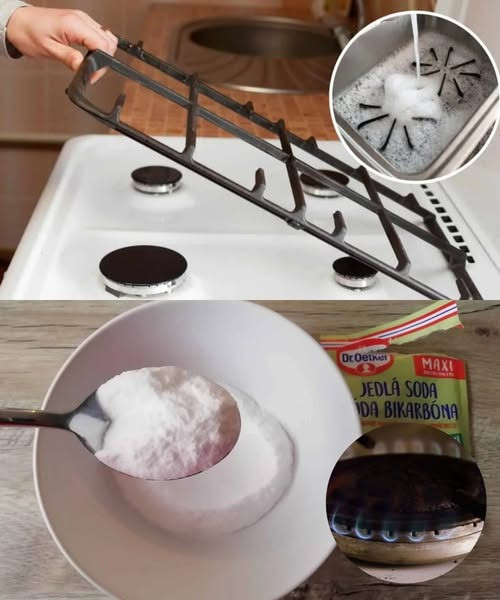
After soaking, drain the water and sprinkle a generous layer of baking soda over the grates. Baking soda acts as a mild abrasive that safely removes stubborn grease and burnt-on food without scratching the cast iron surface.
Step 4: Spray with Vinegar
Lightly spray or drizzle white vinegar over the baking soda. The resulting chemical reaction produces fizzing bubbles that lift grease and grime from the surface. This natural reaction is highly effective for heavy build-up. Let it sit for 5–10 minutes to allow the fizzing action to work deeply into the crevices.
Step 5: Scrub Gently
Using a soft-bristle brush or nylon scrubbing pad, gently scrub the grates. Pay close attention to corners and edges where grease tends to accumulate. Avoid metal brushes, which can scratch the surface and remove seasoning.
Step 6: Rinse Thoroughly
Rinse the grates thoroughly with hot water to remove all traces of baking soda, vinegar, and loosened grease.
Step 7: Dry Completely
Use a clean, dry cloth or paper towels to remove all water. This step is critical, as leftover moisture can lead to rust formation. For added precaution, you can place the grates in a preheated oven at 200°F (93°C) for 5–10 minutes to ensure complete dryness.
Step 8: Re-Season if Necessary
If the grates have lost some of their natural non-stick seasoning during cleaning, lightly coat them with a thin layer of vegetable oil or cast iron seasoning oil. Place them in a warm oven or on the stove over low heat for a few minutes to allow the oil to bond to the surface. This process restores the protective layer and prevents rust.
Click page 2 for more