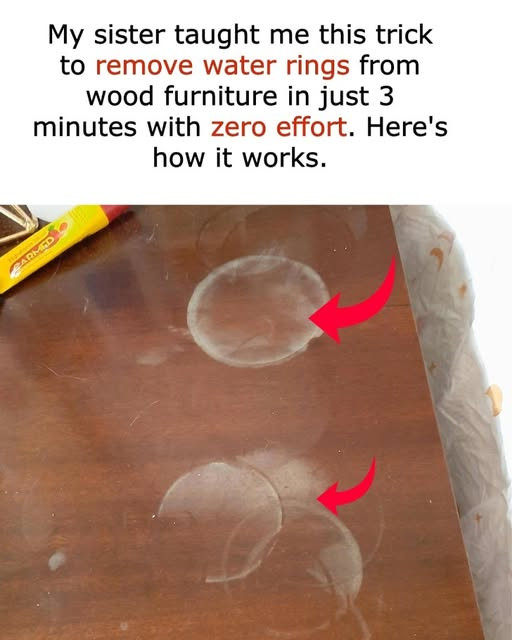
Before executing the fix, understanding the enemy is key. A water ring — usually a white or cloudy halo on a wood surface — is more than cosmetic. It signals moisture trapped beneath the finish layer, or heat forced moisture into the wood‑furniture interface. Left untreated, that moisture can lead to finish lifting, discoloration, even continued wood warping.
How the damage occurs:
- Condensation or heat exposure: A cold glass sweats; a hot dish radiates heat downward. Both drive moisture up against the protective coating, creating a break in its integrity.
- Moisture penetration: The finish (varnish, lacquer, shellac) is designed to keep moisture out. If moisture moves into it, you see a white “cloud” where the finish has lost transparency.
- Trapped moisture under finish: That white cloud is actually light‑scattering moisture under the surface. It diffuses the reflection of light, so you see haze instead of shine.
- Extended damage if ignored: Over time, dark rings form when the moisture interacts with tannins or metal salts in the wood, or when heat “cooks” the stain deeper. At this stage, simple fixes don’t always work.
Understanding this process explains why timing matters—the sooner you act after the ring appears, the higher the chance of restoring the furniture to its original luster.
My Sister’s Zero‑Effort 3‑Minute Trick: The Fast Rescue Method
Here’s the core of the method my sister uses when a fresh water ring appears. It is fast, requires items you already have, and can erase the ring in about three minutes if the conditions are right.
What you’ll need:
- A clean, white cotton cloth or tea towel (avoid prints or synthetic fabrics that might transfer dye).
- A standard household iron (or, if you don’t have one, a hair dryer can substitute though it may take a bit more time).
- Access to the table visible light and a clear view of the stain.
- OPTIONAL: A dab of quality furniture polish to finish with.
Step‑by‑step instructions:
- Clear the surface and select the cloth
Remove any objects from the area, wipe off dust or moisture, and lay the white cotton cloth flat over the water ring. Ensure it covers the mark completely and sits smoothly with no wrinkles. - Heat the surface
Set your iron to a low/no steam setting (usually the “linen” or “silk” setting). Let it warm for a moment. Once ready, place the iron gently on top of the cloth over the stain. Press down lightly for about 10–15 seconds, then lift and check. If still visible, reposition the cloth slightly and press again for another 10–15 seconds. Most fresh white rings vanish at this point because the heat evaporates the trapped moisture beneath the finish. - Inspect and finish
After one or two short cycles, remove the cloth. The water ring should be dramatically faded or gone entirely, leaving the wood finish shiny and normal. At this point, apply a small amount of high‑quality furniture polish and buff with a clean cloth to restore the protective finish and shine.
Total time: about three minutes. Minimal effort, maximal impact.
Why this works
- Heat gently vaporizes the moisture beneath the finish, allowing it to escape, restoring clarity of the finish.
- The light pressure and cloth act as a barrier, preventing direct iron contact with the wood and avoiding finish damage.
- Because the ring is fresh, the finish hasn’t been compromised deeply, so this simple fix is effective.
When the Trivial Fix Doesn’t Work: Variations and Additional Methods
Sometimes the water ring is older, deeper, or the finish is more delicate. If the three‑minute method doesn’t fully clear the mark, try one of these variations:
Variation A: Hair Dryer Method (When you don’t have an iron)
- Use a hair dryer on low/medium heat.
- Hold it about 4–6 inches above the cloth‑covered stain.
- Move continuously for 2–3 minutes until the spot fades.
- Follow with furniture polish.
Variation B: Mayonnaise or Petroleum Jelly (For more stubborn white/opaque rings)
- Apply a small amount of full‑fat mayonnaise (or petroleum jelly) directly on the ring.
- Leave it for 30 minutes to hour (or overnight for persistent haze).
- Wipe off with a soft cloth, buff, then polish.
- This method works because the oils displace trapped moisture and restore the finish’s clarity.
Variation C: Baking Soda Paste or White Toothpaste (For advanced or darker rings)
- Mix 1 tablespoon baking soda with a teaspoon of water to form a paste.
- Gently rub in the grain direction using a soft cloth over the ring.
- For white, non‑gel toothpaste: apply a dab, rub gently, wipe clean, and polish.
- Use extreme caution: these are mild abrasives and should only be used when other safer methods fail.
Variation D: Vinegar & Olive Oil Mix (For faint dark rings or finish restoration)
- Mix equal parts white vinegar + olive oil, apply with a soft cloth, rub gently in grain direction for 3–5 minutes, wipe clean, buff.
- This method helps recondition the finish while reducing visibility of surface discoloration.
Variation E: Professional Consideration (For deep black rings or finish compromised)
- If the ring has turned black or the finish is deeply damaged, the stain has penetrated into the wood fibers. This may require light sanding, re‑staining, refinishing or professional restoration.
Identifying the Ring Type & Choosing the Right Method
Not all water rings are created equal. Choosing the right removal method depends on the type of mark:
- White/Cloudy ring: Moisture trapped beneath the finish, but the wood fibers are unaffected. The fastest to fix using heat method.
- Dark ring: Moisture and/or metal salts have penetrated into the wood grain; more stubborn, may require advanced treatments or refinishing.
- Black ring: Deep penetration, usually iron/tannin reaction — may not be fully reversible without refinishing.
A good rule: If the mark is white or opaque on the surface, you have a very high chance of restoring it with the quick method. If it’s dark, you may need to escalate.
Preventative Strategies to Keep Your Wood Furniture Spot‑Free
Repair is great—but prevention is even better. Use these practices to minimize future water ring damage:
1. Use Coasters and Placemats Consistently
Encourage everyone to use coasters for glasses, especially cold or hot beverages. Placemats under hot dishes protect the finish and distribute heat.
2. Wipe Spills Immediately
Click page 2 for more