In the fast-paced world of modern gadgets and throwaway culture, it’s easy to forget the elegance and craftsmanship that characterized the tools and devices of past centuries. Yet, hidden in the rafters of an old basement, tucked away in forgotten corners of attics, or passed down through generations, there lie artifacts that tell the story of a bygone era—where beauty and functionality went hand in hand. One such object, often overlooked and misunderstood, is the vintage marble razor knife sharpener.
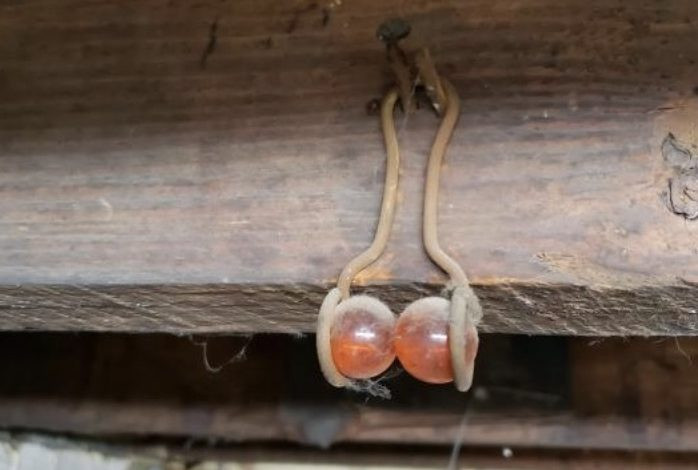
If you’ve ever come across one of these tools—whether it be hanging from the rafters of a century-old home or spotted at a flea market—you might have wondered what it was and how it functioned. At first glance, it could appear as little more than a curious relic, perhaps just two marbles sitting atop a wire hanger. But beneath its simple appearance lies a fascinating piece of history, a symbol of craftsmanship, and an enduring testament to the elegance of the past.
A Glimpse into History: The Marble Razor Knife Sharpener
The vintage marble razor knife sharpener was a tool that emerged in the late 19th and early 20th centuries, a time when craftsmanship and quality were paramount. These sharpeners were particularly popular for keeping knives and razors in optimal condition. Their design, which combined functionality with an artistic touch, made them stand out in an age of rapid industrialization.
The sharpener typically consisted of two main parts: a wire frame or holder and a polished marble or glass sphere. The marble, often encased in a simple wire frame, served as the key element of the tool. It was not just a pretty decoration; its polished surface was essential for the sharpening process. The way it was used was deceptively simple but effective. By placing a knife or razor at the right angle and using the spinning motion of the marble, one could restore a sharp edge to a dull blade.
These sharpeners were prized not only for their utility but for their beauty as well. The marble spheres used in the sharpeners were often hand-polished to perfection, creating an exquisite finish that made the tool as much a piece of art as it was a functional item. The sharpener’s form—a fusion of industrial practicality and aesthetic grace—represented an era when tools were not just functional but were also meant to be admired.
Craftsmanship at Its Finest: The Making of the Marble Razor Knife Sharpener
To understand the allure of these vintage sharpeners, it’s important to take a deeper look at the craftsmanship involved in their creation. In the late 1800s and early 1900s, skilled artisans and craftsmen were highly respected for their ability to turn raw materials into finely honed tools and objects. Marble, glass, and metal were the materials of choice, and they were often manipulated with such precision that the final product seemed almost flawless.
Marble, a stone renowned for its durability and timeless elegance, was used for the sharpener’s spherical component. Unlike the sharpener designs that followed later—made with cheaper plastic and mass-produced parts—the vintage marble razor knife sharpener was built to last. Each marble was handpicked and polished to perfection, ensuring that it was smooth and even, with no imperfections that could affect its sharpening capabilities.
The wire frame, typically made of steel or brass, was another piece of the puzzle. The frame needed to be sturdy enough to hold the marble in place while allowing for the sharpener to be used easily. Its design was simple, functional, and often elegant in its own right. Despite being a tool of practical use, the frame often featured subtle artistic details, such as decorative loops or curved lines that made the entire device aesthetically pleasing.
What set these sharpeners apart from modern-day versions, often made from cheap plastic or flimsy metal, was the level of care that went into their creation. In an age where mass production was beginning to take over, these marble razor knife sharpeners stood as a rare exception—a product where each piece was individually crafted and each detail meticulously honed.
Distinctive Design: The Artistry of the Marble Sharpener
The marble razor knife sharpener’s design is one of its most striking features. The marble sphere, the focal point of the device, was not merely functional. It was designed to be admired. In a time when beauty and functionality were not always separate concepts, the marble added an element of elegance to the sharpener. Often in deep, rich colors—ranging from cloudy white and pale green to shades of amber and blue—the marble served as a visual delight, one that was just as captivating as it was useful.
Beyond the visual appeal of the marble, the sharpener’s wire frame was designed to be as unobtrusive as it was sturdy. The simplicity of the frame allowed the marble to take center stage. The metal wire was often looped into gentle arcs and curves, enhancing the soft, refined look of the tool. In contrast to the clunky, boxy designs of many modern tools, the vintage razor knife sharpener felt organic—graceful even—as though it had been crafted with the same care and precision that went into designing fine jewelry.
What makes these vintage tools stand out in today’s world of mass-produced, utilitarian objects is how they embody a deep connection between the tool and its owner. The sharpener wasn’t just something to use; it was something to appreciate. The way the marble spun against the blade wasn’t merely a mechanical function—it was an experience, an opportunity to slow down, appreciate craftsmanship, and engage with an object that had been made with the utmost care.
The Functionality: Sharpening with Precision
Despite its aesthetic appeal, the marble razor knife sharpener was built to serve a practical function. Using one of these vintage sharpeners required a certain level of skill and care. Unlike modern electric sharpeners that are often automated, the marble razor knife sharpener relied on the user’s ability to position the blade at the correct angle and apply just the right amount of pressure.
click page 2 to continue