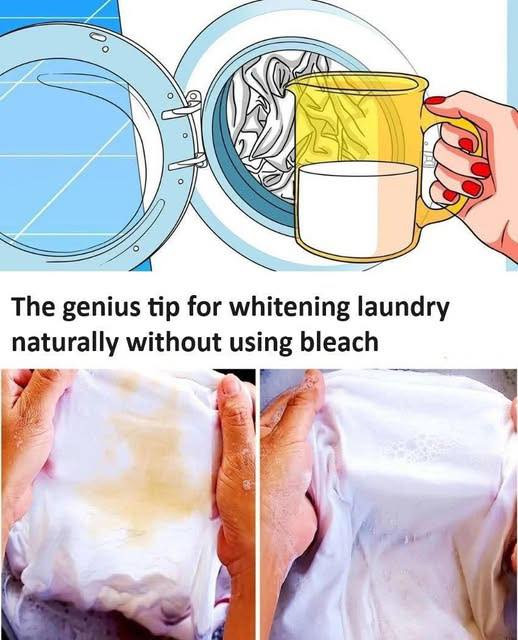
Whitening laundry has long been a quest for homeowners, families, and eco-conscious individuals alike. The search for brilliant, radiant whites, free from dinginess and dullness, usually leads people to rely on bleach. But bleach brings its own set of drawbacks—harsh chemicals, fabric damage, environmental concerns, and the risk of skin irritation. Fortunately, there exists a genius tip for whitening laundry naturally without using bleach, delivering powerful results with gentle, safe, and eco‑friendly fabric brightening power. In this in‑depth article, you will discover not just one—but an array of proven, natural methods, insider secrets, and detailed step‑by‑step instructions for achieving that luminous whiteness for your clothing, towels, sheets, and linens.
Table of Contents
- Why Avoid Bleach: Risks & Drawbacks
- Understanding How Whitening Naturally Works
- Choosing the Right Fabrics & Pre‑Treating Stains
- The Genius Tip (Star Method): Harnessing Oxygen + Heat + Time
- Other Natural Whitening Power Players
- Lemon Juice
- Baking Soda
- Hydrogen Peroxide
- White Vinegar
- Sunlight
- Non‑Chlorine Oxygen Bleach Alternatives
- Combining Methods: Synergy for Maximum Whitening Power
- Step by Step Guide: Whitening Laundry Naturally Without Bleach
- Sorting
- Pre‑Treatment
- Main Wash Routine
- Drying & Finishing
- Additional Pro Tips for Bright Whites
- Avoiding fabric softeners that yellow
- Water temperature matters
- Nature of detergents & the load size
- Storage & prevention of dinginess
- Troubleshooting & Common Problems
- Eco‑Friendly & Cost‑Effective Considerations
1. Why Avoid Bleach: Risks & Drawbacks
Before diving into natural methods, it’s essential to understand why many people want to steer clear of traditional bleach (chlorine bleach). The disadvantages include:
- Fabric damage: Bleach breaks down cotton and natural fibers over time, causing weak spots, tears, and loss of integrity.
- Color fading & yellowing: Even on white fabrics, bleach can leave behind yellow hues when improperly rinsed or reused.
- Skin irritation & respiratory issues: Fumes from bleach can trigger asthma, allergies, skin rashes, and throat irritation.
- Environmental impact: Bleach waste can have harmful effects on water sources and soil microbes.
- Cost and safety: Bleach must be handled carefully, stored securely, and replaced frequently to retain potency.
These factors make naturally‑based whitening tools highly desirable for cost‑effective laundry care, safe methods for sensitive skin, and sustainable living.
2. Understanding How Whitening Naturally Works
Natural whitening is fundamentally about removing stains and restoring brightness without harsh chemicals. The key mechanisms are:
- Enzymatic breakdown of food, sweat, blood, and other organic stains.
- Oxidation by oxygen (from hydrogen peroxide or specialized oxygen bleaches) that lifts stains and brightens fabric fibers.
- Natural acids (citric acid in lemon, acetic acid in vinegar) that dissolve mineral deposits, soften water, and break down grime.
- Alkaline agents (like baking soda) that lift residues, neutralize odors, and brighten by changing pH.
- Ultraviolet light from the sun, which helps in degrading stains and naturally bleaching whites.
To get the brightest whites, one must combine cleaning agents, mechanical action, heat, and time in proper proportion.
3. Choosing the Right Fabrics & Pre‑Treating Stains
Fabric Types & Their Needs
Not all white fabrics are equal. Some are delicate, others robust. Key categories:
- Cotton & linen: Highly durable, tolerate high temperatures; respond very well to natural whitening agents.
- Blends (cotton‑polyester, cotton‑rayon, etc.): More sensitive; avoid extremely high heat, opt for milder methods.
- Delicates (silk, lace, wool blends): Require very gentle treatment; natural acids, cold water, and short exposure.
Pre‑Treatment of Stains
Even before the whitening wash, you can dramatically improve outcomes by pre‑treating.
- Identify common stains: sweat, underarm, food, coffee, tea, blood.
- Use gentle agents immediately: cold water rinse (blood), lemon juice with salt (rust or tannin), baking soda paste (sweat‑odor rings).
- Let the pre‑treatment stay on for at least 15‑30 minutes, but no longer than necessary for delicate fabrics.
4. The Genius Tip (Star Method): Harnessing Oxygen + Heat + Time
Here’s the core trick that will revolutionize the way you whiten laundry naturally, no bleach in sight. It’s a three‑element “Star Method”: Oxygenation + Heat + Time.
What Is the Star Method?
- Oxygenation: Using oxygen‑based whiteners (hydrogen peroxide, oxygen bleach) or agents that release oxygen.
- Heat: Warm or hot water helps activate these agents and accelerates stain removal.
- Time: Allow sufficient soaking or wash cycles so the whitening agents fully act without harming fabric.
When combined, these three produce results rivaling bleach—safe, bright, durable.
Why It Works
- Heat increases the reaction rate of whitening agents.
- Oxygen lifts stains without fabric damage.
- Extended time allows stubborn or set‑in grime to break down.
This is the central genius tip: instead of relying on harsh chemicals, rely on natural, safe, cost‑effective chemistry, heat, and time to do the heavy lifting.
5. Other Natural Whitening Power Players
Click page 2 for more